
Navigating the Labyrinth of Domain Name Disputes: An Essential Guide to UDRP with Gerald Levine’s Second Edition
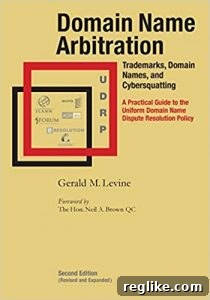
In the dynamic and often complex world of intellectual property and digital presence, understanding the mechanisms for resolving domain name disputes is paramount. For legal professionals, brand owners, and anyone involved in online identity management, the Uniform Domain Name Dispute Resolution Policy (UDRP) stands as a critical framework. We are delighted to announce the publication of a monumental resource in this field: Domain Name Arbitration, Second Edition, penned by the esteemed domain name attorney Gerald Levine. This updated guide is poised to become an indispensable tool for deciphering the intricate jurisprudence surrounding domain name conflicts, offering unparalleled insights and clarity.
Gerald Levine, a name synonymous with expertise in domain name law, first introduced his seminal work in 2015. The intervening years have witnessed an explosion in the number of UDRP cases, each contributing to a rich tapestry of precedents and evolving interpretations. Drawing upon thousands of these newly adjudicated cases, Levine has meticulously revised and expanded his original treatise, ensuring that the second edition is not merely an update but a comprehensive reimagining of the subject matter. This dedication to continuous refinement underscores the author’s commitment to providing the most current and authoritative analysis available.
Meet the Author: Gerald Levine, A Distinguished Voice in Domain Name Jurisprudence
Gerald Levine is widely recognized as one of the foremost authorities and perhaps the most articulate writer on the subject of UDRP. His profound understanding of both the theoretical underpinnings and the practical applications of domain name law is evident throughout his work. With decades of experience navigating the digital legal landscape, Levine brings a unique blend of academic rigor and real-world insight to his writing. His ability to distill complex legal concepts into clear, digestible prose makes him an invaluable guide for both seasoned practitioners and those new to the field. He doesn’t just present the law; he illuminates its nuances, explains its evolution, and anticipates its future trajectory.
His reputation is built on a foundation of meticulous research, incisive analysis, and a commitment to clarity. For anyone seeking not just to understand UDRP, but to truly master its complexities, Levine’s perspective is not merely helpful; it is essential. His contributions extend beyond the pages of his books, influencing discourse and practice within the intellectual property community globally.
The Definitive Guide: “Domain Name Arbitration, Second Edition” Unpacked
The first edition of Domain Name Arbitration set a high benchmark for comprehensive UDRP guidance. The second edition, however, raises that bar significantly. In his forward to the book, Levine himself articulates the depth of this revision, stating, “I have rewritten many of the sections; and where I have not added I have tweaked and refined my thoughts about the jurisprudence to make the principles, factors and concepts of the law more accessible.” This statement highlights a proactive effort to enhance readability and ensure that the book reflects the most current thinking and developments in UDRP jurisprudence.
Unveiling the Enhanced Second Edition: What’s New and Improved?
The decision to undertake a second edition was driven by the rapid evolution of domain name disputes. Since 2015, thousands of additional UDRP cases have been decided by various administrative panels, generating a wealth of new insights and presenting fresh challenges. Levine has painstakingly analyzed this expanded body of case law, integrating these new decisions into his existing framework. This means readers will find an updated synthesis of prevailing legal interpretations, emerging trends, and nuanced applications of the UDRP.
The rewriting of numerous sections indicates a re-evaluation of previous arguments and the inclusion of fresh perspectives informed by recent panel decisions and scholarly discussions. Furthermore, the “tweaking and refining” of thoughts about jurisprudence is critical. It suggests a deeper dive into the philosophical and practical underpinnings of UDRP decisions, offering a more mature and sophisticated understanding of how panels arrive at their conclusions. This iterative process of refinement helps to demystify complex legal reasoning, making the often-opaque world of domain name arbitration more transparent and predictable.
Another significant enhancement is the inclusion of an expansive index. In a dense legal text, a comprehensive index is not a mere convenience but a crucial navigational tool. It allows practitioners to quickly locate specific topics, case references, and legal concepts, significantly boosting the book’s utility as a day-to-day reference guide. This thoughtful addition underscores Levine’s understanding of the practical needs of his readership.
Understanding the UDRP: A Cornerstone of Internet Governance and Brand Protection
The Uniform Domain Name Dispute Resolution Policy (UDRP), established by the Internet Corporation for Assigned Names and Numbers (ICANN), provides an administrative process for resolving disputes over domain names. Its primary goal is to combat “cybersquatting,” the abusive registration of domain names that infringe upon trademark rights. The UDRP allows trademark holders to challenge domain name registrations they believe are identical or confusingly similar to their trademarks, and which have been registered and are being used in “bad faith” by individuals or entities with no legitimate rights or interests in the domain name.
For a complainant to succeed under the UDRP, they must generally prove three elements:
- The domain name is identical or confusingly similar to a trademark or service mark in which the complainant has rights.
- The registrant has no rights or legitimate interests in respect of the domain name.
- The domain name has been registered and is being used in bad faith.
Levine’s book delves deeply into each of these elements, providing detailed analysis of how panels interpret and apply them. It explores the nuances of “confusingly similar,” the various scenarios that may or may not constitute “legitimate interests,” and the manifold ways “bad faith” can be demonstrated. This foundational knowledge is crucial for anyone preparing a UDRP complaint or response.
Who Stands to Benefit? The Indispensable Value for Legal and IP Professionals
This book is not for casual reading; it is a serious academic and practical resource. It is meticulously “designed for lawyers and intellectual property professionals” who require a granular understanding of UDRP. For attorneys specializing in intellectual property, corporate law, or technology law, Levine’s book provides an authoritative guide to crafting compelling arguments, understanding precedents, and effectively representing clients in domain name disputes. It offers strategies for both complainants and respondents, covering everything from initial assessment to remedies.
Beyond litigators, “many panelists would benefit from reading it, too.” Arbitrators and dispute resolution experts who serve on UDRP panels will find invaluable insights into consistent application of the policy, helping to foster more uniform and predictable outcomes. The book serves as a benchmark for best practices in panel decision-making, offering a framework for thorough analysis and well-reasoned determinations.
Furthermore, in-house counsel, brand managers, and business owners dealing with brand protection issues in the digital realm will find this book an essential reference. While perhaps not diving into every legal minutia, it offers a robust framework for understanding their rights, identifying potential infringements, and developing proactive strategies to safeguard their online presence. Law students specializing in intellectual property will also find it an excellent resource for deep learning, providing both theoretical context and practical case studies.
Navigating the Nuances: Why Domain Name Law Demands an Expert Guide
The landscape of domain name disputes is constantly evolving. New top-level domains (TLDs) are introduced, new forms of cybersquatting emerge, and the digital economy continues to reshape how brands interact with consumers online. This dynamic environment makes a clear, authoritative guide indispensable. UDRP cases, while administrative, often involve significant financial and reputational stakes. The absence of strict stare decisis in UDRP decisions means that panel interpretations can vary, adding layers of complexity to predicting outcomes. Levine’s work helps to bring order to this complexity by highlighting common threads, recurring themes, and persuasive arguments that have stood the test of time.
The book’s deep dive into jurisprudence ensures that readers are not just presented with facts but are equipped with the analytical tools to critically assess any UDRP scenario. It addresses common misconceptions, highlights pitfalls, and offers strategic advice on how to build a strong case or defense. This level of detail is crucial for legal professionals who must advise clients effectively in a field where precedent is persuasive but not strictly binding.
Beyond the Pages: Gerald Levine’s Enduring Legacy in Domain Name Jurisprudence
Gerald Levine’s contribution to domain name law extends far beyond the pages of this book. He has consistently been a leading voice in discussions surrounding internet governance, intellectual property rights in the digital age, and the mechanisms for resolving online disputes. His work helps to shape how practitioners and policymakers think about these critical issues, contributing to a more coherent and equitable digital environment.
Domain Name Arbitration, Second Edition is more than just a legal text; it is a testament to Levine’s enduring commitment to clarifying and advancing the understanding of UDRP. It embodies years of dedicated research, legal practice, and thoughtful reflection, culminating in a resource that will undoubtedly guide and inform a new generation of legal professionals and brand protectors.
In conclusion, for anyone seeking an in-depth, authoritative, and up-to-date understanding of the Uniform Domain Name Dispute Resolution Policy, Gerald Levine’s Domain Name Arbitration, Second Edition is not merely recommended; it is essential reading. Its comprehensive coverage, analytical depth, and clear articulation of complex legal principles make it the definitive guide in its field. Equip yourself with the knowledge to confidently navigate the intricacies of domain name disputes.
The book is readily available on Amazon.com, ready to be added to the essential library of any legal or intellectual property professional.