
Don’t try to lookup hotel information at RenaissanceHollywood.com — it’s expired.
The Critical Importance of Domain Management: Lessons from a Hotel’s Unexpected Downtime
In the vast and ever-evolving landscape of the internet, a business’s domain name is often its most fundamental asset, serving as the digital cornerstone of its identity and operations. It’s the address customers use to find information, make purchases, and connect with a brand. Given its profound significance, the notion of a major establishment losing control over its primary domain, even temporarily, seems almost unfathomable. Yet, this exact scenario unfolded recently, offering a potent reminder of the fragility of online presence and the critical importance of meticulous domain management.
The incident in question involved the prestigious Renaissance Hollywood Hotel, a renowned venue poised to host hundreds of domain industry professionals at the eagerly anticipated DOMAINfest Conference. Just days before this high-profile event, a routine search for hotel information yielded a shocking discovery that sent ripples through the digital community: their official website, www.renaissancehollywood.com, was inaccessible. Instead of elegant hotel amenities and booking options, visitors were met with an abrupt message signifying domain expiration.
A Startling Discovery: The Expired Domain Page
A few minutes ago, as I was looking up information about the hotel for this week’s DOMAINfest Conference in Hollywood, the process began innocently enough. I performed a standard Google search for “renaissance hollywood,” expecting the first result to lead directly to the hotel’s official site. Indeed, the top result pointed to www.renaissancehollywood.com. However, upon clicking, the experience quickly veered from routine to remarkably unusual. The page that loaded was not the polished, inviting website of a luxury hotel, but rather a stark, functional message from Network Solutions, a prominent domain registrar.
To my surprise, this is what greeted me:
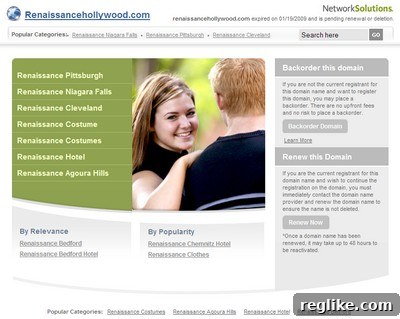
Yes, that image clearly depicts a Network Solutions “expired domain” page. The notice prominently displayed at the top of the page delivered the stark news: RenaissanceHollywood.com had expired on January 19th and was listed as “pending renewal or deletion.” This revelation was particularly jarring, not just for its immediate impact on potential guests, but due to the context of the forthcoming DOMAINfest Conference. The irony was palpable: a hotel hosting an event specifically for domainers – professionals whose livelihoods revolve around understanding and managing domain names – had allowed its own primary domain to lapse.
[Update: Thankfully, the hotel has since renewed the domain name, and it is now resolving, restoring its online presence. This swift resolution underscores the urgency with which such issues are typically addressed once identified.]
Why an Expired Domain is Catastrophic for Any Business, Especially a Hotel
For any business, the website serves as the primary digital storefront. For a hotel, this role is amplified. A hotel’s website is the hub for direct bookings, showcasing rooms, amenities, special offers, and providing crucial contact information. When this critical asset goes offline due to an expired domain, the repercussions are immediate and severe.
Immediate Loss of Business and Revenue
The most direct impact is the immediate halt of online bookings. Guests looking to reserve a room, check availability, or explore facilities are met with an error page instead of a booking engine. This isn’t just a minor inconvenience; it translates directly into lost revenue, especially for a large establishment like the Renaissance Hollywood, which likely relies heavily on direct online reservations to maximize profitability and guest engagement.
Brand Damage and Erosion of Trust
An expired domain projects an image of neglect and unprofessionalism. Guests might question the hotel’s operational efficiency, financial stability, or even its authenticity. In an industry where trust and reputation are paramount, such an incident can quickly erode customer confidence. It sends a message that the hotel is not on top of its digital game, potentially deterring future bookings and damaging long-term brand loyalty.
Devastating SEO Impact
Search engine optimization (SEO) is a marathon, not a sprint. Building up a strong search engine ranking for relevant keywords (e.g., “Renaissance Hollywood,” “Hollywood luxury hotels”) takes consistent effort and time. When a domain expires, search engines like Google quickly notice that the site is no longer accessible. This leads to a rapid de-indexing of pages and a significant drop in search rankings. Recovering from such a blow is a laborious process, often taking months to regain lost ground, even after the domain is renewed. Each day the domain is down represents a step backward in the competitive landscape of online hotel bookings.
Security Risks and Potential for Hijacking
Beyond brand and SEO damage, an expired domain can pose significant security risks. If a domain is not renewed within a grace period, it eventually becomes available for registration by anyone. Malicious actors could potentially acquire the lapsed domain and use it for phishing scams, malware distribution, or to redirect traffic to competing businesses. While less likely for a highly recognized brand like Renaissance Hollywood, the possibility remains a serious concern for any business, underscoring the need for vigilance.
The Irony of Hosting DOMAINfest
The timing of this incident could not have been more ironic. The Renaissance Hollywood Hotel was preparing to welcome hundreds of attendees to the DOMAINfest Conference, an event dedicated to the intricate world of domain names, website development, and online branding. These attendees – domain investors, registrars, web developers, and SEO specialists – are precisely the demographic most attuned to the nuances and critical importance of domain management. For them to arrive at a host venue whose own domain was temporarily down was, to say the least, a conversation starter. It served as an immediate, real-world case study for the very topics being discussed at the conference, highlighting that even major players can fall victim to oversights.
Especially since the hotel was about to host hundreds of domainers in a few days, it was clear that swift action was needed. The informal recommendation for folks at DomainSponsor to help the hotel renew its domain name quickly became a testament to the community’s proactive nature and shared understanding of such a critical lapse.
Best Practices for Preventing Domain Expiration Disasters
The Renaissance Hollywood incident, though quickly resolved, offers valuable lessons for businesses of all sizes. Preventing domain expiration is straightforward with proper planning and vigilance:
1. Enable Automatic Renewal
This is the simplest and most effective safeguard. Most domain registrars offer an auto-renewal option, linking the domain registration to a credit card or payment method that automatically renews the domain before its expiration date. Ensure the payment information is always up-to-date.
2. Maintain Accurate Contact Information
Ensure that the administrative, technical, and billing contact information associated with your domain is current and actively monitored. Registrars send multiple notifications leading up to an expiration date, and these alerts are useless if they go to an outdated email address or an employee who has left the company.
3. Designate Multiple Contacts
Avoid single points of failure. Have at least two or three individuals within the organization listed as contacts for domain management. This ensures that even if one person is unavailable, others receive critical notifications.
4. Register for Multiple Years
Where possible, register your domain for several years at a time (e.g., 5 or 10 years). This reduces the frequency of renewal notifications and the chance of an annual oversight. It also sends a positive signal to search engines about the long-term commitment to the domain.
5. Utilize Domain Monitoring Services
Consider using third-party domain monitoring services that can track expiration dates, DNS changes, and registrar information. These services provide an additional layer of protection and send independent alerts.
6. Choose a Reputable Registrar
Partner with a domain registrar known for its reliability, excellent customer support, and robust management tools. A good registrar will provide clear expiration warnings and a user-friendly interface for managing your domains.
7. Conduct Regular Audits
Periodically review your entire domain portfolio. Check expiration dates, contact details, and auto-renewal settings for all your domains. This proactive approach can catch potential issues before they become critical problems.
The Broader Picture: Digital Identity and Brand Resilience
The saga of RenaissanceHollywood.com serves as a potent microcosm of the broader challenges and responsibilities associated with maintaining a robust digital identity. In today’s interconnected world, a business’s online presence is not just an adjunct to its physical operations; for many, it is the primary interface with customers and the engine of growth. Hotels, in particular, rely on their digital platforms for everything from brand visibility and marketing campaigns to direct booking channels that bypass costly third-party aggregators.
While the quick renewal of the Renaissance Hollywood domain mitigated what could have been a much larger crisis, the incident remains a stark illustration that no entity, regardless of its size or reputation, is immune to the perils of oversight. It underscores the vital necessity of integrating domain management into core business operations, treating it with the same gravity as financial accounting or physical security.
The lesson here transcends simple technical oversight; it speaks to brand resilience and the proactive defense of one’s digital assets. In a landscape where online perception can make or break a business, ensuring continuous, reliable access to your digital storefront is not merely a best practice—it is an existential imperative.