
Unlocking Precision in Domain Intelligence: DomainTools Revolutionizes Reverse Whois Search
In today’s hyper-connected digital landscape, understanding domain ownership and registrant details is paramount for businesses, cybersecurity professionals, brand managers, and investigative researchers alike. The sheer volume of domain registrations, however, often presents a significant challenge, making it difficult to sift through vast amounts of data to find truly relevant insights. Traditional Whois lookups provide individual domain information, but for broader investigations, the power of Reverse Whois is indispensable. This powerful tool allows users to uncover all domains associated with a specific registrant email, name, or other identifying information. However, even Reverse Whois searches can yield overwhelming results, often requiring users to comb through hundreds or thousands of records to pinpoint what they need.
DomainTools, a leader in domain name and IP intelligence, has addressed this challenge head-on with the release of new, significantly enhanced Reverse Whois searching functionality. This update empowers users to hone in on exactly the records they’re looking for with unprecedented precision and efficiency. By introducing advanced filtering and operator capabilities, DomainTools is transforming the way professionals interact with and leverage domain ownership data, making targeted investigations not only possible but also remarkably cost-effective.
The Power of Reverse Whois: A Foundation for Digital Discovery
At its core, Reverse Whois is a crucial intelligence tool. Instead of searching for the owner of a specific domain, it allows you to start with an owner’s detail (like an email address, name, or company) and discover all domains registered under that information. This capability is fundamental for a myriad of use cases, from identifying networks of malicious websites to performing due diligence on an acquisition target, or even tracking the digital footprint of a competitor. Previously, a broad Reverse Whois query might return an extensive list of domains associated with a particular registrant, some of which might be outdated, irrelevant, or simply not pertinent to the immediate investigation. This often led to wasted time, resources, and unnecessary expenditure on comprehensive reports that contained a large amount of “noise” rather than actionable “signal.”
The updated functionality from DomainTools directly tackles this issue by providing powerful, granular control over search parameters. It shifts the paradigm from sifting through raw data to proactively filtering and refining your queries, ensuring that the results you receive are highly targeted and immediately valuable. This advancement is not just about making searches easier; it’s about making them smarter, more efficient, and ultimately, more impactful for critical decision-making.
Introducing Granular Control: DomainTools’ Enhanced Filtering Capabilities
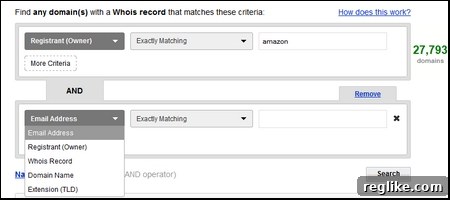
The most significant enhancement in the new DomainTools Reverse Whois functionality lies in its ability to apply multiple ‘and’ and ‘or’ operators across various search indicators. This sophisticated layering of conditions allows investigators to construct highly specific queries, dramatically narrowing down potential results from the outset. Users can now apply these powerful filters to key data points, including:
- Email Address: Pinpoint domains registered with specific email patterns or multiple associated emails.
- Registrant Record: Focus on particular registrant names, organizations, or even segments of registrant contact details.
- Whois Record: Search within the entire Whois record text for unique identifiers, keywords, or specific data fields.
- Domain Name: Include or exclude domains based on specific keywords, prefixes, suffixes, or trademarked terms within the domain name itself.
- Extension (TLD): Filter results by desired top-level domains, such as ‘.com’, ‘.org’, ‘.net’, or country-code TLDs like ‘.uk’ or ‘.de’.
By letting you select text for each search indicator and combine them with logical operators, DomainTools empowers users to create highly surgical investigations. For instance, consider a company actively investigating potential trademark infringement. They can now enter their specific trademark into the “domain name” field. If their primary concern is limited to a particular market or online presence, they can then further refine this search by adding “and” filtering for only ‘.com’ domains, or “or” to include ‘.net’ and ‘.org’ domains as well. This level of precise targeting ensures that investigators aren’t burdened with irrelevant data, allowing them to focus directly on domains that pose a genuine threat or interest.
Furthermore, the ability to search the Whois record based on a registration date adds another critical dimension to investigations. This allows users to focus on recently registered domains, which can be indicative of new threats, emerging competitors, or developing trends. While this feature is highly valuable, the suggestion for adding a date range functionality for the same purpose is insightful. Such an enhancement would provide even greater flexibility, allowing users to analyze domain registrations within specific historical periods, further aiding in trend analysis, historical investigations, and the tracking of long-term digital footprints.
Real-World Applications: Maximizing Your Domain Investigations
The enhanced filtering capabilities unlock a vast array of real-world applications across various sectors, making DomainTools Reverse Whois an indispensable asset:
Brand Protection & Trademark Enforcement
For brands fighting cybersquatting, trademark infringement, and online counterfeiting, this functionality is a game-changer. A brand protection team can easily search for domains containing their trademark AND registered with a specific suspicious email address, OR domains that mimic their brand name and use a common phishing TLD. This precision dramatically reduces the time and resources spent identifying infringing sites, enabling swifter enforcement actions.
Competitive Analysis & Market Intelligence
Strategic planners and market researchers can leverage these tools to gain a deeper understanding of their competitors’ digital strategies. By searching for a competitor’s known registrant details, and then filtering by domain name patterns (e.g., product names, project codes), they can uncover new initiatives, product launches, or market expansions that might otherwise go unnoticed. This provides a significant advantage in formulating proactive business strategies.
Cybersecurity & Threat Intelligence
Cybersecurity analysts are constantly battling phishing campaigns, malware distribution networks, and brand impersonation attacks. With DomainTools’ refined Reverse Whois, they can input a known malicious email address OR a suspicious organization name, AND then filter for specific domain name patterns or newly registered domains. This enables rapid identification of related infrastructure used by threat actors, facilitating faster takedowns and proactive defense strategies.
Mergers & Acquisitions (M&A) Due Diligence
During M&A processes, thorough due diligence extends to a target company’s digital assets. Investigators can use the new filters to systematically verify all domains owned by the target company, identify any unregistered intellectual property, or uncover potential liabilities like associated rogue domains. Searching by the target company’s name AND filtering by various TLDs provides a comprehensive overview of their digital footprint.
Legal & Investigative Research
Legal teams and private investigators can utilize this precision to trace individuals or organizations, identify related entities, and gather evidence for various cases. By inputting known registrant details AND filtering for specific keywords in domain names or Whois records, they can uncover a network of online assets that might be crucial to an investigation.
The Unbeatable Advantage: Why Precision Pays Off
One of the most compelling advantages of this updated functionality is its direct impact on cost-effectiveness. Reverse Whois reports, particularly those covering thousands of domains, can be a significant investment. The ability to dramatically narrow down the list of domains in a report means users only have to pay for the exact data they need. The original example highlights this perfectly: if a registrant owns over 1,000 domains, a full report might set an organization back at least $499. However, by leveraging the new filters to whittle that list down to a more manageable 100 highly relevant domains, the price drops significantly to just $99.
This isn’t merely a small saving; it represents a fundamental shift in how organizations can access and utilize critical domain intelligence. It democratizes access to powerful data, making advanced investigations financially viable for a wider range of businesses, from startups to large enterprises. The return on investment (ROI) becomes immediately apparent when considering the reduced costs combined with the increased efficiency and accuracy of investigations.
Time Efficiency
Beyond monetary savings, the time saved by analysts and investigators is invaluable. Instead of manually reviewing hundreds or thousands of domain records for relevant information, the filtered reports deliver precisely what’s needed. This allows teams to focus on analysis and action rather than tedious data sifting, significantly accelerating investigative workflows and improving overall operational efficiency.
Data Accuracy & Relevance
The core benefit of granular filtering is the improved accuracy and relevance of the data retrieved. By eliminating irrelevant domains from the search results, investigators can concentrate on actionable insights. This reduction in “noise” ensures that every piece of data reviewed contributes directly to the objective of the investigation, leading to more precise conclusions and more effective strategies.
Strategic Decision Making
Ultimately, access to highly targeted, relevant, and cost-effective domain intelligence empowers better strategic decision-making. Whether it’s protecting a brand, understanding a market, or defending against cyber threats, decisions based on precise and pertinent data are inherently more robust and yield more positive outcomes. DomainTools’ enhanced Reverse Whois functionality ensures that businesses and security professionals are equipped with the most refined data possible to navigate the complexities of the digital world.
Future-Proofing Your Digital Strategy with DomainTools
In an era where digital footprints are constantly expanding and evolving, the tools used to understand them must keep pace. DomainTools’ commitment to refining its Reverse Whois search functionality demonstrates a forward-thinking approach, ensuring that users have access to the most effective means of gathering domain intelligence. This continuous evolution of tools like Reverse Whois is crucial for future-proofing digital strategies, enabling organizations to adapt quickly to new online threats, market shifts, and competitive challenges.
Beyond the Basics: Advanced Search Techniques and Tips
To fully leverage the capabilities of this enhanced Reverse Whois, users should explore advanced search techniques. Combining criteria effectively is key. For example, an investigator might search for domains registered by a specific organization, AND containing a specific keyword, OR registered within a particular date range. This layered approach creates highly sophisticated queries that can uncover deep insights.
The existing functionality to search by registration date is a powerful feature for identifying new threats or emerging trends. As suggested earlier, the addition of a date range filter would further enhance this by allowing users to specify a start and end date for registrations. This would be incredibly useful for tracking domain registration activity during specific events, campaigns, or periods of interest, adding another layer of chronological context to investigations.
Navigating Complex Registrant Networks
The ability to use multiple ‘and’/’or’ operators is especially useful for navigating complex registrant networks. Malicious actors or large organizations often use various slight variations in registrant names, email addresses, or organizational details. With these advanced filters, investigators can construct queries that account for these variations, ensuring that all related domains, even those with subtly different registration details, are identified and brought into scope.
This capability is also invaluable for uncovering hidden connections between seemingly disparate entities. By searching for common keywords in Whois records across different registrants or TLDs, investigators can piece together a broader picture of ownership and affiliation, which is critical for complex fraud investigations or understanding the full scope of a digital operation.
Conclusion: Empowering Your Digital Investigations with Unparalleled Domain Data
DomainTools’ updated Reverse Whois searching functionality represents a significant leap forward in the field of domain intelligence. By offering unprecedented control over search parameters through advanced filtering and logical operators, it empowers users to conduct highly precise, efficient, and cost-effective investigations. This granular control is invaluable for cybersecurity professionals defending against threats, brand managers protecting intellectual property, competitive analysts seeking market insights, and investigators tracing digital footprints.
The benefits extend beyond mere convenience; they translate into substantial savings in time and resources, improved accuracy of insights, and ultimately, more informed strategic decision-making. In a digital world that demands constant vigilance and informed action, DomainTools continues to provide the sophisticated tools necessary to navigate its complexities with confidence and unparalleled clarity.