
Enhancing GoDaddy’s Domain Appraisal Tool: A Deep Dive into Valuation Improvement
The world of domain names is dynamic, complex, and often fraught with varying opinions on value. While debates surrounding automated domain appraisals, particularly those from industry giants like GoDaddy, are seemingly endless, they underscore a critical need for precision and transparency in valuation. An accurate and reliable domain appraisal tool is invaluable for investors, entrepreneurs, and individuals looking to buy, sell, or understand the potential worth of their digital assets. GoDaddy’s appraisal tool is one of the most widely used resources in the domaining community, yet it faces persistent scrutiny. This article delves into actionable suggestions aimed at refining GoDaddy’s system, making it more accurate, user-friendly, and reflective of true market dynamics.
The Core Challenge of Automated Domain Valuation
Automated domain appraisal presents a formidable challenge. Unlike real estate, where tangible assets and established comparable sales are often abundant, domain names possess a unique blend of subjective and objective value. Factors such as keyword relevance, brandability, memorability, length, TLD extension, and potential traffic all contribute to a domain’s worth. Furthermore, market trends, industry shifts, and even emotional appeal can significantly influence perceived value. Algorithms struggle to perfectly emulate the nuanced judgment of an experienced human appraiser who understands these intricate layers. The goal, therefore, is not to replace human expertise entirely, but to equip automated tools with smarter logic to minimize discrepancies and build greater trust among users.
Key Suggestions for a Smarter GoDaddy Appraisal System
Based on observations and common criticisms within the domaining community, several strategic adjustments could dramatically improve GoDaddy’s appraisal accuracy and user satisfaction. These suggestions focus on enhancing communication, refining valuation thresholds, and incorporating critical market-driven factors.
1. Reframing High-Value Domain Messaging: Beyond the “$25,000” Ceiling
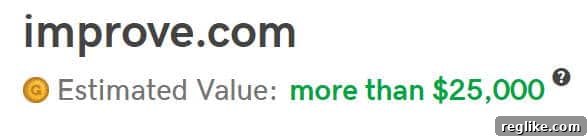
One of the most frequent points of contention arises when GoDaddy appraises domains worth a significant sum. Currently, for domains valued above $25,000, the system often displays a generic message stating “more than $25,000.” While technically accurate, this phrasing can be misleading and frustrating for users. Many interpret “more than $25,000” as being “just $25,000,” leading to disappointment and a perception that the tool undervalues truly premium assets. This limitation becomes particularly glaring for domains that could fetch hundreds of thousands or even millions of dollars.
To address this, GoDaddy should consider adopting more descriptive and nuanced language. Instead of a hard numerical ceiling, phrases like “Premium Value: This domain is a high-value asset, and its exact worth typically requires an expert appraisal due to market complexities” or “Significant Investment Grade: Our automated systems indicate exceptional value; professional valuation recommended” could be used. This change acknowledges the domain’s premium status without capping its perceived value, guiding users toward understanding that such assets often transcend simple algorithmic calculation. It sets appropriate expectations, enhances user trust, and positions GoDaddy as a resource that understands the nuances of the premium domain market, rather than one that dismisses it with an arbitrary cap. Just as luxury real estate appraisals involve more granular analysis than standard residential properties, so too should premium domain valuations be treated with greater descriptive care.
2. Adjusting the High-Value Threshold: A More Realistic Cutoff
Closely related to the messaging is the actual threshold at which the “more than $25,000” message appears. Based on market observations and the typical pricing structure of valuable domains, a $25,000 threshold might be too high for triggering special consideration. Many domains that are clearly valuable – commanding prices well into five figures – often receive the “more than $25,000” notification, despite their true value potentially being significantly higher. This reinforces the perception of an arbitrary ceiling.
A more realistic and helpful approach would be to lower this trigger point. For instance, applying the “high value” or “premium value” label to domains appraised over, say, $10,000 or $15,000, would be more reflective of the market. Domains crossing this lower threshold are often desirable, brandable, and keyword-rich, suggesting they warrant more sophisticated consideration than basic algorithmic comparisons. By identifying these domains earlier in the valuation spectrum, GoDaddy could better differentiate between moderately valuable domains and those entering a truly premium category. This adjustment would provide more relevant feedback to users, encouraging a deeper understanding of their domain’s market position and potentially guiding them towards more informed selling or acquisition strategies.
3. Reconsidering New TLD Valuations: Data-Driven Accuracy
The introduction of hundreds of new Top-Level Domains (TLDs) over the past decade has revolutionized the domain landscape. While GoDaddy has made strides in integrating these new extensions into its appraisal system, the valuation of new TLDs remains a significant challenge. The primary issue stems from a lack of robust, comparable sales data. Unlike established TLDs like .com, .net, or .org, where millions of historical sales provide a rich dataset for algorithmic analysis, many new TLDs have limited sales history, inconsistent market acceptance, and often highly speculative pricing.
Basing valuations for new TLDs on a percentage of a .com equivalent, for instance, is inherently flawed. A .xyz domain, no matter how keyword-rich, rarely commands a fraction of the value of its .com counterpart due to brand recognition, perceived trust, and universal adoption. Until sufficient market data exists—meaning a significant volume of verifiable sales for specific new TLDs—GoDaddy should consider removing or explicitly marking new TLD valuations as “data insufficient.” Options could include displaying “No reliable market data available for this TLD,” “Market still developing; valuation highly speculative,” or simply refraining from offering an estimate altogether. Prioritizing data-backed valuations for established TLDs would enhance the overall credibility of the tool, preventing users from being misled by potentially inaccurate or speculative figures for newer extensions.
4. Introducing a Time-Factor: Preventing Speculative Overvaluation of New Registrations
A legitimate and frequent criticism of automated appraisal systems is their tendency to assign substantial value to keyword-rich domains that are either unregistered or have only been recently registered. The example of “MortgageCorn.com” being valued at $1,377 illustrates this flaw perfectly. While “MortgageCorn” might contain valuable keywords, the domain itself is nonsensical and has no established history or market demand. An algorithm focused purely on keyword density and search volume might incorrectly assign a high value, even for a freshly registered domain that has not yet had time to “season” in the market.
To combat this, GoDaddy should implement a “time-factor” into its valuation algorithm, particularly for newly registered domains. This approach acknowledges that a domain’s value often accrues over time, influenced by its registration age, active use, development, and proven traffic. A suggested model could be:
- Domains registered less than one month: Appraise at or near the standard registration fee (e.g., $10-$20). This reflects the initial cost and acknowledges zero market history.
- Domains registered between one month and one year: Values could slowly and conservatively creep up, based on minimal keyword relevance and general market trends for undeveloped domains, but still far below a fully established domain. This prevents instant speculative gains.
- Domains registered for one year or more: At this point, the full appraisal algorithm could be applied, as the domain has had some time to potentially develop, attract traffic, or establish a small market presence.
This “seasoning” factor would prevent the immediate overvaluation of undeveloped, newly registered, or even unregistered keyword combinations. It instills greater realism into the appraisal process, educating users that genuine domain value often requires time, development, or proven market demand, rather than simply possessing appealing keywords. While some might call it a “hack,” it’s a practical and effective mechanism to prevent manipulation and enhance the credibility of automated valuations, particularly for the vast majority of domains that are either newly acquired or yet to be developed.
Beyond These Suggestions: Continuous Improvement
While these four suggestions offer significant avenues for improvement, the journey towards a perfect automated appraisal system is ongoing. GoDaddy could also explore incorporating more granular comparative sales data, perhaps allowing users to filter by specific industries or domain attributes. Integrating real-time user feedback on appraisal accuracy, offering more transparency in the methodology behind valuations, and developing more sophisticated algorithms that account for semantic context rather than just keyword presence are all future possibilities. The goal should be to continuously evolve the tool, ensuring it remains a trusted and accurate resource for the entire domaining ecosystem.
Conclusion
The reliability of automated domain appraisal tools directly impacts the confidence of buyers, sellers, and investors in the domain market. GoDaddy, as a leading platform, has a unique opportunity to elevate its appraisal system by implementing strategic enhancements. By refining the language used for high-value domains, adjusting valuation thresholds, exercising caution with new TLDs, and integrating a crucial time-factor for new registrations, GoDaddy can significantly improve the accuracy, transparency, and overall user experience of its appraisal tool. These improvements would not only foster greater trust among its user base but also solidify GoDaddy’s reputation as an indispensable resource for navigating the complex and ever-evolving landscape of domain name valuation. The debate about automated appraisals may never fully end, but with thoughtful refinements, GoDaddy can lead the way towards a smarter, more reliable future for domain valuation.