
In a pivotal decision reflecting the ongoing debate surrounding online content moderation and platform responsibility, domain name registrar Epik has clarified its stance on providing services to the controversial imageboard 8chan. While Epik affirms its commitment to facilitating fundamental internet infrastructure by continuing registrar services, the company has explicitly stated it will not provide content delivery services. This nuanced approach comes in the wake of intense public scrutiny following tragic events and underscores the delicate balance tech companies navigate between advocating for free speech and addressing the potential for violent radicalization online.
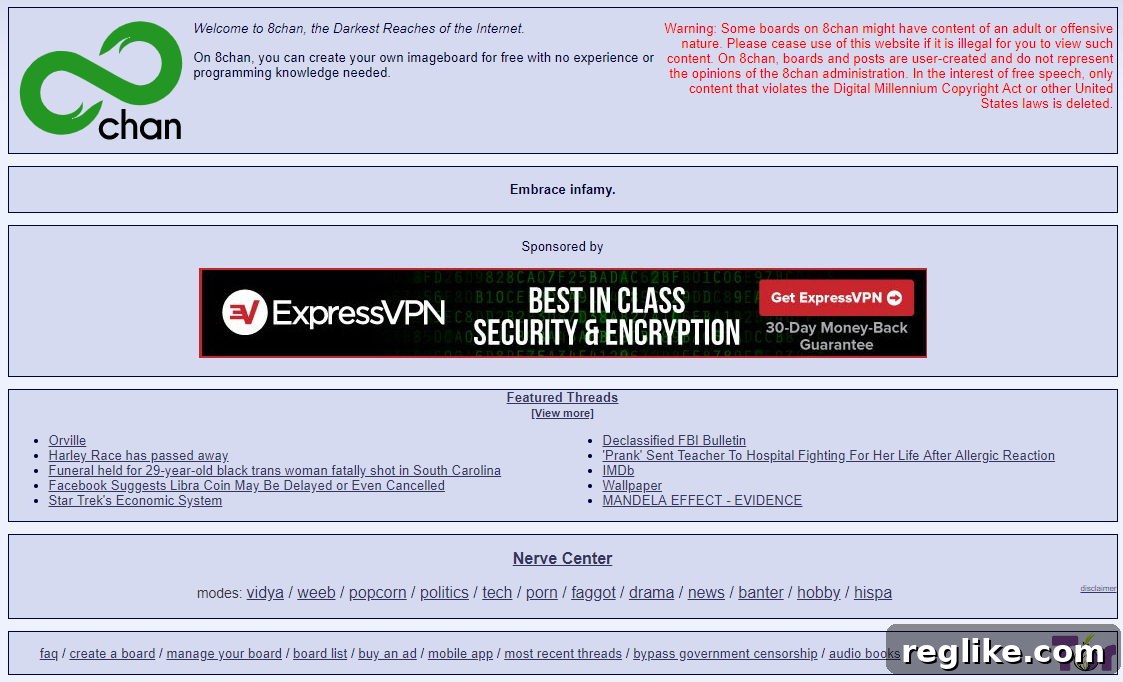
The controversy surrounding 8chan, a platform notorious for its minimal moderation policies and its association with extremist content, reached a fever pitch after the devastating shooting in El Paso. The platform, which had previously been deplatformed by other service providers, subsequently moved its domain to Epik, a registrar that has historically positioned itself as a defender of free speech, often welcoming websites deemed controversial by mainstream providers, such as Gab and Parler.
Epik’s Initial Hesitation and the Pressure of Public Opinion
In the immediate aftermath of 8chan’s migration, Epik CEO Rob Monster engaged with the media, confirming to Domain Name Wire yesterday that his company had not actively solicited 8chan’s business. At that time, Epik was still evaluating whether it would extend its full suite of services, including crucial content delivery and DDoS mitigation, to the embattled site. This period of deliberation highlighted the significant internal and external pressures Epik faced, as the public, media, and even its own upstream providers weighed in on the moral and ethical implications of hosting a platform linked to real-world violence.
The debate surrounding 8chan is not new; the imageboard has long been a subject of intense scrutiny due to its role as a haven for anonymous discussions, many of which veer into offensive, hateful, or extremist territory. Its “anything goes” moderation policy—or rather, lack thereof—has attracted individuals and communities that advocate for views often suppressed on other platforms. However, this commitment to absolute free speech has come at a steep price, with 8chan repeatedly being linked to the manifestos and radicalization paths of perpetrators of mass shootings, including those in Christchurch, Poway, and most recently, El Paso.
The Critical Role of Upstream Providers: Voxility Pulls the Plug
The turning point in Epik’s decision-making process came not from an internal policy shift alone, but from the intervention of a critical upstream provider. Voxility, which supplied Epik with some of its core content delivery and DDoS mitigation infrastructure, made the decisive move to pull its services from Epik, specifically regarding 8chan. This action effectively forced Epik’s hand, cutting off the technical lifeline that enables large-scale online platforms to operate smoothly and securely.
The intervention by Voxility underscores a growing trend in the internet infrastructure landscape: the increasing power of foundational service providers to influence or even dictate content governance. While companies like Epik might champion free speech principles, their operational capacity is inherently tied to the services provided by larger, often less publicly scrutinized, entities. When an upstream provider decides a client’s content or practices violate their terms or values, the downstream provider is left with little recourse but to comply or find alternative infrastructure, which can be a complex and time-consuming endeavor.
Epik’s Definitive Stance: No Content Delivery Services for 8chan
Following Voxility’s withdrawal and comprehensive internal consideration, Epik issued a definitive statement today, clarifying its long-term commitment:
Upon careful consideration of the recent operating history of 8Chan, and in the wake of tragic news in El Paso and Dayton over the weekend, Epik has elected to not provide content delivery services to 8Chan. This is largely due to the concern of inadequate enforcement and the elevated possibility of violent radicalization on the platform.
This statement represents a significant shift for Epik, a company often seen as a sanctuary for platforms on the fringes. The acknowledgment of “inadequate enforcement” and the “elevated possibility of violent radicalization” indicates a recognition of 8chan’s unique challenges and its direct link to real-world harm. It suggests that even for providers with a strong commitment to free speech, there are limits when content demonstrably contributes to violence and poses a public safety threat.
Rob Monster elaborated on the official statement in a message to Domain Name Wire, offering a more direct assessment of 8chan’s operational failures:
The issue is that their community grew and their moderation skills did not. This was neglect, and like a neglected building it eventually became a menace to itself.
Monster’s analogy of a “neglected building” vividly portrays the dangers of unmoderated online communities. As platforms scale, the sheer volume of content and users necessitates robust moderation frameworks to prevent the proliferation of harmful material. When these frameworks are absent or insufficient, a platform can quickly devolve into a space where dangerous ideologies fester, potentially leading to tragic consequences. This observation highlights the critical responsibility of platform operators to scale their moderation capabilities alongside their user base.
The Nuance of Services: Registrar vs. Content Delivery
Despite the decision to withhold content delivery services, Epik has confirmed that it will continue to provide registrar services to 8chan. This distinction is crucial for understanding the technical and ethical complexities involved. A domain name registrar, like Epik, is responsible for managing the registration of domain names (e.g., 8ch.net) and linking them to specific IP addresses. This service is foundational to the internet, akin to a phone book listing a number.
Content delivery services, on the other hand, involve caching and distributing website content closer to users, improving loading times and performance. More importantly, they often include DDoS (Distributed Denial of Service) mitigation, which protects websites from malicious attacks designed to overwhelm and take them offline. Without robust content delivery and DDoS protection, a website like 8chan, which is frequently targeted, would struggle to remain accessible to its users.
By continuing to provide registrar services, Epik maintains that it is merely facilitating a basic internet function, not actively endorsing or distributing the content itself. This position allows Epik to adhere to its free speech ethos at a fundamental level while distancing itself from the direct enabling of harmful content dissemination. However, critics argue that even providing registrar services still lends legitimacy and infrastructure to platforms that consistently host dangerous material, prompting a broader debate on whether any internet service provider should remain entirely “content neutral” in the face of demonstrable harm.
Broader Implications for Online Content Governance and Deplatforming
Epik’s decision regarding 8chan is indicative of a wider trend in the tech industry, where companies are increasingly grappling with their role in content governance. The phenomenon of “deplatforming”—where tech companies remove services from websites or individuals deemed to violate their terms of service or societal norms—has become a contentious issue. While proponents argue it’s a necessary step for corporate responsibility and public safety, critics often decry it as censorship and a threat to free speech.
The case of 8chan and Epik highlights the interconnectedness of internet infrastructure and the cascading effects when one provider decides to withdraw services. It forces platforms and their operators to confront the consequences of their moderation policies, or lack thereof. As the internet continues to evolve, the debate over who controls online discourse—platforms, users, governments, or the underlying infrastructure providers—will undoubtedly persist. Epik’s nuanced approach, separating registrar services from content delivery, offers a unique perspective on this ongoing challenge, illustrating the difficult tightrope walk companies must perform to balance differing ethical and operational imperatives in the digital age.
Ultimately, the situation surrounding 8chan serves as a stark reminder of the responsibilities that come with operating online platforms and providing essential internet services. It underscores the growing pressure on tech companies to not only uphold technical functionality but also to consider the societal impact of the content they facilitate, shaping the future of online discourse and the boundaries of digital free expression.