
The ESPNSlaughter.com Saga: When Social Commentary Collides with Trademark Law
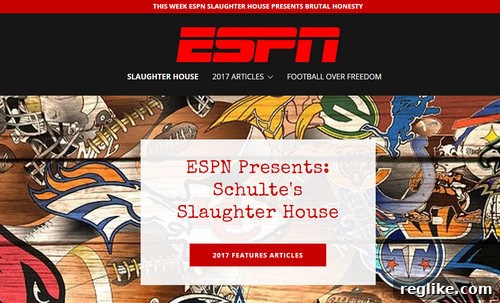
In an era where digital platforms serve as primary conduits for public discourse and critique, the line between protected free speech and enforceable intellectual property rights can often blur. This tension was vividly demonstrated in the case of ESPNSlaughter.com, a domain name that became the subject of a high-profile domain dispute. The popular sports network ESPN successfully petitioned a National Arbitration Forum (NAF) panel to seize control of the domain, effectively shutting down a platform dedicated to criticizing the financial priorities within professional football.
The Veteran’s Vision: Andrew Schulte and His Critique of NFL Spending
At the heart of the ESPNSlaughter.com initiative was Andrew Schulte, a U.S. Army veteran with a profound concern for societal well-being. Schulte, a self-professed football fan, wasn’t against the sport itself. Instead, his criticism was directed at what he perceived as the misallocation of vast sums of money within the National Football League (NFL) ecosystem. He argued passionately that the immense financial resources channeled into constructing opulent stadiums and paying exorbitant player salaries could be far better utilized to address pressing societal issues.
Schulte’s perspective resonated with many who question the economics of modern sports. He proposed a radical idea: a one-year “timeout” for the NFL. During this hiatus, he suggested, the colossal financial outlay typically associated with a football season – from public subsidies for stadiums to multi-million dollar player contracts – could be redirected towards causes that genuinely uplift communities and tackle systemic problems. While acknowledging the logistical and financial complexities of such a proposal, particularly concerning player salaries and league operations, Schulte’s core message was a powerful call for introspection and a re-evaluation of priorities. His website aimed to foster a discussion about the ethical implications of sports expenditure versus community investment, prompting visitors to consider alternative uses for billions of dollars.
The Contested Domain: ESPNSlaughter.com’s Appearance and Association
The controversy surrounding ESPNSlaughter.com was not solely about the content of its criticism but also its presentation. The website was designed to closely mimic the visual identity and branding of ESPN, a critical factor that ultimately played a significant role in the domain transfer decision. This imitation included not just stylistic elements but also an explicit, albeit misleading, notice prominently displayed on the site: “Brought to you by ESPN Media a Disney Co.” This detail proved to be a pivotal point in ESPN’s favor.
For domain name disputes, particularly those governed by the Uniform Domain-Name Dispute-Resolution Policy (UDRP), the appearance of a website and any implied affiliations are scrutinizingly examined. While Schulte’s intent was to offer social commentary, his decision to mimic ESPN’s look and explicitly link his site to ESPN and its parent company, Disney, introduced a complex layer of trademark infringement and potential consumer confusion. This action suggested a connection or endorsement that simply did not exist, leading to a strong argument from ESPN regarding bad faith registration and use.
Navigating the UDRP Landscape: ESPN’s Claim and the Panel’s Ruling
Domain name disputes are often adjudicated under the Uniform Domain-Name Dispute-Resolution Policy (UDRP), a streamlined administrative procedure designed to resolve conflicts quickly and efficiently without recourse to lengthy court battles. To succeed in a UDRP complaint, the complainant (in this case, ESPN) must prove three cumulative elements:
- The domain name is identical or confusingly similar to a trademark or service mark in which the complainant has rights.
- The registrant (Andrew Schulte) has no rights or legitimate interests in respect of the domain name.
- The domain name has been registered and is being used in bad faith.
ESPN, a globally recognized brand, had no difficulty demonstrating its robust trademark rights for “ESPN.” The panel quickly found ESPNSlaughter.com to be confusingly similar, given the clear inclusion of the dominant “ESPN” mark. The “slaughter” suffix, while intended to be critical, did not sufficiently differentiate it to avoid consumer confusion, especially in light of the site’s overall design.
Regarding the second element, while criticism sites can sometimes argue legitimate interests under free speech principles, the imitation of ESPN’s branding and the explicit claim of affiliation (“Brought to you by ESPN Media a Disney Co.”) severely undermined Schulte’s ability to claim a legitimate non-commercial or fair use interest. Such actions typically transform what might otherwise be protected commentary into a confusingly misleading commercial impression.
The third and most crucial element, bad faith, was strongly supported by the mimicking of ESPN’s site design and the false attribution. Registering a domain name primarily to disrupt the business of a competitor or to intentionally attract internet users to one’s website by creating a likelihood of confusion with the complainant’s mark as to the source, sponsorship, affiliation, or endorsement of one’s website or location or of a product or service on one’s website or location, constitutes bad faith. National Arbitration Forum panelist Richard Hill, presiding over the case, meticulously reviewed these points. He ultimately found in ESPN’s favor, concluding that the domain name ESPNSlaughter.com should be transferred to the sports network. This ruling highlighted the critical importance of avoiding visual and textual mimicry when creating a criticism site, as it can easily cross the line into trademark infringement and bad faith.
The Nuance of Criticism Sites and the Peril of Non-Response
It is generally understood that websites dedicated to criticism or parody can sometimes find immunity from cybersquatting claims. The legal principle often invoked is that legitimate criticism, even when using a trademarked term in the domain, may fall under fair use or free speech protections. However, this protection is not absolute. The key distinction often lies in whether the criticism genuinely aims to inform or comment, versus whether it seeks to confuse, deceive, or commercially exploit the trademark holder’s brand. In the ESPNSlaughter.com case, the mimicry of ESPN’s site and the false claim of affiliation pushed it squarely into the latter category, making it difficult to sustain a defense based purely on criticism.
Furthermore, a significant procedural factor contributing to the outcome was Andrew Schulte’s failure to respond to the claims brought by ESPN. In UDRP proceedings, if a respondent does not submit a response, the panel is often left to decide based solely on the evidence presented by the complainant. While this does not automatically guarantee a win for the complainant, it significantly strengthens their position, as there is no counter-argument or evidence to weigh against their claims. A robust defense, even if ultimately unsuccessful, could have potentially introduced mitigating factors or alternative interpretations of Schulte’s intent and the site’s design. His non-response effectively sealed the fate of ESPNSlaughter.com, underscoring the importance of engagement in such legal proceedings.
Broader Implications: Balancing Free Speech and Intellectual Property in the Digital Age
The ESPNSlaughter.com case serves as a compelling reminder of the delicate balance between individuals’ rights to free expression and corporations’ rights to protect their intellectual property. In the digital realm, where information spreads rapidly and domain names are often the first point of contact, trademark law remains a powerful tool for brands to prevent dilution, confusion, and unauthorized association.
For individuals and activists seeking to create platforms for social commentary, this case offers crucial lessons. While the intent to criticize or raise awareness about important issues is laudable, the method of delivery is equally important from a legal standpoint. Avoiding any visual or textual elements that might confuse users into believing the criticism site is officially affiliated with, endorsed by, or sponsored by the target of the criticism is paramount. The use of clear disclaimers, distinct branding, and a transparent presentation of the site’s independent nature can often provide the necessary legal distinction to protect such ventures.
Conversely, for intellectual property holders like ESPN, the case reaffirms the potency of UDRP as an efficient mechanism for safeguarding brand integrity against misleading or infringing domain registrations. It reinforces the message that even seemingly niche criticism sites can pose a threat if they cross the line into trademark infringement and bad faith usage, irrespective of the registrant’s underlying social commentary aims.
Conclusion: A Precedent for Online Expression and Brand Protection
The transfer of ESPNSlaughter.com to ESPN marks a significant outcome in the ongoing dialogue between online activism and corporate trademark enforcement. Andrew Schulte’s admirable intent to spark a discussion about societal spending priorities through his football criticism platform ultimately ran afoul of established trademark principles due to the site’s design and explicit claim of affiliation. The ruling by the National Arbitration Forum panel underscores that while criticism is a cornerstone of free speech, it must be exercised within the bounds of intellectual property law, particularly when it comes to brand identity and consumer perception.
This case stands as a salient reminder for all online creators: while the internet provides an unparalleled stage for diverse voices and critiques, understanding and respecting trademark boundaries is essential. It highlights that the most impactful social commentary thrives not just on the strength of its message, but also on the clarity and legality of its presentation, ensuring that the critical dialogue can continue without infringing upon the legitimate rights of established brands.