
Strategic Trademark Filings Reshape the New gTLD Landscape: A Deep Dive into European IP Tactics
The dawn of the new generic Top-Level Domain (gTLD) program, initiated by the Internet Corporation for Assigned Names and Numbers (ICANN), promised an expansive digital frontier. However, this innovative initiative has also ignited a complex battleground for intellectual property rights, particularly in the realm of “frontrunning” trademarks for prospective TLDs. While the United States Patent and Trademark Office (USPTO) has largely rejected such attempts to register “dot-word” trademarks, a distinct and strategic playbook is unfolding within the European Union, influencing the future of the domain name system.
This article explores the proactive and intricate efforts of key players in Europe who are leveraging trademark law to secure positions in the highly anticipated new gTLD space. These actions, while perfectly legal within their respective jurisdictions, raise critical questions about fairness, competition, and the foundational principles of domain name governance.
The Prolific Efforts of Constantine Roussos and the .MUSIC Saga
Among the most active and recognized figures in this strategic intellectual property maneuvering is Constantine Roussos, a French lawyer deeply connected to various initiatives, most notably the .MUSIC TLD project. Roussos’s journey into the intricate world of TLD trademarks began well before the current wave of applications, providing a significant precedent for the strategies being employed today.
Back in 2009, Roussos successfully registered two stylized trademarks for “dot music” with the then-named Trade Marks and Design Registrations Office of the European Union (now the European Union Intellectual Property Office – EUIPO). These registrations were not merely speculative filings; they represented a calculated move to establish a distinct brand identity and, crucially, a legal claim to the concept of a .MUSIC domain within the EU’s intellectual property framework. This success in Europe stands in stark contrast to his later attempt to file a similar trademark in the United States, where it was swiftly rebuffed by the USPTO. The difference in outcomes highlights the varying interpretations of trademark registrability for generic “dot-words” between jurisdictions, making the European approach particularly noteworthy.
While ICANN, as the global regulator of the domain name system, maintains a stance that existing “dot” trademarks should not be the sole determinant for TLD allocation, the reality on the ground is far more nuanced. These pre-emptive trademark registrations, especially when stylized and distinct, introduce a layer of complexity that could potentially tie up TLD applications in protracted legal disputes. Such scenarios could delay the launch of new TLDs, increase costs for applicants, and create an environment of uncertainty for the entire program.
Roussos himself has been quite vocal about the defensive and strategic nature of these filings. In 2010, he commented directly to ICANN, articulating his position with clarity:
Rest assured that if we, as .MUSIC are faced with the possibility of being gamed and abused in a manner that we find illegal, we will use our trademarks and other means necessary to do what we have to do to protect ourselves and our respective community. While trademarks alone should not be the sole determinant of earning a TLD, it is the only means we have of protection, since ICANN has not incorporated any mechanisms to prevent TLD applicant abuse, gaming and unfair piggybacking from other initiatives.
This powerful statement underscores the perception among some applicants that ICANN’s framework, while robust in many aspects, lacks sufficient mechanisms to prevent what they view as “gaming” or “unfair piggybacking” by competitors. Consequently, intellectual property law, specifically trademark registration, becomes a critical defensive and offensive tool in this high-stakes environment. For entities like the .MUSIC initiative, trademarks are seen as a necessary safeguard, a legal shield against potential infringements or attempts to undermine their investment and community vision for a specific TLD.
Roussos’s Expanded Trademark Portfolio: A Broader Vision
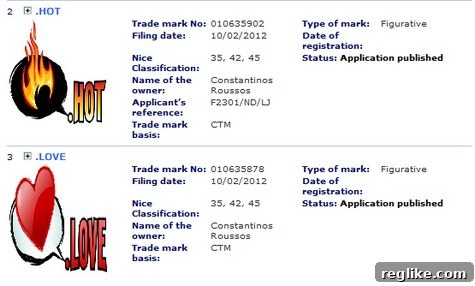
Roussos’s strategic vision extends far beyond just .MUSIC. Demonstrating a clear pattern of intent and a comprehensive strategy, he has significantly expanded his trademark portfolio, filing an additional 21 applications since December 30th of the preceding year. These filings are not for generic word marks but consistently feature stylized logos, indicating an effort to distinguish them and enhance their registrability, especially within the EUIPO system.
These graphical mark applications provide a glimpse into the diverse range of industries and concepts Roussos and his associates are targeting. The use of stylized logos is a deliberate tactic, making the marks less susceptible to rejection on grounds of being overly generic. This approach aims to create a unique identifier, not just for the word itself, but for a specific visual representation associated with that word, thereby strengthening the trademark claim.
The domains covered by these strategic applications include a wide array of potential gTLDs:
- .cool
- .hot
- .love
- .doctor
- .blog
- .app
- .lawyer
- .attorney
- .artist
- .video
- .movie
- .tunes
- .store
- .song
- .property
- .online
- .mus
- .law
- .home
- .film
- .fashion
This extensive list showcases an ambition to secure intellectual property rights across a broad spectrum of popular and potentially lucrative TLD categories, from lifestyle and entertainment to professional services and e-commerce. Each filing represents a potential future point of leverage in the competitive new gTLD application process.
The Influential Role of Dreyfus & Associes: A Connected Network
Facilitating Roussos’s ambitious trademark strategy is Dreyfus & Associes, a prominent French intellectual property law firm. The firm’s involvement is particularly significant due to its founder, Nathalie Dreyfus, whose deep connections within the internet governance ecosystem, including ICANN, NAF (National Arbitration Forum), and WIPO (World Intellectual Property Organization), add another layer of strategic depth to these filings.
Nathalie Dreyfus is a highly respected figure in the intellectual property and domain name fields. At the time of this report, she was a member of ICANN’s At-Large Advisory Committee (ALAC). The ALAC plays a crucial role in providing advice to ICANN on the interests of individual internet users worldwide, offering a voice to the global internet community. While ICANN’s ALAC membership page may experience temporary outages or changes (as indicated by a 404 error at the time of the original observation), her past or present involvement underscores her intimate understanding of ICANN’s policies and processes from an insider’s perspective. Such insight can be invaluable for clients navigating the complexities of new TLD applications.
Beyond her ICANN advisory role, Dreyfus’s influence extends into the realm of dispute resolution. She is not merely an attorney who assists companies in filing trademarks; she also provides legal counsel for Uniform Domain-Name Dispute-Resolution Policy (UDRP) complaints. Crucially, she is also a UDRP panelist. This dual role, while ethical within established guidelines, highlights a unique position where an individual contributes to the policy-making and dispute resolution mechanisms of the domain name system while simultaneously advising clients on strategies within that very system. Her multifaceted engagement provides an unparalleled perspective on the intersection of trademark law, domain names, and internet governance.
Dreyfus & Associes’ Broader Impact: Assisting StartingDot
The firm’s strategic assistance is not limited to Constantine Roussos. Dreyfus & Associes has also played a pivotal role in aiding another significant new TLD applicant, StartingDot, in their efforts to secure trademark registrations within the European Union. Similar to Roussos’s strategy, StartingDot has filed numerous trademark applications in the EU, many of which also feature stylized logos, mirroring the proactive approach seen with the dot-music and other Roussos-backed initiatives.
This consistent approach across different clients suggests a well-developed and effective strategy within Dreyfus & Associes for navigating the nuances of EU trademark law in the context of new gTLDs. The firm’s expertise in crafting applications that are likely to be accepted by the EUIPO, particularly for concepts that might be considered generic as simple text, is a testament to their specialized knowledge.
StartingDot’s trademark filings include a range of intriguing and potentially valuable TLDs:
- dot Luxe
- dot Restau
- dot Sport
- dot Moto
- dot Auto
- dot Vet
- dot archi
- dot design
- dot bio
- dot immo
- dot ski
While Dreyfus & Associes is explicitly listed as the representative on only some of these applications, their involvement with StartingDot underscores the firm’s broader engagement in shaping the intellectual property landscape for the upcoming wave of new gTLDs. This collaborative yet distinct approach indicates a coordinated effort to secure a strong foothold in various market segments before the TLD application process fully unfolds.
Implications for the Future of New gTLDs and Brand Protection
The ongoing strategic trademark filings by entities like Constantine Roussos and applicants assisted by Dreyfus & Associes signify a crucial shift in the landscape of new gTLDs. These actions move beyond mere speculation, introducing tangible legal instruments that could profoundly impact the allocation and operation of future top-level domains. The “games continue,” as the original article succinctly put it, but with increasingly sophisticated rules and players.
The potential for these trademarks to cause TLDs to get “tied up in the courts” is a significant concern for ICANN and for the broader domain name community. While ICANN’s application process is designed to be independent of pre-existing “dot-word” trademarks, the reality of global intellectual property law dictates that valid trademark registrations in key jurisdictions like the EU cannot be simply ignored. This creates a potential conflict between ICANN’s domain name allocation policies and national/regional trademark laws, setting the stage for complex legal battles and potentially lengthy delays for new gTLD applicants.
For brand owners, these developments highlight the critical importance of a comprehensive brand protection strategy that encompasses not only existing domain names but also potential future TLDs. Proactive monitoring and filing of trademarks for “dot-brand” TLDs, as well as considering defensive registrations for generic terms relevant to their business, will become increasingly vital. The rise of “frontrunning” demonstrates that the race for digital real estate extends far beyond simply registering a domain name; it now includes securing the very names of the domain extensions themselves.
Furthermore, the involvement of individuals with deep connections to ICANN and WIPO, like Nathalie Dreyfus, brings an added dimension to this strategy. It suggests an intricate understanding of both the legal and governance frameworks, enabling clients to navigate these complex waters with a highly informed approach. This interdisciplinary expertise, blending intellectual property law with internet policy, is becoming indispensable for anyone seeking to make a significant impact in the gTLD space.
Ultimately, these strategic trademark filings are a testament to the high stakes involved in the new gTLD program. They underscore the ongoing tension between a global, open internet and the localized, proprietary nature of intellectual property rights. As the domain name system continues to evolve, the interplay of legal strategy, technological innovation, and governance policy will undoubtedly shape the digital landscape for decades to come, demanding vigilance and adaptability from all stakeholders.