
A peculiar chapter recently unfolded in the ongoing saga of online brand protection, highlighting the complexities and occasional absurdities within the realm of cybersquatting claims. This specific incident involves a major player in the digital advertising landscape and a domain name that sparked an unusual interpretation.
Taboola, the prominent content recommendation and native advertising network, known for its ubiquitous “related content” boxes across countless websites, recently found itself in the spotlight for initiating a rather intriguing cybersquatting complaint. This tech giant, often associated with headlines promoting diet tips, celebrity transformations, or financial advice, lodged a formal complaint against the domain name tabooladies.com.
The company submitted its grievance to the National Arbitration Forum, one of the primary dispute resolution service providers for domain name disputes under the Uniform Domain-Name Dispute-Resolution Policy (UDRP). Initially, without knowledge of the complainant, one might ponder which entity would pursue a site seemingly dedicated to “Taboo Ladies.” However, the identity of the complainant quickly sheds light on the peculiar angle: Taboola appears to have perceived the domain “tabooladies” as a deliberate, albeit phonetically similar, derogatory reference to its brand, perhaps interpreting it as “Taboola Dies.”
The Curious Case of Taboola vs. TabooLadies.com
This raises several compelling questions regarding brand protection in the digital age. Was this domain flagged by an automated cybersquatting detection system, which identified a close phonetic resemblance to the Taboola trademark? And more critically, did a human being within Taboola’s legal or brand protection team review this flag and conclude that the domain warranted legal action? The perception of “Taboola Dies” is a significant leap from “Taboo Ladies,” highlighting a potential disconnect between automated triggers and human judgment in intellectual property enforcement.
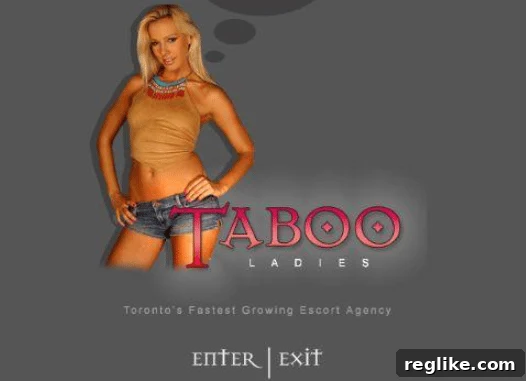
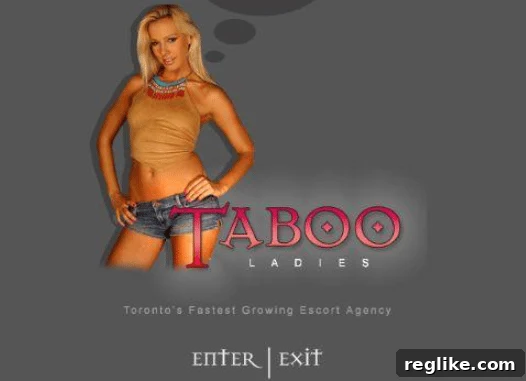
Delving into the history of tabooladies.com reveals an even more distinct context that further underscores the unusual nature of Taboola’s complaint. For a period, this domain served as the online presence for “Toronto’s fastest growing escort agency.” This past usage firmly establishes a clear and unrelated meaning for “Taboo Ladies,” pointing to a business model entirely distinct from Taboola’s content recommendation services. The domain eventually expired, as many do, and was subsequently re-registered by a new entity in November of the preceding year. This typical domain lifecycle event signifies a change of ownership and potentially a new intent for the domain’s use.
It is plausible that there was an additional underlying reason or context behind Taboola’s decision to pursue this complaint. Perhaps the new registrant intended to use the domain in a manner directly detrimental to Taboola’s brand, or perhaps there was an assumption of bad faith that wasn’t immediately apparent. However, without further details from Taboola’s side, which are typically presented in the UDRP complaint itself, the primary motivation appears to hinge on the phonetic similarity and the perceived threat of a “Taboola Dies” interpretation.
Understanding Cybersquatting and the UDRP
To fully appreciate the intricacies of this case, it’s essential to understand the framework designed to address domain name disputes. Cybersquatting refers to the act of registering, trafficking in, or using a domain name with the bad-faith intent to profit from the goodwill of a trademark belonging to someone else. It’s a prevalent issue that impacts businesses of all sizes, often leading to brand dilution, lost revenue, and reputational damage. The internet’s global nature makes brand protection a complex endeavor, requiring robust mechanisms to resolve conflicts efficiently.
The Uniform Domain-Name Dispute-Resolution Policy (UDRP) is the cornerstone of resolving most generic top-level domain (gTLD) disputes, such as .com, .net, and .org. It provides an administrative process, offering a faster and more cost-effective alternative to traditional litigation. Under the UDRP, a complainant must prove three critical elements to succeed:
- The domain name is identical or confusingly similar to a trademark or service mark in which the complainant has rights.
- The registrant (domain name holder) has no rights or legitimate interests in respect of the domain name.
- The domain name has been registered and is being used in bad faith.
Each of these elements carries a significant burden of proof for the complainant. For instance, merely proving confusing similarity is often insufficient if the registrant can demonstrate a legitimate interest or the absence of bad faith. Common legitimate interests include making a noncommercial or fair use of the domain, or being commonly known by the domain name even without trademark rights.
The Technicality That Thwarted the Complaint
In the specific case of Taboola vs. tabooladies.com, the UDRP process concluded with a denial of the complaint, not on the merits of the cybersquatting claim itself, but on a critical technicality. The domain registrant for tabooladies.com is located in China. Taboola, however, filed its complaint in English, without adequately justifying why an English-language proceeding was appropriate given the registrant’s location.
This seemingly minor procedural detail is, in fact, a crucial aspect of fairness and due process within international dispute resolution. UDRP rules dictate that proceedings should generally be conducted in the language of the registration agreement for the domain name, unless otherwise agreed by the parties or determined by the panel based on the circumstances. The purpose is to ensure that all parties can understand and effectively participate in the proceedings. If the registrant’s registration agreement was in Chinese, and they are located in China, the burden falls on the complainant to demonstrate why an English proceeding would not prejudice the registrant or why the registrant has a sufficient understanding of English to proceed. Without such justification, the complaint risks being rejected.
In this instance, Taboola failed to make a convincing case for why the UDRP panel should proceed in English. This could be due to a lack of evidence that the registrant conducts business in English, communicates in English, or targets English-speaking markets with the domain name. Consequently, the panel deemed the filing to be procedurally flawed, leading to the outright denial of the complaint. This denial highlights that even if a company believes it has a strong substantive case, procedural accuracy and adherence to fairness principles are paramount in UDRP proceedings.
Implications and Lessons for Brand Protection
The outcome of the Taboola vs. tabooladies.com case offers valuable insights for companies engaged in brand protection and for individuals navigating domain name disputes:
- Due Diligence in Filing: For large corporations like Taboola, this serves as a reminder that even with extensive resources, thorough due diligence is required before filing a UDRP complaint. This includes carefully assessing jurisdictional requirements and language considerations, especially in international disputes.
- The Human Element in Automation: The incident underscores the limitations of relying solely on automated detection systems for potential trademark infringements. Human oversight and nuanced judgment are crucial to distinguish between genuine threats and instances of mere phonetic similarity that lack malicious intent or direct brand relevance.
- Protecting Registrant Rights: The denial on a technicality reinforces the UDRP’s commitment to protecting the rights of domain registrants, ensuring that they receive fair treatment and can properly defend themselves against claims. Procedural fairness is a cornerstone of the policy.
- Defining “Confusingly Similar”: While not directly ruled upon due to the technicality, the case implicitly questions how broadly “confusingly similar” should be interpreted, particularly when a domain name has a clear, established meaning unrelated to the trademark. “Taboo Ladies” and “Taboola” are phonetically similar but semantically distinct.
- Cost-Benefit Analysis: Pursuing UDRP complaints incurs costs, both in terms of filing fees and legal resources. Companies must conduct a careful cost-benefit analysis, weighing the potential harm from a domain against the expenses and likelihood of success in a dispute.
Conclusion
The dispute involving Taboola and tabooladies.com stands as a fascinating illustration of the intricate challenges inherent in digital brand protection. It showcases how even a powerful global brand can encounter unforeseen hurdles, not just in proving the core elements of cybersquatting, but in adhering to the fundamental procedural requirements designed to ensure fairness across borders. While the specific merits of whether “tabooladies” could genuinely be interpreted as “Taboola Dies” in bad faith were never fully adjudicated, the case serves as a powerful reminder that in the global arena of domain name disputes, procedural precision and respect for international linguistic and legal norms are as critical as the substantive claims themselves. For businesses and domain registrants alike, this case underscores the ongoing need for vigilance, clear communication, and a thorough understanding of the UDRP framework to effectively navigate the complex landscape of online intellectual property rights.