
Former ICANN CEO Fadi Chehadé Appointed Co-CEO of Ethos Capital Amidst Lingering Controversy Over Failed .org Acquisition
In a significant development that has reignited discussions across the internet governance landscape, Fadi Chehadé, the former CEO of the Internet Corporation for Assigned Names and Numbers (ICANN), is now officially listed as a Co-CEO of Ethos Capital. This private equity firm gained considerable notoriety for its ultimately unsuccessful bid to acquire the Public Interest Registry (PIR), the non-profit entity responsible for managing the .org top-level domain. The official announcement on Ethos Capital’s corporate website marks a pivotal shift, bringing a key figure from internet governance directly into a leadership role at a firm that has been at the center of intense scrutiny regarding the commercialization of public interest assets. This move is particularly impactful for stakeholders in the domain name industry and beyond, prompting renewed examination of transparency and accountability in the digital sphere.
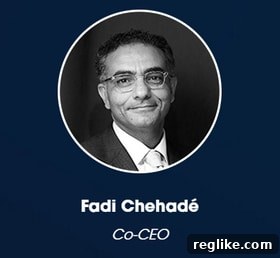
The journey of Fadi Chehadé from the pinnacle of internet administration to a top executive position at Ethos Capital has been closely watched by experts and advocates alike. As ICANN CEO from 2012 to 2016, Chehadé oversaw critical periods of internet evolution, including the landmark transition of ICANN’s stewardship away from the U.S. government. During his tenure, he played a crucial role in shaping global internet policy and the framework for domain name management. His deep understanding of the domain name system (DNS) and the intricate workings of global internet policy makes his new role particularly noteworthy, especially given Ethos Capital’s contentious history with the .org domain. His presence at Ethos Capital, particularly in such a senior capacity, inevitably raises questions about the interplay between regulatory bodies and commercial entities in the internet ecosystem, and how former leaders might influence future strategic directions in this sensitive space.
Ethos Capital’s attempt to acquire the Public Interest Registry (PIR) for an estimated $1.135 billion was undeniably one of the most polarizing events in recent internet history, sparking a firestorm of debate. The .org domain, established in 1985, has historically served as a digital home for non-profit organizations, charities, educational institutions, and various community groups worldwide. It has cultivated a reputation as a trusted, non-commercial space vital for public service initiatives. The proposed sale of PIR to a private equity firm, whose fundamental motive is profit generation for its investors, immediately sparked widespread alarm among the global internet community. Critics argued vehemently that such an acquisition would fundamentally alter the nature and mission of .org, potentially leading to detrimental consequences. These concerns included the possibility of significantly increased registration fees, a relaxation of current censorship protection policies, or even the potential sale of sensitive user data to third parties. Such outcomes, it was feared, would severely undermine the domain’s public trust and mission, jeopardizing the very foundations upon which countless non-profit initiatives operate online. The proposal ignited a fierce backlash from a broad coalition of non-profits, digital rights advocates, and individual internet users worldwide, all of whom voiced strong opposition to the commercialization of this vital public good.
The controversy surrounding the .org sale reached its zenith when ICANN, the global non-profit organization responsible for coordinating the internet’s unique identifiers, was compelled to intervene. After months of intense deliberation, extensive public consultation, and carefully considering the overwhelming sentiment from the global internet community, ICANN ultimately denied the transaction in April 2020. This landmark decision was widely hailed as a significant victory for the multi-stakeholder model of internet governance and a powerful testament to the efficacy of collective community action in protecting the public interest. ICANN cited several compelling reasons for its rejection, including the perceived lack of transparency in the deal, the deep and widespread opposition from the .org community, and significant concerns about how the acquisition by a private equity firm would impact PIR’s ability to maintain its unwavering commitment to the non-profit community over the long term. The rejection underscored ICANN’s crucial role as a guardian of the internet’s stability and public trust, demonstrating its willingness to intervene decisively when commercial interests are seen to threaten the foundational principles and public good mandates of certain top-level domains. This decision sent a clear message that not all internet assets are purely commodities to be traded.
Fadi Chehadé’s involvement with Ethos Capital was initially shrouded in considerable secrecy, adding yet another complex layer of controversy to the already contentious .org deal. When Ethos Capital first publicly announced its intention to acquire PIR, Chehadé’s name was notably absent from the firm’s public-facing materials, including its official website and press releases. This omission fueled skepticism and a sense of unease within the community. However, his connection to Ethos Capital quickly became public knowledge through diligent investigative work, specifically by tracing Whois data for one of Ethos Capital’s domain names. This digital breadcrumb trail ultimately revealed Chehadé’s indirect but significant role. Faced with mounting evidence and intensifying public scrutiny, Ethos Capital eventually admitted that Chehadé had been acting in an advisory capacity on the deal. This belated disclosure, however, raised serious questions about transparency and ethical conduct, particularly given Chehadé’s prior leadership role at ICANN, the very organization tasked with the critical responsibility of approving or denying such significant transactions. Critics argued that his advisory role, unannounced initially, created a strong perception of a conflict of interest or, at the very least, a significant ethical concern, given his intimate and unparalleled knowledge of ICANN’s internal workings, policies, and decision-making processes. Such a perceived conflict could undermine trust in the impartiality of internet governance.
For an extended period following the public revelation of Chehadé’s advisory capacity, the Ethos Capital website maintained a remarkably lean executive roster, listing only two key individuals: CEO Erik Brooks and Chief Purpose Officer Nora Abusitta-Ouri. The presence of Abusitta-Ouri on this limited team further fueled discussions, as she had also previously worked alongside Chehadé at ICANN, serving as Vice President of Strategic Engagement. Her specific role as Chief Purpose Officer at Ethos Capital, a position seemingly designed to address the public interest concerns often associated with private equity acquisitions, was viewed by some as a strategic attempt to lend credibility to the firm’s claims of understanding and respecting the non-profit ethos, despite the inherently commercial nature of its proposed .org acquisition. This initial limited public-facing team contrasted sharply with the immense scale of the proposed multi-billion dollar acquisition, leading many observers to speculate about the full extent of the firm’s operational structure and the potential involvement of other key figures behind the scenes. The lack of detailed information contributed to an atmosphere of uncertainty and distrust among those scrutinizing the deal.
The recent change to Ethos Capital’s website, which now prominently features Fadi Chehadé as a Co-CEO, appears to be a very recent and deliberate update. Observations from internet archives, such as the widely used Wayback Machine, indicate that a capture from as recently as June 15 did not display Chehadé in this elevated leadership role. The discrepancy was notably spotted and highlighted by astute industry expert Elliot Silver, drawing immediate and widespread attention from the domain name community. This sudden elevation to Co-CEO from an undisclosed, or at best, an acknowledged advisory role, has sparked further intense speculation. Many industry observers are now left to ponder whether Chehadé was, in fact, pegged for a co-CEO position all along, with his official title intentionally omitted from the website in the initial, highly sensitive stages to avoid generating even more controversy during the turbulent period of the .org acquisition attempt and its subsequent rejection. Such a strategic move, if confirmed, would strongly suggest a calculated effort to manage public perception and mitigate potential backlash against the firm and its leadership, especially considering the intense and sustained scrutiny Ethos Capital has faced since its inception.
Beyond Chehadé’s appointment, the executive team at Ethos Capital has expanded considerably since the early days of its public profile. The website now lists a total of eight employees, a notable increase from the initial two. Significantly, a remarkable three of these eight individuals boast a background at ICANN, including Fadi Chehadé himself. This notable concentration of former ICANN officials within Ethos Capital raises important questions about the pervasive “revolving door” phenomenon, where individuals transition from regulatory or governance roles to positions within the very entities they once oversaw or interacted with. Such transitions, while not inherently unlawful, frequently lead to perceptions of potential conflicts of interest, as former insiders bring invaluable institutional knowledge, strategic insights, and an extensive network of connections that could provide a distinct advantage in commercial dealings within the sector. It further fuels concern that their expertise, initially developed and honed to serve the broader public interest and maintain the integrity of the internet, might now be leveraged primarily for private gain, potentially blurring the ethical lines of internet governance.
Another prominent former ICANN official now firmly embedded within Ethos Capital is Allen Grogan, who serves as an Executive Partner. Grogan previously held the highly significant position of Chief Contract Compliance Officer at ICANN, a critical role that involved ensuring that contracted parties, including domain registries like PIR, rigorously adhered to their contractual agreements with ICANN. His profound understanding of compliance frameworks and registry operations would be invaluable to any domain-focused entity. Grogan’s LinkedIn page further confirms his association with Ethos Capital, stating unequivocally that he began advising the firm in September of the previous year. His involvement, much like Chehadé’s, was not immediately public knowledge. It only came to light after ICANN specifically requested information on former employees involved with Ethos Capital during its diligent review of the contentious .org sale proposal. This recurring pattern of delayed disclosure for key personnel with strong, recent ICANN ties further exacerbates concerns about transparency and the ethical boundaries between internet governance and private enterprise. The combined experience of Chehadé, Grogan, and Abusitta-Ouri offers Ethos Capital an unparalleled and insider understanding of ICANN’s complex regulatory framework, operational procedures, and decision-making psyche, an invaluable asset that would undoubtedly prove highly beneficial in future ventures within the intricate and highly regulated domain industry.
Adding yet another layer to this intricate web of connections that characterizes the domain name industry, Fadi Chehadé’s LinkedIn profile still prominently lists him as a partner at Abry Partners. Abry is a major private equity firm that notably acquired Donuts, one of the largest and most influential domain name registry operators, in 2018. Erik Brooks, the current CEO of Ethos Capital, also has a prior association with Abry, having worked there previously. This deep-seated connection to Abry is highly significant because it highlights a broader and accelerating trend of private equity firms investing heavily in various segments of the domain name industry. The strategic move by Abry to acquire Donuts signaled a growing and robust interest in monetizing the backend infrastructure and services of the internet. The intricate, interlocking relationships between these individuals and firms underscore the highly interconnected nature of the private equity world and the domain industry, suggesting a sophisticated strategic network that influences various critical aspects of internet infrastructure and governance. These interdependencies raise ongoing and crucial questions about how substantial investment decisions impact the broader public interest, the stability, security, and accessibility of the domain name system, and the overall future direction of the internet.
The formal appointment of Fadi Chehadé as Co-CEO of Ethos Capital, particularly following the firm’s failed but highly publicized attempt to acquire the .org domain, represents a pivotal moment for understanding the evolving and often contentious dynamics between internet governance bodies and commercial interests. While the highly controversial .org sale was ultimately rejected due to overwhelming community opposition and ICANN’s intervention, the ongoing presence and increasingly prominent roles of former ICANN officials at Ethos Capital ensure that the firm remains a focal point for discussions on transparency, accountability, and potential conflicts of interest within the dynamic domain name space. As the digital landscape continues to expand and its economic value grows, the scrutiny on such transitions and the ethical implications of the “revolving door” phenomenon will undoubtedly intensify. Stakeholders across the globe will continue to demand greater clarity, robust ethical frameworks, and unwavering commitment to public interest principles to safeguard the future of the internet and its foundational structures.