
In an inspiring display of civic responsibility and technological ingenuity, Canadian college students launched Flatten.ca, a pioneering platform designed to empower citizens in the collective effort to “flatten the curve” during the global COVID-19 pandemic. This initiative quickly garnered attention as a powerful example of how community-driven projects can significantly augment official public health responses.
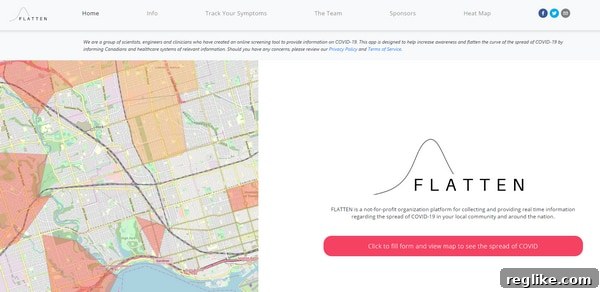
The phrase “flattening the curve” became a global rallying cry, signifying the critical need to slow the spread of the novel coronavirus and prevent healthcare systems from being overwhelmed. While governments and health organizations worked tirelessly, the true impact of this crisis required a multi-faceted approach, often calling upon the innovation and dedication of individuals. It is within this context that a group of quick-thinking Canadian college students stepped up, creating a digital tool to contribute meaningfully to this monumental task. Their choice of domain, Flatten.ca, was not only memorable but perfectly encapsulated their mission.
Understanding the Imperative: What Does “Flattening the Curve” Truly Mean?
Before delving deeper into the remarkable initiative of Flatten.ca, it’s essential to grasp the core concept it addresses. “Flattening the curve” refers to strategies aimed at reducing the peak number of COVID-19 cases occurring simultaneously, thereby spreading infections over a longer period. This doesn’t necessarily reduce the total number of people who contract the virus, but it significantly lessens the strain on hospitals, intensive care units, and healthcare professionals. Without such measures, a sharp, high peak of infections can lead to a collapse of medical resources, resulting in higher mortality rates and poorer patient outcomes.
Measures like social distancing, remote work, school closures, and rigorous hygiene practices are all designed to contribute to this flattening effect. However, the effectiveness of these measures heavily relies on public cooperation and, crucially, a clear understanding of the situation on the ground. This is precisely where citizen-led initiatives like Flatten.ca demonstrate immense value, providing a complementary layer of data and engagement that official channels might struggle to capture in real-time.
The Genesis of a Solution: Students Take Action
The story of Flatten.ca begins, like many impactful innovations, out of necessity and a desire to contribute. When the COVID-19 crisis necessitated the closure of college campuses, these Canadian students, instead of succumbing to idleness, channeled their skills and energy into a constructive project. On March 19, they hand-registered the domain Flatten.ca, a testament to their swift action and clear vision. This immediate response highlights the power of youthful initiative and the ability of digital natives to rapidly deploy solutions in a crisis.
Their vision was simple yet profound: create a platform where individuals could self-report potential COVID-19 symptoms. This wasn’t intended to replace official medical diagnosis or reporting but rather to provide a supplementary, community-driven data stream. The underlying principle was to leverage collective intelligence to paint a more granular picture of potential viral activity across various communities in Canada, helping to identify emerging trends and hotspots faster than official, laboratory-confirmed data might allow.
How Flatten.ca Works: A Community-Powered Heat Map
At its core, Flatten.ca functions as a sophisticated, anonymous self-reporting system. Users experiencing symptoms consistent with COVID-19 can visit the website and input their current health status. This data, anonymized to protect privacy, is then aggregated and transformed into a visual “heat map.” This map provides a dynamic, color-coded representation of potential cases and symptomatic clusters across different geographic regions within Canada.
The value of such a system is manifold. Official data on verified COVID-19 cases often comes with a time lag due to testing capacity, lab processing times, and reporting protocols. Self-reported symptom data, while not clinical diagnoses, can offer an earlier indicator of viral spread. By augmenting official statistics, Flatten.ca helps health authorities, community leaders, and even individuals make more informed decisions. For instance, a sudden surge in self-reported symptoms in a particular neighborhood on the heat map could alert local officials to conduct targeted testing or deploy public health messaging more proactively, potentially curbing further spread before it becomes unmanageable.
This initiative exemplifies the concept of “citizen science” applied to public health. It empowers individuals to become active participants in disease surveillance, turning everyday observations into actionable data. The user interface is designed to be intuitive and accessible, ensuring that a broad demographic can easily contribute, further enhancing the richness and accuracy of the collected data.
The Strategic Advantage of a Brilliant Domain Name
One of the often-underestimated components of any successful online venture, especially one with a public health mission, is its domain name. The creators of this platform demonstrated remarkable foresight by choosing “Flatten.ca.” This simple, memorable, and highly relevant domain name plays a crucial role in its effectiveness for several reasons:
- Clarity of Purpose: “Flatten.ca” immediately communicates the website’s objective. There is no ambiguity; users instantly understand what the site is about and why it exists.
- Memorability: In a crisis, information needs to be disseminated rapidly and remembered easily. A short, evocative domain name like this sticks in people’s minds, making it easier to share by word-of-mouth or recall when needed.
- SEO Benefits: For search engines, a domain name that directly relates to the core mission can offer significant SEO advantages. When people search for “flatten the curve Canada” or similar terms, a domain like Flatten.ca is naturally more relevant, boosting its visibility and organic reach.
- Branding and Trust: The .ca extension instantly identifies it as a Canadian initiative, fostering a sense of local relevance and trust among the target audience. The name itself, being universally understood in the context of the pandemic, lends credibility.
The domain name wasn’t just available; it was perfectly chosen. This highlights an important lesson for any public-facing digital project: a well-selected domain is a foundational element for accessibility, branding, and overall impact.
Beyond the Code: The Broader Impact and Lessons
The Flatten.ca initiative, as highlighted by this CTV News story, resonated deeply for several reasons. Firstly, it showcased the incredible potential of young minds to contribute constructively during challenging times. These students, forced home from their academic pursuits, transformed their unexpected downtime into a period of innovation and service. Their proactive stance serves as an inspiration, demonstrating that meaningful contributions can come from anywhere, at any time.
Secondly, it underscored the growing importance of “civic tech” – technology developed by citizens for the public good. Flatten.ca is a shining example of how grassroots efforts, powered by readily available web technologies, can fill critical gaps in public infrastructure and enhance governmental responses. It fostered a sense of collective agency, allowing ordinary citizens to feel like they were actively participating in the fight against the pandemic, beyond just observing public health guidelines.
The platform also opened a crucial dialogue about the role of unofficial data in public health. While official, verified data is paramount, supplementary data from self-reporting tools can provide a crucial leading indicator. It offers a more agile and real-time snapshot of community health, which can be invaluable for predictive modeling and resource allocation, especially in the early stages of an outbreak or in areas with limited testing capabilities.
The Future of Community-Driven Health Initiatives
The success and utility of platforms like Flatten.ca hint at a future where community involvement and digital tools play an even more integrated role in public health. Such initiatives can evolve to track other public health metrics, gather feedback on policy effectiveness, or even facilitate localized support networks. The core principles – leveraging collective data, empowering individuals, and utilizing accessible technology – remain universally applicable.
Flatten.ca stands as a testament to the ingenuity and community spirit prevalent during times of crisis. It’s a powerful reminder that even amidst global challenges, innovation thrives, especially when driven by a clear purpose and a desire to make a difference. The students behind this initiative not only created a valuable tool but also ignited a spark of hope, showcasing how technology and civic engagement can intersect to build more resilient and informed communities.
Our sincere thanks go to Bill Sweetman for bringing this remarkable initiative to our attention, highlighting the profound impact that thoughtful digital projects can have.