
UDRP Panel Inconsistency: A Deep Dive into The Food Emporium Cases
The Uniform Domain-Name Dispute-Resolution Policy (UDRP) was established to provide a streamlined, administrative process for resolving conflicts between trademark holders and domain name registrants, particularly in cases of alleged cybersquatting. While generally effective, a persistent concern within the domain name industry and legal community revolves around the perceived inconsistency of UDRP panel decisions. Many practitioners, brand owners, and domain investors have observed that panels, despite applying the same policy, can arrive at vastly different conclusions based on similar facts or offer conflicting interpretations of key UDRP elements. For those seeking clear precedents or predictable outcomes, this variability can be a significant source of frustration and uncertainty.
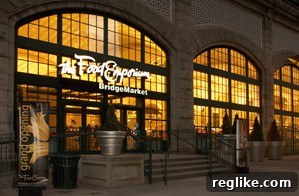
If you’ve ever suspected that UDRP panel decisions sometimes lack a consistent application of the rules, you don’t need to look any further than the compelling case study of New York grocer, The Food Emporium. This fascinating series of events involved the company filing three separate actions under UDRP for the domain names FoodEmporium.com, FoodEmporium.net, and FoodEmporium.org. The outcome? A perplexing split decision: The Food Emporium won the case for FoodEmporium.org but surprisingly lost the complaints filed against both FoodEmporium.com and FoodEmporium.net. This trio of cases serves as a potent example, laying bare the profound inconsistencies that can plague UDRP proceedings and offering invaluable lessons for both trademark owners and domain name registrants.
Understanding the UDRP Framework: A Quick Review
Before delving into the specifics of The Food Emporium cases, it’s essential to briefly recap the core tenets of the UDRP. Under this policy, a complainant must prove three critical elements to succeed in transferring a domain name:
- The domain name is identical or confusingly similar to a trademark or service mark in which the complainant has rights.
- The registrant (respondent) has no rights or legitimate interests in respect of the domain name.
- The domain name has been registered and is being used in bad faith.
All three elements must be established by the complainant on the balance of probabilities. The complexity arises in the interpretation and application of these elements, particularly “legitimate interests” and “bad faith,” where panelist discretion and varying legal perspectives often come into play.
The Food Emporium Trilogy: A Closer Look at the Three Cases
The Food Emporium, a well-known grocery chain primarily operating in the New York metropolitan area, initiated these disputes to protect its brand. The contrasting outcomes across what might seem like very similar domain names (just different top-level domains) highlight the intricacies and potential pitfalls of UDRP. While there were certainly factual differences in each case, including the identity and defense strategies of the registrants, a closer examination reveals discrepancies in the panels’ reasoning that transcend these differences.
Case 1: FoodEmporium.com – The Generic Term Defense Prevails
The dispute over FoodEmporium.com involved one of the most prominent names in the domain investing world: Frank Schilling’s Name Administration. The defense of this domain was expertly handled by renowned domain attorney John Berryhill. Berryhill successfully argued that the term “Food Emporium” is, in fact, generic and descriptive, referring to a large store specializing in food. He also presented evidence that Schilling, as a professional domain investor, registered the name for its generic value and was unaware of the specific New York grocery chain at the time of registration.
The panel, in this instance, sided with the respondent, making a key finding that speaks directly to the concept of legitimate interest and bad faith. The decision states:
“Respondent’s use of the generic term in its domain name as a means of attracting Internet users to its website to access hyperlinks that offer goods and services related to the generic term is legitimate.”
This ruling strongly suggests that operating a parked page with generic links, when the domain itself is considered generic and was registered without specific knowledge of the complainant’s trademark, constitutes a legitimate use. This finding would become a point of stark contrast when compared to another panel’s decision in the .org case.
Case 2: FoodEmporium.net – Affirmative Defense and Timing of Rights
Similar to the .com case, FoodEmporium.net was owned by Name Media, a company widely recognized for its portfolio of generic domain names, often operating under the BuyDomains brand. Name Media mounted a robust defense, providing affidavits that affirmed its practice of registering domain names based on their generic and descriptive qualities, not with the intention of targeting specific trademarks. Crucially, they also attested that they had no knowledge of The Food Emporium grocery chain when registering the domain.
An additional element in this case was the timing of the trademark. While The Food Emporium claimed common law rights extending back to the 1980s, the official trademark registration was filed after Name Media’s initial domain registration. This chronological detail further bolstered the respondent’s argument against bad faith registration. The panel ultimately concluded that the domain was not registered in bad faith, again highlighting the importance of the registrant’s intent and the generic nature of the term. The complaint was denied, reinforcing the idea that legitimate generic registration, even with parking, can withstand a UDRP challenge.
Case 3: FoodEmporium.org – The Unresponsive Registrant and Default Win
The narrative took a different turn with FoodEmporium.org. This domain was protected by WHOIS privacy through Intercosmos, and critically, the registrant never responded to the UDRP complaint. In UDRP proceedings, a failure to respond often leads to a default judgment in favor of the complainant, as the panel is then left only with the complainant’s assertions and evidence.
Without a respondent to present a defense, the panel found it easy to conclude that the registrant had no legitimate interest and that the domain was being used in bad faith. This decision, however, contained reasoning that directly conflicted with the .com panel’s findings regarding the legitimacy of parked pages. The .org panel stated:
“Respondent is using the foodemporium.org domain name to advertise links to third-party competitors. The Panel finds that such use is not a bona fide offering of goods or services under Policy ¶ 4(c)(i) or a legitimate noncommercial or fair use under Policy ¶ 4(c)(iii).”
Here, a parked page linking to competitors was explicitly deemed *not* legitimate. Furthermore, the panel on .org found the domain “confusingly similar” without much deliberation, whereas the .com panel considered The Food Emporium’s case for confusing similarity to be “very close” but ultimately still allowed the defense to stand.
The Glaring Contradictions: A Side-by-Side Analysis of Panel Reasoning
The outcomes of these three cases are indeed perplexing, particularly when juxtaposing the reasoning of the panels:
- Legitimacy of Parked Pages: The .com panel found a parked page with related hyperlinks to be “legitimate use” because the underlying term was generic. In stark contrast, the .org panel explicitly stated that using a domain to “advertise links to third-party competitors” (a common function of parked pages) is “not a bona fide offering of goods or services” and “not a legitimate noncommercial or fair use.” This is a fundamental disagreement on what constitutes legitimate use under UDRP policy, even if one case had an active defense and the other did not. While a lack of response impacts the outcome, it should not fundamentally change the *interpretation* of the policy itself regarding common domain monetization practices.
- Assessment of Confusing Similarity: The .com panel found the case for confusing similarity to be “very close,” indicating a nuanced, borderline assessment. The .org panel, on the other hand, simply stated it was confusingly similar without such qualification. While this might seem minor, it reflects a difference in the perceived strength of the complainant’s primary argument even before considering defenses.
These discrepancies are not merely academic; they have real-world implications. They create an unpredictable environment where the success of a complaint or defense can hinge not just on the facts, but on the subjective interpretation of a particular panelist on a given day. This erodes confidence in the UDRP system’s ability to deliver consistently fair and predictable results.
Why Do These Inconsistencies Occur?
Several factors contribute to the UDRP’s perceived inconsistencies:
- Panelist Subjectivity: UDRP panels consist of individual legal experts, each bringing their own background, legal philosophy, and interpretation of UDRP policy. Unlike traditional court systems with binding precedents and appellate bodies, UDRP decisions are generally not binding on future panels, though WIPO and NAF maintain informal digest databases of past decisions.
- Lack of Formal Precedent: While WIPO and NAF publish digests that provide guidance, there is no formal system of binding precedent. A panel is not legally obligated to follow a previous decision, even if the facts are nearly identical.
- Varying Interpretations of Key Terms: Concepts like “generic,” “bad faith,” and “legitimate interest” are not always clear-cut and can be subject to diverse interpretations depending on context, industry, and individual panelist views.
- Burden of Proof and Evidence: The quality and quantity of evidence presented by both parties can heavily influence a panel’s decision. In cases like FoodEmporium.org, the absence of a respondent’s evidence severely limits the panel’s ability to consider alternative narratives.
- Single-Member vs. Three-Member Panels: While the Food Emporium cases were likely single-member panels (common for initial filings), three-member panels, when requested, can sometimes introduce more diverse opinions but also potentially more debate, though they aim for consensus.
Lessons for Domain Owners and Trademark Holders
The Food Emporium cases offer an excellent case study for anyone involved in domain name disputes. They underscore the critical importance of strategy, evidence, and legal representation.
For Domain Owners (Respondents):
- Always Respond to Complaints: The outcome of FoodEmporium.org is a stark reminder: failing to respond to a UDRP complaint almost guarantees a loss. A response, even if brief, allows you to present your side of the story.
- Document Everything: Maintain clear records of your intent behind registering generic or descriptive domain names. Evidence such as historical portfolio data, business plans, and declarations of non-knowledge of specific trademarks can be crucial.
- Understand the Generic Term Defense: If your domain name is generic or descriptive, you have a strong defense. Be prepared to argue why the term is generic and how your use is legitimate, as exemplified by the FoodEmporium.com and .net cases.
- Consider Expert Legal Counsel: The successful defenses by John Berryhill demonstrate the value of experienced legal representation in navigating the nuances of UDRP policy and effectively presenting your case.
- Monitor Your Domains: Be aware of potential UDRP threats and act proactively.
For Trademark Holders (Complainants):
- Thorough Due Diligence: Before filing a complaint, thoroughly research the domain registrant, their history, the domain’s use, and any potential generic or descriptive meanings of your trademark. This can save time and resources.
- Strong Evidence is Key: Ensure you can clearly prove all three UDRP elements, especially bad faith registration and use, with compelling evidence. Generic terms and registrations preceding your trademark can be significant hurdles.
- Beware of Generic Terms: Understand that even strong trademarks can have generic components. If your mark is descriptive, proving bad faith against a generic use can be challenging.
- File Promptly: While not a factor in these cases, timely filing can strengthen your argument against bad faith and help avoid claims of laches.
Conclusion: Navigating the UDRP Landscape with Caution
The UDRP remains an indispensable tool for trademark protection in the digital age, offering a relatively quick and cost-effective alternative to traditional litigation. However, The Food Emporium cases serve as a powerful testament to the inherent challenges within the system, particularly the alarming inconsistencies that can arise between different panels’ interpretations and applications of the policy. These gross inconsistencies highlight that success in a UDRP dispute is not always a given, even for what might appear to be straightforward cases.
For domain name owners, this means that merely owning a descriptive or generic domain doesn’t guarantee immunity from a UDRP complaint, but a well-documented defense is paramount. For brand owners, it emphasizes the need for careful consideration and robust evidence before initiating a complaint, especially when dealing with potentially generic terms or established domain registrants. Ultimately, understanding these nuances and preparing meticulously are essential steps in successfully navigating the often-unpredictable landscape of online domain disputes.