
Elevate Your Online Security: The Unmatched Benefits of Physical FIDO U2F Security Keys
In an increasingly digital world, robust online security is paramount. While two-factor authentication (2FA) has become a standard defense, not all 2FA methods are created equal. This article delves into the transformative advantages of physical security keys, specifically those leveraging the FIDO U2F standard, highlighting how they offer both superior protection and a remarkably faster, more streamlined login experience compared to traditional authentication methods.
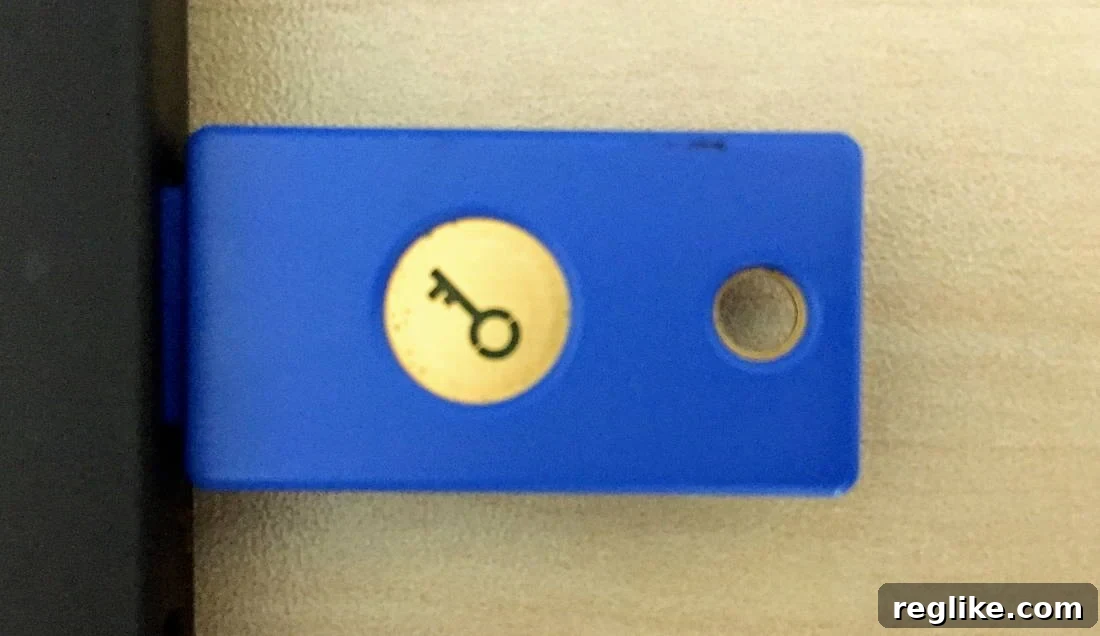
The Evolution of Two-Factor Authentication: From Codes to Keys
For years, two-factor authentication has been the go-to solution for adding an extra layer of security beyond just a password. Initially, SMS-based one-time passcodes (OTPs) gained popularity due to their simplicity. However, vulnerabilities like SIM swapping and the interception of text messages quickly exposed their weaknesses, leaving users susceptible to sophisticated phishing attacks.
The next iteration saw the rise of authenticator apps, generating time-based one-time passcodes (TOTP) that were less susceptible to SMS interception. While a significant improvement, these app-generated codes still require manual input and can be tricked by advanced phishing sites that mimic legitimate login pages, tricking users into entering their code into a malicious site.
Enter physical security keys, a game-changer in the realm of authentication. These devices, based on standards like FIDO U2F (Universal 2nd Factor) and the newer WebAuthn, represent the pinnacle of user-friendly, phishing-resistant security. They leverage cryptographic principles to verify your identity, making it virtually impossible for attackers to impersonate you, even if they have your password.
Understanding FIDO U2F: The Gold Standard in Security
FIDO (Fast IDentity Online) Alliance is an open industry association that aims to reduce the world’s over-reliance on passwords. FIDO U2F is a specific protocol developed by the FIDO Alliance that enables internet users to securely access online services with a physical key. When you use a FIDO U2F key, it doesn’t just send a code; it performs a cryptographic challenge-response with the website you’re trying to access.
Here’s a simplified breakdown of how it works: When you register a FIDO key with a service (like GoDaddy or Google), the key generates a unique cryptographic key pair for that specific service – a private key that stays on the device and a public key that is shared with the service. During login, after you enter your username and password, the service sends a “challenge” to your browser. Your FIDO key, upon your physical touch, uses its private key to sign this challenge and sends the signed response back. The service then verifies this signature using the public key it stores. This entire process ensures that only your legitimate key can authenticate, rendering phishing attempts useless because the key communicates directly with the legitimate website’s domain, refusing to authenticate with lookalike phishing sites.
Unrivaled Security: Why Physical Keys Are Superior
The primary advantage of physical FIDO U2F security keys lies in their unparalleled security against common cyber threats:
- Phishing Resistance: This is the most critical benefit. Unlike passwords or OTPs, FIDO keys are inherently phishing-resistant. They cryptographically bind your login to the specific domain you are trying to access. If an attacker sets up a fake website (e.g., “g0daddy.com” instead of “godaddy.com”), your key will refuse to authenticate because the domain doesn’t match the one it was registered with.
- Malware and Man-in-the-Middle Protection: Since the authentication process happens directly between the physical key and the service, it bypasses vulnerabilities in your computer’s software or network. Even if your computer is compromised with malware, the key’s cryptographic operations remain secure on the hardware itself.
- Hardware-Level Protection: The cryptographic secrets (private keys) are securely stored within the tamper-resistant hardware of the key, making them incredibly difficult for attackers to extract.
- Simplicity and Universal Standard: FIDO U2F and WebAuthn are open standards, meaning keys from various manufacturers (like YubiKey, Google Titan Security Key, etc.) work across a multitude of platforms and services, providing consistent, high-level security.
The Speed and Simplicity Factor: A Seamless Login Experience
Beyond security, physical keys revolutionize the user experience by making logins significantly faster and less cumbersome. Let’s compare the typical login process with an authenticator app versus a physical key:
Traditional App-Based 2FA Login:
- Navigate to the login page (e.g., GoDaddy.com).
- Enter username and password.
- Realize you need your phone for the 2FA code.
- Scramble to locate your phone (which might be in another room).
- Unlock your phone and open the authenticator app.
- Wait for the new code to generate (if the old one expired).
- Carefully type the six-digit code into your laptop or desktop browser.
- Finally, gain access.
This multi-step process is not only time-consuming but also prone to errors and frustration, especially when codes expire quickly or your phone isn’t immediately at hand.
Physical Security Key Login:
- Navigate to the login page (e.g., GoDaddy.com).
- Enter your username and password.
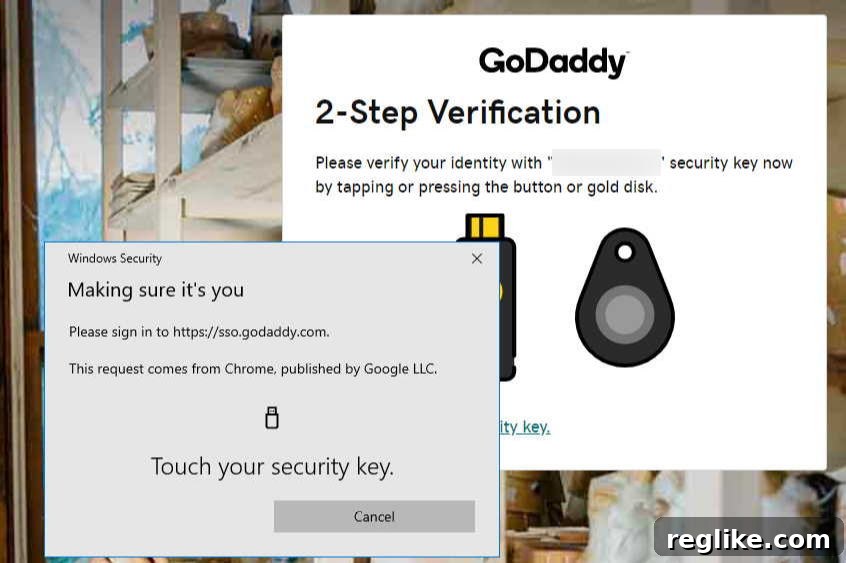
- Simply touch your physical key, which is already inserted into a USB port or wirelessly connected via Bluetooth/NFC.
- Instantly gain access.
The difference is stark. The physical key streamlines the authentication to a single, intuitive touch. There’s no frantic search for your phone, no app to open, and no codes to type. It’s a frictionless experience that saves precious seconds and eliminates potential points of frustration with every login.
GoDaddy’s Forward-Thinking Approach to Security
GoDaddy, a leading domain registrar and web hosting company, has been proactive in adopting these advanced security measures. At industry events like NamesCon, they have actively promoted the adoption of FIDO U2F physical security keys for two-factor authentication, recognizing their superior security and user experience benefits.
For existing GoDaddy users, the transition to a physical key is seamless and highly recommended. Prior to this, a notable challenge existed: users couldn’t simultaneously use a physical security key for logging into GoDaddy.com via a web browser and then rely on an app-based 2FA method for the GoDaddy Investor app on iOS. This often forced users into a less secure or more inconvenient method across their devices.
Fortunately, GoDaddy addressed this limitation with a significant update to its iOS Investor app. This crucial enhancement now allows users to leverage the superior security of a physical key for web logins while still having the flexibility to use an app-based authenticator (like Google Authenticator or Authy) as a backup or for mobile app access. This hybrid approach offers the best of both worlds: robust primary security with the physical key and convenient, albeit slightly less secure, backup options for mobile scenarios. It’s crucial to set up app-based authentication as your backup method to ensure you always have access, even if your physical key is misplaced.
Implementing Physical Security Keys: Best Practices
Adopting physical security keys is straightforward, but a few best practices can ensure maximum security and convenience:
- Purchase Reliable Keys: Invest in keys from reputable manufacturers like Yubico (YubiKey), Google, or Thetis.
- Register Multiple Keys: Always register at least two physical keys with your critical accounts – one for daily use and another as a backup, stored securely in a separate location. This prevents lockout if your primary key is lost or damaged.
- Set Up Backup Methods: While physical keys are superior, always configure a backup 2FA method (like an authenticator app or printed recovery codes) as a last resort, especially for services that support it. This is precisely what GoDaddy now facilitates for its mobile app users.
- Familiarize Yourself with Usage: Understand if your key requires a touch, whether it’s USB-A, USB-C, or supports NFC/Bluetooth for mobile device compatibility.
The Future is Secure: Beyond GoDaddy
The adoption of FIDO-based security keys is rapidly growing beyond GoDaddy. Major tech companies like Google, Microsoft, Facebook, Twitter, Dropbox, and many others now support these devices, recognizing their pivotal role in safeguarding user accounts. The FIDO Alliance continues to innovate with the WebAuthn standard, paving the way for a truly passwordless future where your physical key (or even biometrics on your device) becomes your sole, secure credential.
Conclusion
In the evolving landscape of cybersecurity, physical FIDO U2F security keys stand out as an indispensable tool for protecting your most valuable online assets. They offer an unmatched combination of phishing resistance, hardware-level security, and a dramatically improved, faster login experience. GoDaddy’s embrace of this technology, coupled with enhanced flexibility for mobile app users, underscores a clear trend towards stronger, more user-friendly authentication. By integrating a physical security key into your digital life, you’re not just adding another layer of defense; you’re fundamentally upgrading to the highest standard of online security available today, ensuring peace of mind with every login.