
Strategic Domain Acquisition: Fox Media’s Approach to Crisis Communication with .com and .fox Domains
In an era defined by rapid information flow and unprecedented global events, the role of reliable news organizations in disseminating critical updates has become more vital than ever. As the world grapples with complex challenges, access to accurate, timely, and centralized information is paramount. Against this backdrop, digital domain name strategies employed by major media entities offer fascinating insights into their approach to crisis communication and brand reinforcement.
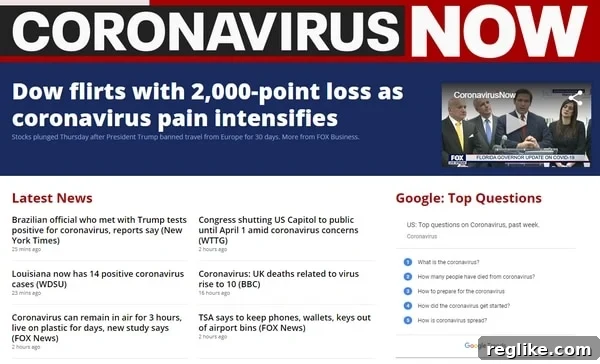
A recent observation within newly registered domain lists revealed an interesting move by Fox Media: the registration of Coronavirus.fox. This isn’t merely a defensive acquisition; it represents a deliberate and insightful digital strategy. Upon closer inspection, it became clear that this specific dot-brand domain served a distinct purpose, redirecting users to a comprehensive news platform, CoronavirusNow.com, dedicated entirely to aggregating information about pressing public health issues.
The Dual-Domain Strategy: .COM and .FOX Unpacked for Optimal Reach
Fox Media’s decision to utilize both a highly recognizable generic Top-Level Domain (gTLD) like .com and its unique dot-brand TLD, .fox, for a single, focused initiative speaks volumes about modern digital outreach. This sophisticated dual-domain strategy is designed to maximize brand presence, enhance user trust, and ensure broad accessibility for critical information during times of crisis. Understanding the nuances of each domain’s role is key to appreciating the overall effectiveness of this approach.
Leveraging the Power of a Dot-Brand TLD: Coronavirus.fox
The registration of Coronavirus.fox is particularly noteworthy because .fox is not just any domain extension; it is a proprietary dot-brand Top-Level Domain owned and operated exclusively by Fox Media. Dot-brand TLDs, such as .apple, .google, or .nike, represent a significant investment by corporations to control a segment of the internet namespace directly tied to their brand identity. For Fox, using Coronavirus.fox immediately confers an unparalleled level of brand authenticity and trust. In a digital landscape often plagued by misinformation, a domain name directly linked to an established media brand reassures users about the source’s credibility.
From an SEO perspective, while dot-brand TLDs are still evolving in their direct impact on search rankings compared to traditional domains, their value lies heavily in brand recognition and user recall. A branded domain like Coronavirus.fox is inherently memorable and reinforces Fox’s commitment to delivering specific content. It acts as a powerful branding tool, signaling to the audience that this content is officially curated and endorsed by the Fox brand, potentially improving click-through rates and direct navigation, which are indirect SEO benefits.
The Global Reach and Authority of .COM: CoronavirusNow.com
While the dot-brand provides exclusive branding, the choice of CoronavirusNow.com as the primary destination highlights the enduring strength and global recognition of the .com domain. For decades, .com has been the undisputed king of TLDs, universally associated with reputable, professional, and accessible websites. Its widespread familiarity means users instinctively trust and recall .com addresses, making it an ideal choice for a public-facing information portal that needs to reach the broadest possible audience. The inclusion of “Now” in the domain name further emphasizes urgency and real-time updates, critical attributes for crisis communication.
From an SEO standpoint, .com domains are still perceived by search engines and users alike as a default standard, often benefiting from long-standing authority and widespread indexing. For a site aiming to be a central repository of public health news, a .com domain ensures maximum discoverability and minimizes any potential user hesitation regarding its legitimacy or accessibility. It provides a familiar and robust foundation upon which to build a comprehensive information resource.
The Smart Redirection: A Synergy of Brand and Accessibility
The strategic redirection of Coronavirus.fox to CoronavirusNow.com is a masterclass in digital strategy. It allows Fox to harness the unique branding power and authenticity of its dot-brand TLD while simultaneously leveraging the universal trust and recognition of a .com domain. Users who encounter or recall the branded .fox address are seamlessly directed to the comprehensive .com site, benefiting from the best of both worlds. This approach ensures brand consistency and perceived authority without sacrificing the accessibility and broad appeal of a .com address.
This redirection strategy also contributes positively to SEO. By redirecting a high-authority, branded domain like Coronavirus.fox (potentially with its own established link equity) to CoronavirusNow.com, it can help consolidate search engine authority and direct traffic effectively. It prevents fragmentation of online presence and ensures that any brand recognition garnered by the .fox domain ultimately benefits the main information hub.
CoronavirusNow.com: A Hub for Critical Information During Crises
CoronavirusNow.com is more than just a domain; it’s a dedicated platform designed to aggregate and centralize information about critical public health issues. This initiative underscores the evolving responsibility of media organizations to not only report news but also to provide comprehensive, curated resources for the public, especially during unfolding crises.
Aggregating Vital Public Health Information
The primary function of CoronavirusNow.com is to aggregate information about the specific health crisis, drawing from various sources to offer a holistic view. This aggregation model is crucial because it allows users to find diverse perspectives and the latest updates in one convenient location, reducing the need to scour multiple websites. A well-designed aggregation site serves as a vital service, particularly when public health guidelines, case numbers, and scientific understanding are constantly evolving. It becomes a go-to resource for accurate statistics, expert advice, and public safety announcements.
For SEO, a content-rich aggregation site like CoronavirusNow.com can be highly effective. By continually updating with fresh, relevant content from authoritative sources and optimizing for keywords related to the crisis, it can achieve high rankings for critical search queries. The site’s ability to provide a breadth of information makes it valuable to users and, consequently, to search engines.
Showcasing Local Expertise: The Role of Fox Affiliates
A significant strength of CoronavirusNow.com lies in its apparent design to showcase content from Fox affiliates across the country. This strategy is immensely valuable during public health emergencies because local news outlets often provide the most granular, relevant information pertaining to specific communities. While national headlines offer a broad overview, local reports detail regional impacts, specific containment measures, and community resources, which are crucial for citizens. By centralizing these local perspectives, Fox Media leverages its extensive network to provide a comprehensive, geographically diverse understanding of the crisis.
This approach also benefits the Fox network as a whole. It drives traffic to affiliate content, reinforces the brand’s presence at both national and local levels, and demonstrates a commitment to community-specific reporting. From an SEO perspective, linking to and featuring content from numerous Fox affiliates can enhance the overall authority and freshness of CoronavirusNow.com, as it acts as a central hub of interconnected, reliable news sources.
Navigating Diverse Information Sources: The Nuance of Aggregation
Interestingly, during a visit to CoronavirusNow.com, a top news headline was observed to be from Fox rival, The New York Times. While this might seem ironic at first glance, it highlights a crucial aspect of responsible news aggregation: the pursuit of comprehensive and authoritative information, regardless of the source. In a public health crisis, the paramount goal should be to provide the most accurate and vital information to the public. Including content from other reputable news organizations can enhance the site’s credibility, demonstrating a commitment to journalistic integrity over exclusive brand promotion.
This willingness to cross-reference and include diverse, high-quality sources can actually strengthen the site’s authority in the eyes of both users and search engines. It signals a dedication to factual reporting and broad informational coverage, rather than simply promoting self-produced content. For SEO, featuring links to other authoritative sources (even competitors) can be a positive signal, indicating a comprehensive and well-researched resource.
Beyond the Headlines: Broader Implications for Digital Strategy
Fox Media’s initiative with CoronavirusNow.com and its domain strategy offers valuable lessons extending beyond crisis communication, touching upon broader trends in digital strategy, branding, and the evolving role of news organizations.
The Evolution of News Delivery in Times of Crisis
This dedicated microsite approach signifies a shift in how news organizations respond to major global events. Rather than merely integrating reports into their general news feeds, creating a specialized, easily discoverable hub demonstrates a proactive commitment to public service. Such platforms become essential during prolonged crises, providing a stable, reliable point of reference for an anxious public. This model is likely to become more prevalent as media companies seek to differentiate themselves and prove their value beyond traditional reporting.
Domain Name Strategy as a Cornerstone of Brand Identity and SEO
The careful selection and deployment of domain names, exemplified by Fox’s use of .com and .fox, underscore their critical role in modern digital branding and SEO. Domain names are not just addresses; they are fundamental elements of a brand’s identity, influencing public perception, trust, and search engine visibility. A well-thought-out domain strategy, incorporating both generic and branded TLDs, can significantly enhance a brand’s digital footprint and ensure that vital information is both discoverable and credible.
Building Trust and Authority in a Digital Landscape
In an age increasingly challenged by misinformation and “fake news,” the ability of a digital platform to convey trust and authority is paramount. Fox’s approach—combining a trusted .com with an authenticated dot-brand .fox—is a powerful statement about its commitment to providing reliable information. By creating a dedicated, branded portal, they actively combat the spread of false narratives by offering an authoritative alternative, thereby strengthening their position as a trustworthy news source.
Ethical Considerations in Domain Registration and Crisis Response
It is important to address the ethical dimension often associated with domain registration during times of crisis. While Fox Media’s actions are clearly driven by a public service and branding strategy, the broader landscape sometimes sees individuals attempting to capitalize on tragic events for financial gain. Registering domain names related to natural disasters, epidemics, or other crises solely for profit (known as cybersquatting or domain squatting) is not only unethical but often illegal and harmful. Such practices exploit public fear and divert attention from legitimate information sources.
The responsible use of domain names during crises is a shared responsibility among registrants, registrars, and the broader internet community. Companies like Fox, by creating legitimate, informative platforms, set a positive example of how digital assets can be leveraged for public good rather than personal enrichment. It serves as a reminder that the internet, while a powerful tool for commerce, also holds immense potential for collective benefit and responsible information dissemination.
Conclusion: A Strategic Blueprint for Digital Engagement
Fox Media’s strategic acquisition and deployment of Coronavirus.fox redirecting to CoronavirusNow.com exemplify a sophisticated approach to digital communication during critical times. This dual-domain strategy effectively marries the authentic branding power of a dot-brand TLD with the universal accessibility and trust of a .com domain. The resulting platform serves as a vital hub for aggregated, localized, and diverse news content, demonstrating a proactive stance in crisis communication.
This initiative not only reinforces Fox’s brand authority but also offers a blueprint for how major media organizations can leverage cutting-edge domain strategies to deliver crucial information effectively and ethically. In an increasingly complex digital world, such well-conceived strategies are indispensable for building trust, ensuring broad reach, and fulfilling the essential role of informing the public.