
The Thriving Landscape of National Digital Identity: Germany’s .de Soars Past 17 Million, Canada’s .ca Reports Robust Growth
In an increasingly interconnected world, national digital identities, often represented by country code Top-Level Domains (ccTLDs), serve as critical anchors for businesses, organizations, and individuals. These digital signposts not only signify geographic presence but also build trust, foster local economies, and enable seamless online interactions. Recent reports from two prominent ccTLD operators – DENIC for Germany’s .de and CIRA for Canada’s .ca – underscore the vibrant health and strategic importance of these national domain spaces, revealing significant milestones and impressive growth trends that paint a clear picture of ongoing digital transformation.
Germany, a global economic powerhouse, has long been a leader in digital infrastructure, and its .de domain is a testament to this prowess. Administered by DENIC, the cooperative responsible for managing the .de namespace, the German ccTLD recently achieved a remarkable milestone, surpassing 17 million registered domains. This achievement not only solidifies .de’s position as one of the world’s largest and most active country code domains but also highlights the sustained digital engagement of German enterprises and citizens.
Across the Atlantic, Canada’s .ca domain, managed by the Canadian Internet Registration Authority (CIRA), is also experiencing a period of accelerated growth. CIRA’s latest insights report paints a picture of a dynamic digital landscape, fueled by a renewed focus on online presence for Canadian businesses and a growing understanding of the value of a distinctly Canadian digital address. Both DENIC and CIRA have recently released comprehensive updates detailing the robust health of their respective namespaces, offering invaluable insights into global domain trends and the unique trajectories of national digital economies.
Germany’s .de Domain: A Pillar of Digital Trust and Innovation
On July 13th, DENIC proudly announced that Germany’s .de domain reached an impressive 17 million domains under management. This significant figure is not just a number; it represents the collective digital footprint of millions of German businesses, organizations, and individuals who have chosen .de as their preferred online identifier. The journey to this milestone has been steady and impressive, demonstrating consistent growth over the years. For context, the .de domain had crossed the 16 million mark back in 2015, indicating a sustained increase of approximately one million domains every eight years, a testament to its enduring relevance and appeal.
The Significance of 17 Million .de Domains
The sheer volume of .de registrations underscores Germany’s digital maturity and its robust internet infrastructure. For German businesses, a .de domain name is often seen as a mark of authenticity and trustworthiness, signaling a local presence and commitment to the German market. This is particularly crucial for e-commerce, where consumers often prefer to transact with businesses that have a clear national identity. Moreover, the strong adoption of .de reflects the nation’s proactive approach to digital transformation across various sectors, from manufacturing and automotive to small and medium-sized enterprises (SMEs) and startups.
DENIC’s meticulous management ensures the stability, security, and reliability of the .de namespace, which are foundational elements for building and maintaining digital trust. The cooperative’s commitment to these principles has cultivated an environment where businesses and individuals feel confident in establishing and expanding their online presence under the national banner. This sustained growth also positions .de as a vital component of Germany’s digital economy, facilitating communication, commerce, and innovation at a national and international level.
Canada’s .ca Domain: Riding the Wave of Accelerated Digital Adoption
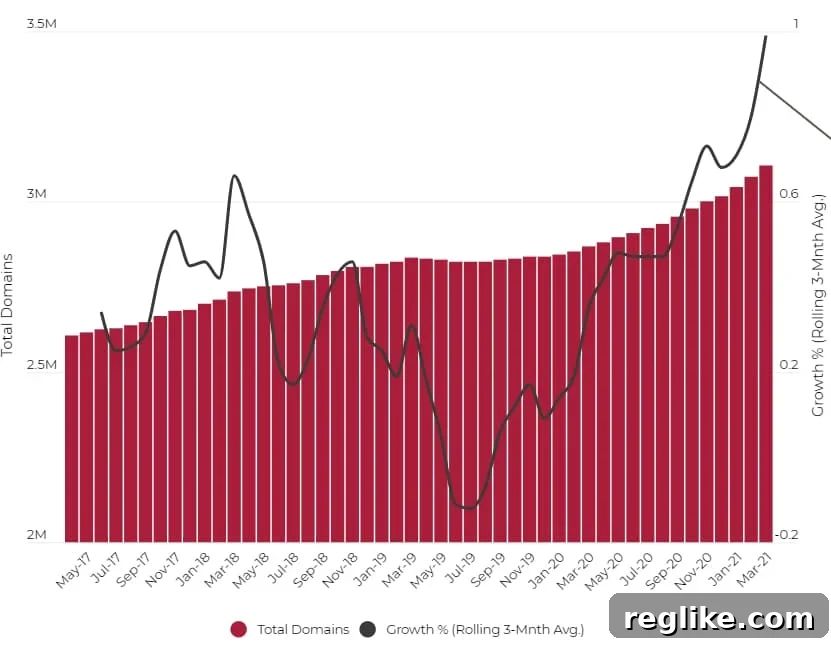
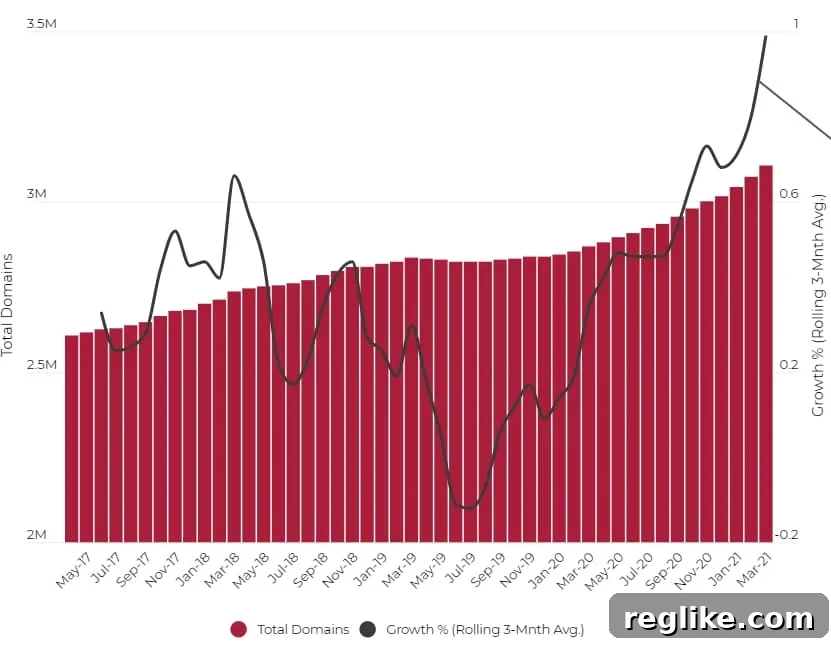
CIRA’s recent release of its Q1 .CA Insights Report provides a detailed look into the dynamic growth of Canada’s ccTLD. The report highlights a significant surge in registrations, a trend that began during the initial phases of the global pandemic and has continued to accelerate. CIRA reported that its rolling three-month growth rate for .ca domains was nearly 1%, a remarkable increase when compared to the 0.35% recorded just a year prior. This substantial acceleration points to a profound shift in how Canadian businesses and individuals perceive and utilize their online presence.
Understanding the Growth Dynamics of .ca
The nearly threefold increase in the growth rate for .ca domains is a strong indicator of Canada’s digital awakening. This surge can be attributed to several factors:
- Pandemic-Driven Digitalization: The necessity for businesses to pivot online during lockdowns spurred a rapid adoption of e-commerce and digital services. Many small businesses, previously reliant on brick-and-mortar operations, found a new lifeline in establishing an online presence.
- National Identity and Trust: Canadian consumers often prefer to support local businesses. A .ca domain explicitly signals a Canadian entity, fostering trust and loyalty among domestic customers.
- Strategic Marketing: Many Canadian businesses recognize the SEO benefits of a .ca domain, as it helps target Canadian audiences more effectively in search engine results.
Deeper Dive into .ca Domain Statistics
CIRA’s report also shed light on how .ca domains are being utilized. Approximately 17% of .ca domains are configured to redirect to other web addresses, often used for brand protection, consolidating multiple domain names, or guiding users to specific campaign pages. More importantly, 32% of registered .ca domains are actively developed websites, serving as primary online platforms for businesses, personal blogs, and organizational portals. This active percentage represents a significant portion of the Canadian digital economy, demonstrating real engagement and deployment of online resources.
The remaining domains, which are neither redirected nor active, may be held for future projects, as defensive registrations to protect intellectual property, or simply as investments. This diverse range of usage patterns highlights the strategic value of domain names beyond just hosting a website, encompassing brand strategy, future planning, and digital asset management.
The Evolving Landscape of CMS and Website Builders for .ca Domains
One of the most interesting aspects of CIRA’s report is the data concerning the Content Management Systems (CMS) and website builders employed by active .ca domains. This offers a glimpse into the tools and platforms Canadian webmasters are choosing to build their online presence:
- WordPress Dominance: WordPress continues to be the undisputed leader, accounting for just over half (more than 50%) of all active .ca sites. Its open-source nature, extensive plugin ecosystem, flexibility, and robust community support make it a preferred choice for everything from corporate websites and e-commerce stores to personal blogs.
- Rise of Website Builders: The report highlights the increasing popularity of user-friendly website builders, catering especially to individuals and small businesses looking for quick, affordable, and easy-to-manage online solutions.
- Wix: Capturing 9.05% of the market, Wix appeals to users with its intuitive drag-and-drop interface and vast template library, making professional-looking websites accessible to non-technical users.
- GoDaddy Website Builder: With 6.95%, GoDaddy’s solution offers convenience, often bundled with domain registrations and hosting services, providing an all-in-one package for rapid website deployment.
- Squarespace: Known for its aesthetically pleasing designs and integrated e-commerce features, Squarespace holds 6.11%, attracting creatives and businesses focused on strong visual branding.
- Weebly: Accounting for 4.36%, Weebly provides another straightforward option for building websites and online stores, particularly popular for its simplicity and affordability.
- Shopify’s E-commerce Power: Significantly, 5.3% of developed .ca sites utilize Shopify. This statistic underscores the burgeoning e-commerce sector in Canada and Shopify’s critical role in empowering Canadian merchants to sell online. As a Canadian-founded company, Shopify holds particular relevance and trust within the national market, providing robust tools for online retail.
This distribution of CMS and website builder usage reflects a diverse digital ecosystem in Canada, catering to varying technical skill levels, budget constraints, and business objectives. The popularity of website builders, alongside the enduring strength of WordPress and the specialized niche of Shopify, showcases the democratization of web development and the ease with which Canadian entities can now establish an online footprint.
Most Visited .ca Domains: A Snapshot of Canadian Online Activity
CIRA’s report also identified the most visited .ca domains, offering a fascinating glimpse into the online habits and priorities of Canadians. The top three are:
- Amazon.ca: As the Canadian localized version of the global e-commerce giant, Amazon.ca is a primary destination for online shopping, reflecting the strong consumer shift towards digital retail.
- Google.ca: The Canadian version of the world’s leading search engine, Google.ca, serves as the gateway for most Canadians to navigate the internet, search for information, and access local services.
- Canada.ca: This is the official website of the Government of Canada, serving as a comprehensive portal for government services, information, and resources for citizens and residents, highlighting the importance of accessible public services online.
These top domains illustrate the multifaceted nature of Canadian internet usage, encompassing commerce, information retrieval, and civic engagement. They also underscore the critical role that both global platforms with local presence and national institutions play in the digital lives of Canadians.
The Broader Implications for Global Digital Identity and Local SEO
The impressive growth figures for Germany’s .de and Canada’s .ca domains are not isolated incidents but rather reflections of broader global trends. CcTLDs worldwide are experiencing renewed interest as businesses recognize the strategic advantages they offer:
- Local SEO Advantage: For businesses targeting specific national markets, a ccTLD is invaluable for local search engine optimization. Search engines often prioritize websites with relevant ccTLDs for geographically targeted searches, improving visibility and organic traffic.
- Building Trust and Credibility: A national domain instills a sense of trust and authenticity among local consumers, indicating a commitment to serving that particular market.
- Brand Protection: Owning the ccTLD variant of a brand name is crucial for protecting intellectual property and preventing cybersquatting within a specific country.
- Economic Resilience: The vitality of ccTLDs mirrors the digital resilience and innovation within a nation’s economy, showcasing the adaptability of its businesses and the digital literacy of its population.
Conclusion: A Future Built on Strong National Digital Foundations
The recent reports from DENIC and CIRA paint a compelling picture of vibrant and growing national digital landscapes in Germany and Canada. Germany’s .de domain achieving 17 million registrations is a powerful statement about its enduring stability and importance in the global internet infrastructure. Concurrently, Canada’s .ca domain’s accelerated growth and evolving usage patterns, detailed in CIRA’s insightful report, highlight a nation rapidly embracing digital transformation, with small businesses and individuals increasingly establishing their online presence through accessible website builders and robust e-commerce platforms like Shopify.
These trends affirm that in an increasingly globalized digital world, national digital identities remain more relevant than ever. They serve not only as technical identifiers but also as cultural touchstones, economic drivers, and trust signals. As businesses and individuals continue to navigate the complexities of the digital realm, the strength and continued evolution of ccTLDs like .de and .ca will remain fundamental to fostering local economies, empowering online communities, and building a more connected and trustworthy internet for all.