
Go Daddy Limits Third-Party WHOIS Access: Unpacking the Impact on Domain Research and Transparency
In the dynamic world of domain name management and acquisition, access to accurate and timely WHOIS data is paramount. Recently, users relying on various third-party WHOIS search tools have encountered a significant shift when querying domain names registered with Go Daddy, one of the world’s largest domain registrars. Instead of displaying the traditional domain ownership information, these tools now often redirect users to Go Daddy’s own dedicated WHOIS lookup service, triggering discussions and concerns across the domain community. This article delves into the reasons behind Go Daddy’s decision, the immediate and long-term consequences for various stakeholders, and the broader implications for domain data accessibility.
For many years, independent platforms like DomainTools, who.is, and iWhois.com have served as indispensable resources for quickly retrieving critical information about domain registrations. These services aggregate data from various registrars, offering a consolidated and often enhanced view of domain ownership, registration dates, expiration details, and nameserver configurations. The recent change means that a simple search for a Go Daddy-registered domain on these platforms no longer yields direct results. For instance, a typical query now presents a URL prompting users to visit http://whois.GoDaddy.com directly to find the domain’s WHOIS information. This shift is not isolated to a single service; reports indicate widespread disruption affecting numerous third-party WHOIS lookup sites.
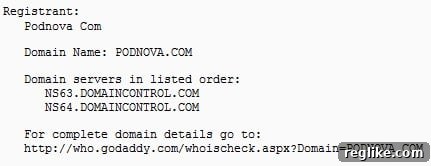
Initially, this behavior led to confusion and frustration, with some third-party services even temporarily displaying notes about difficulties with Go Daddy WHOIS lookups. While some services, like iWhois.com, might find temporary resolutions or workarounds, the underlying policy change from Go Daddy signals a more permanent redirection of data access, prompting an examination of the registrar’s motivations and the wider ramifications.
Go Daddy’s Official Stance: Prioritizing Privacy and Preventing Data Harvesting
To understand the rationale behind this move, we reached out to Go Daddy directly. Rich Merdinger, Director of Domain Services, provided a clear statement outlining the company’s position:
Go Daddy values customer privacy. We monitor WHOIS data regularly to ensure our customers’ information is being accessed properly and not being harvested for unintended uses. If we suspect that any service is harvesting WHOIS data, we will limit access to that specific source.
We are not taking the WHOIS information offline, however. Anyone can find the WHOIS information on a domain name registered through Go Daddy by visiting http://whois.GoDaddy.com.
If a company or service has questions about accessing Go Daddy WHOIS information, they can email dns (at) jomax.net.
This statement clarifies Go Daddy’s primary concern: safeguarding customer privacy and combating data harvesting. The company asserts that its monitoring efforts are aimed at preventing the misuse of WHOIS data, which can range from unsolicited marketing (spam) to more malicious activities like phishing, identity theft, or targeted cyberattacks. By limiting access to sources suspected of systematic data extraction, Go Daddy aims to protect its registrants from potential abuses.
Crucially, Merdinger emphasized that Go Daddy is not making WHOIS information unavailable. Instead, it is channeling access through its official portal. This ensures that legitimate inquiries can still be made, albeit with an additional step. Furthermore, Go Daddy has provided a dedicated contact email (dns (at) jomax.net) for companies or services seeking to understand their access policies or discuss specific integration needs, suggesting a potential pathway for legitimate data users to regain more direct access under controlled conditions.
The Indispensable Role of WHOIS Data in the Digital Ecosystem
To fully appreciate the impact of Go Daddy’s policy, it’s essential to recognize the fundamental role WHOIS data plays across various sectors of the digital economy. The WHOIS protocol provides a standardized way to query databases that store registration information for domain names and IP addresses. For domain names, this typically includes the registrant’s name, organization, contact details (email, phone, address), administrative and technical contacts, registration and expiration dates, and the nameservers associated with the domain.
The legitimate uses of this data are extensive and critical for a wide array of professionals and organizations:
- Domain Ownership Verification: Essential for due diligence during domain acquisitions, transfers, or understanding the legitimate owner of a website.
- Intellectual Property Protection: Trademark attorneys and brand protection specialists use WHOIS to identify potential infringers, cybersquatters, and initiate legal action to protect their client’s brands.
- Cybersecurity Investigations: Security professionals rely on WHOIS to trace malicious actors, identify compromised domains involved in phishing or malware distribution, and respond to incidents more effectively.
- Domain Investment and Research: Investors and brokers analyze current and historical WHOIS data to assess a domain’s past ownership, usage patterns, and potential market value.
- Spam and Abuse Mitigation: Identifying the owners of domains used for sending unsolicited bulk email or engaging in other abusive activities on the internet.
- Dispute Resolution: Providing contact information for resolving domain-related disputes, such as those governed by ICANN’s Uniform Domain-Name Dispute-Resolution Policy (UDRP).
ICANN (Internet Corporation for Assigned Names and Numbers), the global governing body for domain names, mandates that registrars provide public access to certain WHOIS data to maintain transparency and accountability within the domain name system. Go Daddy’s move, therefore, represents a delicate balance between fulfilling these mandates and protecting registrant privacy in an era of heightened data security concerns and evolving regulatory landscapes.
Far-Reaching Implications for Domain Professionals and Tools
While a single redirection might seem like a minor inconvenience for the casual user performing an occasional lookup, its ramifications for specialized domain tools and professionals are substantial. The policy shift affects various advanced functionalities that rely on consistent, direct access to WHOIS databases, creating friction and potential gaps in critical data.
Disruption to Historical WHOIS Services
Services offering historical WHOIS lookups are among the most significantly impacted. These tools meticulously collect and archive WHOIS records over time, creating a comprehensive timeline of a domain’s ownership, nameserver changes, and contact information updates. This historical data is invaluable for:
- Domain Investors and Appraisers: To research a domain’s past, identify previous owners, uncover potential issues like spam history, or verify a clean, consistent ownership history before making an investment decision or determining a domain’s value.
- Brand Protection Specialists: To track changes in ownership of domains that might be related to intellectual property, helping to build a case against infringers over time.
- Forensic Analysts: To understand how a domain evolved over its lifespan, which can be crucial in cybersecurity investigations or complex legal disputes involving domain ownership or usage.
By limiting the ability of third-party services to collect detailed records from Go Daddy, the registrar effectively disrupts the continuous aggregation of this crucial historical data. Future historical lookups for Go Daddy-registered domains will likely be incomplete or absent from these third-party archives, diminishing their utility and potentially leading to less informed decisions for domain buyers, brand managers, and cybersecurity analysts.
Challenges for Reverse WHOIS Lookups
Another powerful tool facing direct consequences is reverse WHOIS, which allows users to search for all domain names associated with a specific registrant name, email address, or organization. This functionality is particularly vital for:
- Trademark Attorneys: To identify potential cybersquatting or trademark infringement by discovering all domains owned by a suspected infringer. If a registrant holds numerous domains under the same identity, reverse WHOIS is indispensable for uncovering their full portfolio and pattern of behavior.
- Brand Management Teams: To proactively monitor for unauthorized use of their brand across various domains and identify individuals or entities repeatedly targeting their intellectual property.
- Cybersecurity Analysts: To map out the digital footprint of a threat actor or a suspicious organization, by identifying related domains that might be part of a larger network of malicious infrastructure.
If a registrant centralizes their domain portfolio at Go Daddy, and third-party services are blocked from performing detailed reverse WHOIS queries, then attorneys, brand protection teams, and security professionals could be significantly hampered in their investigative efforts. This could lead to blind spots in brand protection strategies, slower responses to emerging cyber threats, and a reduced ability to gather comprehensive intelligence.
Broader Impact on Domain Brokers, Researchers, and Cybersecurity Professionals
Beyond specific tools, the overall efficiency of domain-related workflows is affected. Domain brokers performing due diligence on large portfolios, academic researchers studying domain trends and registrant behavior, or cybersecurity firms building threat intelligence databases all rely on programmatic or bulk access to WHOIS data. The requirement to manually visit http://whois.GoDaddy.com for each individual Go Daddy domain is impractical, time-consuming, and fundamentally incompatible with large-scale data processing and automated analysis. This friction increases operational costs and slows down critical processes across the industry.
Privacy vs. Transparency: An Ongoing Debate in the Domain Space
Go Daddy’s actions must be viewed within the broader context of the ongoing debate surrounding domain registrant privacy versus the need for transparency and accountability in the domain name system. The implementation of the General Data Protection Regulation (GDPR) in Europe, followed by similar privacy laws like the California Consumer Privacy Act (CCPA), significantly altered how personal data in WHOIS records is handled. Many registrars, including Go Daddy, began redacting personal information (like email addresses and phone numbers) from public WHOIS records for registrants falling under these regulations, often replacing them with proxy services or generic contact forms to protect individual privacy.
While these redactions addressed legitimate privacy concerns, they also created challenges for legitimate users of WHOIS data, such as law enforcement, intellectual property holders, and cybersecurity researchers, who often require access to unredacted information for their critical work. ICANN has been actively involved in developing new policies, such as the Expedited Policy Development Process (EPDP) for the Temporary Specification for gTLD WHOIS data, to find a sustainable solution that balances these competing interests.
Go Daddy’s current move to limit third-party access appears to be another significant step in this evolving landscape. It suggests a proactive measure to control how its customers’ (even public) WHOIS data is accessed and utilized, aiming to curb what it perceives as systematic abuse or harvesting, irrespective of GDPR redactions. This approach, while rooted in privacy protection, undeniably shifts the burden of access and data aggregation, potentially centralizing more control over domain data with large registrars, thus impacting the decentralized nature of domain information access.
Navigating the New Landscape: Solutions and Future Outlook
For third-party WHOIS services and professionals who heavily rely on this data, adapting to Go Daddy’s policy is crucial. Several avenues might be explored to mitigate the impact and ensure continued access to essential domain information:
- Direct Engagement and Formal Agreements: The most straightforward path for legitimate services is to directly engage with Go Daddy via the provided email (dns (at) jomax.net). This could lead to formal data access agreements, API access for specific use cases, or specific data-sharing arrangements that address Go Daddy’s concerns about harvesting while allowing necessary, controlled data access for approved entities.
- Technical Adaptations and Smart Scraping: Third-party tools might need to implement more sophisticated parsing or crawling mechanisms that respect Go Daddy’s terms of service. This could involve navigating dynamic content, integrating solutions for CAPTCHA challenges, or adhering to strict rate limits to avoid being identified as a harvesting operation.
- Diversification of Data Sources: Relying less solely on direct registrar lookups and more on alternative data aggregation techniques for non-sensitive data, such as analyzing DNS records, leveraging web archiving services, or integrating data from other registrars. While this approach can be less reliable for precise ownership details, it can offer supplementary information.
- Advocacy and Policy Development: Continued engagement with ICANN, relevant industry bodies, and other registrars is vital to advocate for standardized, legitimate access pathways that protect privacy without crippling essential domain ecosystem functions. Collective efforts can shape future policies that balance all stakeholders’ needs.
The domain industry is constantly evolving, with a persistent tension between open data access, intellectual property rights, and individual privacy. Go Daddy’s decision to restrict third-party WHOIS access marks a significant moment in this ongoing evolution. While driven by understandable concerns regarding data harvesting and customer privacy, it undeniably adds friction to legitimate domain research and impacts vital tools for professionals. The challenge now lies in finding a sustainable equilibrium where privacy is protected, but the essential functions of transparency and accountability within the domain name system remain robust and accessible for all valid stakeholders.
This development underscores the importance of staying informed about registrar policies and adapting strategies for domain research and management. The future of WHOIS access will likely involve more controlled environments, emphasizing formal agreements and responsible data usage, rather than the broad, unrestricted access that characterized the early days of the internet. Professionals in the domain space must be prepared to navigate these evolving complexities to ensure the integrity and efficiency of their operations.