
Unlocking Domain Value: Is GoDaddy’s ‘Buy Now’ Lander Premium Worth the Price?
In the dynamic world of domain name investing, every decision impacts potential profitability. From acquisition to pricing and eventual sale, investors are constantly seeking optimal strategies to maximize returns. A crucial element in this process is the sales landing page – the digital storefront that connects a potential buyer with a coveted domain. Recently, industry giant GoDaddy introduced a new option for domain investors: branded “buy now” landing pages, complementing their existing “request a price” landers.
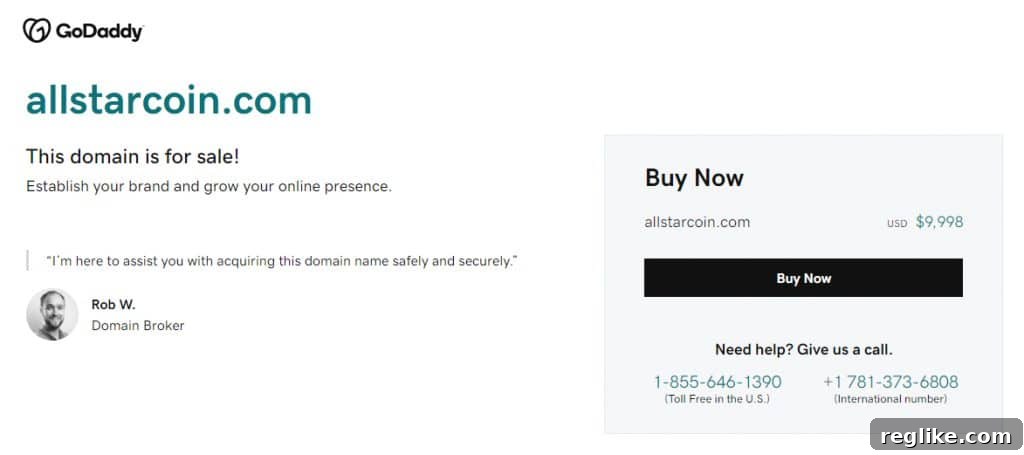
This development has sparked considerable debate and introspection within the domain community. While the allure of leveraging GoDaddy’s formidable brand presence is undeniable, it comes with a significant financial commitment. The fundamental question for every domain investor remains: does the GoDaddy brand on a landing page measurably increase sales enough to justify the steep commission structure?
The Evolution of Domain Sales Landing Pages
Historically, selling a domain name could be a laborious process. Early methods often involved a simple “for sale” page with contact information, relying on direct communication and manual negotiation. As the industry matured, lead-generation forms became standard, allowing potential buyers to express interest and negotiate a price with the seller. These “request a price” landers still serve a vital role, especially for high-value assets where direct interaction is preferred.
The “buy now” lander represents a further evolution, mirroring the instant gratification expected in modern e-commerce. By offering an immediate purchase option, these pages aim to simplify the transaction, reduce friction, and potentially capitalize on impulsive buying decisions. GoDaddy’s entry into this space with its branded “buy now” pages signifies a move towards a more streamlined, consumer-friendly approach to domain sales, promising convenience for buyers and potentially quicker sales for investors.
GoDaddy’s New “Buy Now” Offering: A Closer Look
What They Offer
GoDaddy’s new “buy now” landing pages are designed for simplicity and efficiency. When an investor opts to use this service, their domain is presented on a GoDaddy-branded page featuring a clear, fixed price and an immediate purchase button. The entire transaction, from payment processing to domain transfer, is facilitated by GoDaddy, aiming to provide a seamless experience for both parties.
From a buyer’s perspective, this means a straightforward path to acquiring a domain without the need for back-and-forth negotiations. They see a trusted brand, a clear price, and a direct way to complete the purchase. For sellers, it translates to less administrative overhead, as GoDaddy handles many of the logistical complexities that can arise during a domain sale.
The User Experience
The user experience (UX) of these landers is central to their appeal. GoDaddy, with its extensive experience in web services, designs these pages to be intuitive and reassuring. Buyers are likely to find the interface familiar and easy to navigate, reducing any hesitation associated with making a purchase from an unfamiliar seller. The integration with GoDaddy’s robust payment systems and domain transfer protocols adds another layer of security and convenience, which can be a significant differentiator in encouraging a sale.
The Power of the GoDaddy Brand
One of the primary arguments for using GoDaddy’s landers, despite their cost, is the undeniable power of their brand. GoDaddy is a household name in the web services industry, recognized globally by millions of individuals and businesses.
Trust and Recognition
For many potential domain buyers, seeing the GoDaddy logo instills an immediate sense of trust and legitimacy. In an online landscape rife with scams and uncertainty, a familiar and reputable brand acts as a powerful reassurance. This recognition can significantly reduce buyer apprehension, making them more comfortable proceeding with a purchase, especially for higher-value domains where trust is paramount.
Market Reach and Exposure
GoDaddy also boasts an enormous customer base and extensive marketing reach. While using their landers doesn’t automatically mean your domain will appear higher in their search results, it does mean that any buyer who lands on your page will be interacting with a brand they likely already know and trust. This widespread familiarity can subtly but effectively influence purchasing decisions, potentially leading to a higher conversion rate compared to a generic landing page or a less-known platform.
Perceived Security
Beyond general trust, the GoDaddy brand often implies a higher level of transactional security. Buyers are confident that their payment information is handled securely and that the domain transfer process will be smooth and reliable, backed by a large, established corporation. This perceived security can be a crucial factor, particularly for buyers who might be new to domain investing or online asset acquisition.
Deconstructing GoDaddy’s Commission Structure
While the brand appeal is strong, it’s essential to analyze the price tag attached to it. GoDaddy’s commission rates for “buy now” landers are notably higher than many alternatives in the market.
The Tiered Model Explained
GoDaddy employs a tiered commission structure:
- 20% commission on sales up to $5,000.
- 15% commission on sales up to $25,000 (meaning, the amount *between* $5,000 and $25,000 incurs 15%).
- 10% commission on the amount over $25,000.
Let’s illustrate with a few examples:
- Domain sold for $1,000: GoDaddy takes $200 (20%). Investor receives $800.
- Domain sold for $5,000: GoDaddy takes $1,000 (20%). Investor receives $4,000.
- Domain sold for $10,000: GoDaddy takes $5,000 * 20% = $1,000. Plus $5,000 * 15% = $750. Total commission: $1,750. Investor receives $8,250.
- Domain sold for $30,000: GoDaddy takes $5,000 * 20% = $1,000. Plus $20,000 * 15% = $3,000. Plus $5,000 * 10% = $500. Total commission: $4,500. Investor receives $25,500.
Impact on Profitability
These rates are significantly higher than what many domain investors are accustomed to, especially for lower to mid-range sales. A 20% commission on a $1,000 domain, for instance, means losing a substantial portion of the potential profit. For investors operating on tight margins or dealing with a high volume of lower-priced domains, this can severely impact their overall return on investment (ROI). Even for higher-value domains, the percentage can add up quickly, diminishing the net proceeds significantly.
Comparing GoDaddy to Competitors
The domain marketplace is competitive, and several other platforms offer landing pages with much lower commission rates.
Alternative Platforms
Platforms like Dan.com (now part of GoDaddy, but with a different commission structure), Sav, Dynadot, and Porkbun have long been popular choices for domain investors. These services typically offer commission rates below 10%, often in the range of 5-9% depending on the platform, payment method, and specific terms. For example, Dan.com generally charges 9% on most sales (or 1.5% if the domain is purchased directly through their brokerage service). Sav offers a very competitive 4% commission if you use their registrar, or 9% otherwise. Dynadot and Porkbun also provide competitive rates, usually in the 8-10% range.
Beyond Commissions: Feature Comparison
While commission is a critical factor, it’s not the only one. Other aspects to consider include:
- Ease of Use: How simple is it to set up and manage listings?
- Payment Options: Do they support various payment methods preferred by international buyers?
- Domain Transfer Process: How efficient and secure is the transfer of ownership?
- Dispute Resolution: What support is available in case of issues between buyer and seller?
- Buyer Audience: Does the platform attract a specific type of buyer?
- Integration with Registrar: Some registrars offer lower commissions if you host your domain with them.
Many of these alternative platforms have refined their services to offer robust features comparable to, or even exceeding, GoDaddy’s basic offerings in some niche areas, all while maintaining a more investor-friendly commission model.
When to Choose What
The choice between GoDaddy and its competitors often boils down to a strategic decision based on the specific domain, its value, and the investor’s risk tolerance. For a highly liquid, mid-value domain where a quick, hassle-free sale is prioritized, GoDaddy’s brand might be seen as a worthwhile accelerant. However, for domains with thinner margins, or for investors who prioritize maximizing every dollar, the lower commission platforms present a compelling alternative.
The Million-Dollar Question: Is the GoDaddy Brand Lift Real?
This is arguably the most challenging question for domain investors. Does the GoDaddy brand truly provide a “lift” in sales volume or price that offsets its higher commission?
Measuring the Immeasurable
Quantifying the precise impact of brand recognition on domain sales is incredibly difficult for individual investors. Unlike e-commerce products where A/B testing can be easily implemented with large sample sizes, domain sales are often single, high-value transactions. Running statistically significant tests would require an enormous portfolio of similar domains, listed simultaneously on different platforms, to account for variables such as market demand fluctuations, specific buyer intent, and even the time of year.
Moreover, the factors influencing a domain sale extend far beyond the landing page’s branding. The quality and desirability of the domain itself, its pricing strategy, current market trends, and even the buyer’s unique needs at that moment all play significant roles. Isolating the “GoDaddy brand effect” from these myriad variables becomes an almost impossible task for the average investor.
The Investor’s Dilemma
Without clear, quantifiable data, investors are left to make educated guesses and rely on anecdotal evidence or their intuition. The dilemma is whether to pay a premium for a potential, unmeasured advantage, or opt for a lower-cost option with known, albeit perhaps less branded, effectiveness. This decision often comes down to an investor’s overall portfolio strategy and their comfort level with potential trade-offs.
GoDaddy’s Own Recommendation: Lead Forms for High-Value Domains
Interestingly, GoDaddy itself provides a strong clue regarding the applicability of its “buy now” landers. The company still recommends using its lead form lander for domains priced over $1,000.
Why Not “Buy Now” for All?
This recommendation suggests that for higher-value assets, the complexity and psychology of the sale often necessitate a more personalized approach. A “buy now” button might be ideal for an impulse purchase of a $500 or $800 domain. However, when a domain is priced at $5,000, $10,000, or even more, buyers typically want more than an instant transaction.
High-value buyers often require:
- Negotiation: The opportunity to discuss price, terms, or bundled deals.
- Due Diligence: Time to conduct thorough research, check trademarks, and verify the domain’s history.
- Human Interaction: Reassurance and answers to specific questions that a static “buy now” page cannot provide.
- Escrow Services: For very high values, buyers may prefer specific escrow arrangements.
A lead form facilitates this human element, allowing the seller to engage, build rapport, and potentially close a deal that a simple “buy now” button might have missed.
When “Buy Now” Excels
Conversely, the “buy now” model truly shines for domains that are in the “impulse purchase” category. These are often generic, descriptive, or slightly premium domains that a small business or individual might acquire quickly without extensive contemplation. For these lower-to-mid-tier domains, the speed, simplicity, and perceived safety of a GoDaddy-branded instant purchase can be a powerful conversion tool.
Pros and Cons of GoDaddy “Buy Now” Landers
Advantages
- Unmatched Brand Trust: Leveraging GoDaddy’s global reputation can build immediate confidence in buyers.
- Simplicity for Buyers: A straightforward, one-click purchase process reduces friction.
- Potential for Faster Sales: For specific domain types, the ease of transaction can lead to quicker conversions.
- Vast User Base: While not direct marketing, being associated with GoDaddy places your domain within a widely recognized ecosystem.
- Streamlined Logistics: GoDaddy handles payment processing and domain transfer, easing the seller’s administrative burden.
Disadvantages
- Significantly High Commissions: Rates of 20%, 15%, and 10% eat deeply into profits, especially on lower-priced domains.
- Lack of Negotiation Flexibility: The “buy now” model removes the opportunity for dialogue and price negotiation, which can be crucial for higher-value assets.
- Difficulty in Measuring Brand Impact: Investors struggle to quantify the actual “lift” provided by the GoDaddy brand versus its cost.
- May Not Be Suitable for Premium Domains: For very high-value or complex domains, a lead-generation approach offering personalized interaction and negotiation is often superior.
- Potential for Lost Sales: A buyer who might have negotiated slightly lower might simply pass on a fixed-price domain if it’s perceived as too high, even if it’s branded GoDaddy.
Strategies for Maximizing Domain Sales
Regardless of whether an investor uses GoDaddy’s branded landers or a competitor’s, several core strategies remain essential for successful domain sales:
- Strategic Pricing: Research comparable sales, understand market demand, and price your domain competitively yet profitably. An overpriced domain won’t sell, regardless of the landing page.
- Diversifying Sales Channels: Don’t put all your eggs in one basket. List your domains on multiple reputable platforms (if allowed and manageable) to maximize exposure.
- Optimizing Landing Pages: Ensure your landing pages, wherever they are hosted, are clean, professional, mobile-responsive, and have a clear call to action.
- Market Research: Stay abreast of industry trends, emerging niches, and buyer behavior to identify opportunities and adapt your selling approach.
- Building a Reputation: For direct sales, a good reputation within the domain community can be as powerful as any brand name.
The Future of Domain Marketplaces
The introduction of GoDaddy’s “buy now” landers is indicative of a broader trend towards making domain acquisition more accessible and instant. We can expect to see further innovation in sales tools, potentially incorporating AI for dynamic pricing suggestions, enhanced analytics for sellers, and more integrated solutions that bridge the gap between registrars and marketplaces.
Commission models will also likely remain a point of contention and competition. As more players enter the market, pressure will mount on established services to justify their rates or adapt to more investor-friendly structures. The balance between brand value, service offering, and cost will continue to shape the choices available to domain investors.
Conclusion
GoDaddy’s “buy now” landing pages offer a compelling proposition: the power of a globally recognized brand combined with the convenience of instant transactions. For domain investors, this translates into potential benefits like increased buyer trust, streamlined processes, and possibly quicker sales for certain types of domains.
However, these advantages come at a significant cost. The high commission rates, especially for lower-to-mid-range sales, demand careful consideration. For many investors, the challenge lies in quantifying the elusive “brand lift” against a concrete, substantial fee. While the GoDaddy brand undoubtedly carries weight, its value must be weighed against the tangible impact on profitability for each unique domain and portfolio.
Ultimately, the decision to leverage GoDaddy’s premium landers should be a strategic one, informed by the specific characteristics of the domain being sold, the investor’s profit margins, and a pragmatic assessment of whether the perceived brand benefit genuinely justifies the higher price. For some domains, particularly those in the lower-to-mid-range where simplicity and speed are paramount, it might be a worthwhile investment. For higher-value assets where negotiation and buyer interaction are key, GoDaddy’s own recommendation for lead forms, or opting for a lower-commission alternative, may still prove to be the more prudent path.