
GoDaddy’s Strategic Patents: Shaping the Future of Domain Name Search and Discoverability
In an ever-expanding digital landscape where choosing the perfect domain name can be pivotal for online success, the way domain names are presented to users during a search is becoming increasingly critical. Leading domain registrar GoDaddy has consistently demonstrated foresight in this area, continuing to secure patents related to methods for prioritizing domain name search results. This strategic accumulation of intellectual property underscores a significant trend in the domain industry: the move towards more structured, and potentially monetized, domain discoverability.
The U.S. Patent and Trademark Office (USPTO) recently granted GoDaddy its sixth patent concerning sophisticated mechanisms to position domain names in response to a user’s domain search query. This latest achievement builds upon a decade-long endeavor by GoDaddy to refine how potential registrants interact with and select available domain names, especially amidst the proliferation of new Top-Level Domains (TLDs).
The Genesis of a Groundbreaking Idea: Preferred Domain Positioning
The journey began in 2011 when the USPTO issued GoDaddy its inaugural patent, U.S. Patent No. 7,890,602, titled “Tools enabling preferred domain positioning on a registration website.” This initial patent laid the groundwork for a system designed to influence the visibility and ranking of domain names displayed to users. At the time, the concept was revolutionary, signaling a shift from a purely alphabetical or popularity-based display to a more dynamic, and potentially sponsored, model.
Traditionally, domain name registrars have engaged in various marketing partnerships with registries to promote specific Top-Level Domains. These arrangements often manifest as prominent banners on registrar homepages, special promotional pricing for certain TLDs, or simply ensuring a TLD appears high up in search suggestions. However, as the Internet Corporation for Assigned Names and Numbers (ICANN) introduced hundreds of new generic Top-Level Domains (gTLDs) over the past decade, the sheer volume of options has made these one-off marketing deals increasingly challenging to manage efficiently and scale effectively. This burgeoning complexity is precisely where GoDaddy’s patented system steps in, offering a streamlined and automated solution.
“AdWords for Top-Level Domains”: A Paradigm Shift in Domain Discoverability
The most intuitive way to understand GoDaddy’s patented system is to liken it to Google’s highly successful “AdWords” (now Google Ads) model, but specifically tailored for Top-Level Domains. In this innovative framework, TLD registries would be empowered to place a “bid” with GoDaddy for preferential placement within search results. This bid wouldn’t be the sole determinant; GoDaddy’s system would also incorporate a “quality score” for the domain search query and the TLD in question. This holistic approach ensures that relevance and user experience remain part of the equation, alongside financial considerations.
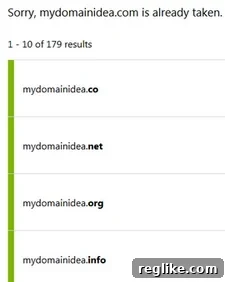
When a user searches for a domain name, GoDaddy’s proprietary algorithm would then factor in these bids and quality scores to intelligently determine the order in which various domain options are presented. Imagine searching for “bestwidgets.com,” and instead of just seeing various extensions in alphabetical order, you might see “.store” or “.online” prominently featured because their respective registries have bid for higher visibility and possess a strong quality score for generic business terms. This mechanism offers registries an unprecedented level of control and precision in promoting their TLDs directly to users at the critical point of decision-making: the domain search interface.
The Expanding Portfolio of Innovation: GoDaddy’s Patent Collection
The latest patent, U.S. Patent No. 8,620,761, granted on December 31, 2013, serves as a continuation of the initial patent, illustrating GoDaddy’s commitment to continuously refine and protect its innovative approach to domain search prioritization. This signifies that the core concept has evolved over time, with subsequent patents addressing improvements, different methodologies, and broader applications of the preferred placement service. The accumulation of these patents paints a clear picture of a well-thought-out, long-term strategy to dominate the domain name search monetization space.
Other significant patents within GoDaddy’s portfolio that are related to this pioneering idea include:
- U.S. Patent No. 8,171,110: “Tools enabling a preferred placement service for domain registration websites” – This patent further elaborates on the foundational tools and infrastructure required to implement such a service.
- U.S. Patent No. 8,195,652: “Preferred placement service for domain registration websites” – This focuses more broadly on the service itself, detailing how it functions from a user and registry perspective.
- U.S. Patent No. 8,280,952: “Methods implementing a preferred placement service for domain registration websites” – This particular patent delves into the procedural and algorithmic methods used to operationalize the preferred placement system.
- U.S. Patent No. 8,370,217: “Methods for determining preferred domain positioning on a registration website” – This patent outlines specific techniques and criteria for algorithmically deciding the optimal positioning of domain names based on various inputs.
The inventorship listed on these patents reads like a who’s who of GoDaddy’s executive leadership and key strategists at the time. It includes GoDaddy founder Bob Parsons, then Chief Marketing Officer Barbara Rechterman, EVP of Finance (and then CFO) Mike Zimmerman, Senior Director of ICANN Policy James Bladel, and VP of Domains Richard Merdinger. This high-level involvement underscores the strategic importance and potential impact that GoDaddy’s leadership ascribed to this innovative system, recognizing its potential to fundamentally alter how domains are marketed and sold.
Implications for the Domain Industry and Beyond
GoDaddy’s patented preferred placement system has far-reaching implications for various stakeholders within the vast domain industry:
For Registries
For Top-Level Domain registries, this system offers an unprecedented marketing channel. Rather than relying on generic advertising or broad partnerships, registries can precisely target potential registrants at the moment they are actively seeking a domain. This could be particularly advantageous for newer gTLDs that struggle for visibility against established extensions like .com, .net, and .org. It transforms discoverability into a competitive advantage, allowing registries to invest directly in being seen.
For Registrars
For GoDaddy, this represents a significant competitive differentiator and a new, powerful revenue stream. By offering a sophisticated, automated bidding system, GoDaddy can monetize domain search results in a way that traditional banner ads or fixed marketing fees cannot. Other registrars may need to develop similar systems, license GoDaddy’s technology, or find alternative ways to compete in a landscape where search positioning can heavily influence user choice.
For Domain Investors and Registrants
The system introduces a new layer of complexity for domain investors and individual registrants. While it could theoretically help users discover more relevant and diverse domain options, it also raises questions about potential biases in search results. A domain name’s visibility might increasingly be influenced by a registry’s marketing budget rather than solely its inherent suitability or the registrant’s creative intent. This could lead to higher costs for popular TLDs or specialized extensions, as registries pass on their advertising expenses. Furthermore, it could impact domain valuation, with TLDs that participate in such programs potentially gaining an edge in perceived value and demand.
For Users
From a user’s perspective, the system could be a double-edged sword. On one hand, it could streamline the domain search process, presenting highly relevant and available options quickly. On the other hand, users might be less aware that the order of results is influenced by paid placement, potentially leading them to believe that the top-ranked options are inherently “better” or more popular, rather than simply more heavily advertised. Transparency in indicating sponsored results would be crucial to maintain user trust.
The Future of Domain Name Discoverability
GoDaddy’s continuous patenting efforts signal a strategic move towards a more dynamic and monetized domain search ecosystem. As the number of available domain extensions continues to grow, efficient and effective discoverability mechanisms will only become more vital. This patented approach paves the way for a future where domain search is less about a simple alphabetical list and more about an intelligent, algorithm-driven marketplace that connects registries with interested buyers through a sophisticated bidding and quality-scoring system.
This innovation could redefine the competitive landscape of the domain industry, pushing other registrars to innovate or adapt. It also highlights a broader trend in the digital economy: the monetization of search results, where visibility often comes at a premium. GoDaddy’s strategic foresight in developing and protecting this “AdWords for TLDs” concept positions it as a key influencer in shaping how individuals and businesses discover and acquire their digital identities for years to come.