
Revolutionizing Domain Transfers: GoDaddy’s AuthCode-Free Patent Streamlines Process
A groundbreaking process poised to eliminate the often cumbersome Authorization Codes, favoring a more direct and efficient registrant data verification method for domain name transfers.
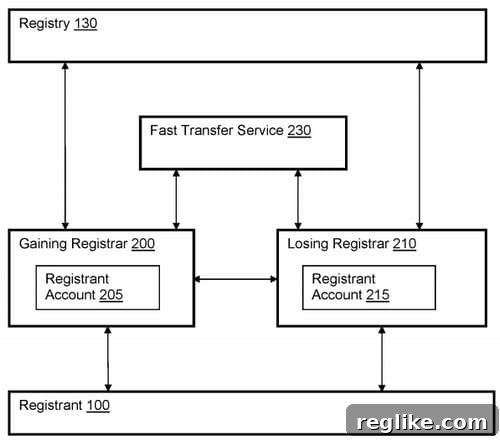
In a significant development for the domain name industry, the U.S. Patent and Trademark Office has officially granted patent number 10,581,799 (pdf) to GoDaddy (NYSE: GDDY). This patent, titled “Method for a losing registrar to transfer a domain name from the losing registrar to a gaining registrar,” introduces an innovative approach that could fundamentally reshape how domain names are transferred between registrars.
The core of this patent lies in its proposal to facilitate domain name transfers without the traditional requirement of an authorization code, commonly known as an AuthCode or EPP key. This novel system aims to simplify the transfer process, making it more intuitive and less prone to the common frustrations associated with the current method. By bypassing the need for users to log into their old (losing) registrar’s account solely to retrieve a code, GoDaddy envisions a smoother, more user-friendly experience for domain owners worldwide.
The Current Domain Transfer Dilemma: Why AuthCodes are “Pesky”
For years, the standard procedure for initiating a domain name transfer has involved a multi-step process. Before a customer can move their domain to a new (gaining) registrar, they must first navigate to their account with the existing (losing) registrar. Within this account, they typically need to request an authorization code, which is then provided to the gaining registrar to authorize the transfer. While intended as a security measure, this system often presents several hurdles for domain owners:
- Lost or Forgotten Codes: Users frequently misplace or forget their AuthCodes, leading to delays and frustration.
- Expired Codes: AuthCodes often have a limited validity period, requiring users to request new ones if the initial code expires before the transfer is completed.
- Account Access Issues: Problems logging into the losing registrar’s account (e.g., forgotten passwords, outdated contact information) can create significant roadblocks.
- Complexity for Novice Users: The technical jargon and multi-step process can be intimidating for those unfamiliar with domain management.
- Manual Retrieval: The necessity of manually retrieving a code from one platform to input into another adds friction to an otherwise straightforward administrative task.
These issues collectively contribute to a less-than-ideal user experience and often generate a significant volume of support requests for both losing and gaining registrars. GoDaddy’s new patent seeks to directly address these pain points, promising a more streamlined and efficient future for domain transfers.
GoDaddy’s Innovative Approach: Registrant Data Verification
Under the system outlined in the GoDaddy patent, the responsibility of verifying the domain owner’s intent to transfer would shift away from reliance on a single, shared authorization code. Instead, the gaining registrar would undertake the crucial task of validating the registrant’s information directly. This method promises a more robust and adaptive verification process:
- Leveraging Whois Data: One proposed method involves the gaining registrar verifying information found in the public Whois database. This could include sending a verification request to the email address listed in Whois and/or an SMS verification to the associated phone number. The patent application was notably filed shortly after the General Data Protection Regulation (GDPR) came into effect, acknowledging the evolving landscape of Whois data access and privacy.
- Direct Registrar Communication: An alternative, and potentially more privacy-preserving, approach involves the gaining registrar “pinging” the losing registrar. In this scenario, the losing registrar would then provide the necessary contact information for validation, allowing the gaining registrar to confirm the transfer request directly with the registrant without requiring broad public access to Whois data. This method aligns well with modern privacy standards, ensuring that sensitive contact information is only shared between trusted parties for the explicit purpose of transfer verification.
This registrant-centric verification process aims to reduce friction while maintaining, or even enhancing, security. By directly confirming the transfer request with the legitimate domain owner through multiple channels, the system can better prevent unauthorized transfers and improve the overall integrity of the domain ecosystem.
A Glimpse into the Past: Echoes of Email-Based Transfers
While GoDaddy’s patented system introduces a modern solution, the concept of verifying transfers through direct registrant contact is not entirely new. In the earlier days of the internet and domain name management, transfers were commonly predicated on sending an email to the administrative contact listed in the Whois record. This often involved the gaining registrar initiating an email to the registrant, who would then respond to approve the transfer. The new system shares a conceptual similarity, focusing on direct communication with the registrant rather than a shared secret code.
However, GoDaddy’s proposal significantly advances this historical approach. By incorporating SMS verification and direct registrar-to-registrar communication for contact data, it addresses many of the vulnerabilities and inefficiencies of the old email-only system. For instance, email-based transfers were susceptible to issues like outdated email addresses, spam filters, or email account compromises. The multi-channel approach and direct registrar communication envisioned by GoDaddy’s patent offer enhanced security and reliability, learning from past experiences to build a more resilient transfer mechanism.
Benefits of an AuthCode-Less Domain Transfer System
The adoption of an AuthCode-free transfer system could usher in a new era of simplicity and efficiency for the domain name industry, offering substantial benefits to various stakeholders:
- Enhanced User Experience (UX): Eliminating AuthCodes directly addresses a major pain point for domain owners. The simplified process means less time spent searching for codes, fewer potential errors, and a more intuitive journey for transferring domains. This translates to higher customer satisfaction and reduces the learning curve for new domain registrants.
- Reduced Support Burden for Registrars: A significant portion of support inquiries for registrars often revolves around AuthCode retrieval, expiration, or incorrect entry. By automating verification and removing the AuthCode requirement, registrars can anticipate a noticeable reduction in support tickets, allowing their teams to focus on more complex issues and value-added services.
- Increased Transfer Velocity: A smoother transfer process could encourage more domain owners to move their domains between registrars based on service, pricing, or features, fostering healthy competition within the industry.
- Improved Security Through Direct Verification: While AuthCodes provide a layer of security, they can also be compromised or misused. A system that directly verifies the registrant’s identity through multiple, robust channels (email, SMS, direct registrar interaction) could offer an arguably stronger and more reliable security posture against unauthorized transfers.
- Streamlined Automation: The new process lends itself better to automation. Gaining registrars could initiate verification processes more seamlessly, reducing manual intervention and speeding up the overall transfer timeline.
Navigating Security, Privacy, and Implementation Challenges
While the benefits are clear, implementing such a significant shift in domain transfer protocols naturally raises important questions regarding security, privacy, and industry-wide adoption.
Maintaining Security Without a Shared Secret
The primary concern for any new transfer method is security. Without a unique AuthCode, how does the system prevent unauthorized transfers? GoDaddy’s patent addresses this by relying on direct registrant verification. By requiring confirmation via verifiable contact points (Whois email, SMS) or through direct, secure communication channels between registrars, the system aims to ensure that only the legitimate domain owner can authorize a transfer. This multi-factor approach can, in many ways, be more secure than a single AuthCode, which if compromised, can be used by an unauthorized party.
GDPR and Whois Data Access
The patent’s filing after GDPR’s implementation highlights the crucial consideration of data privacy. GDPR significantly restricted public access to full Whois data, making the initial proposal of relying solely on public Whois for verification challenging. However, the patent cleverly includes alternatives, such as the gaining registrar pinging the losing registrar for validated contact information. This approach respects privacy regulations by keeping sensitive data contained within the registrar ecosystem while still enabling effective registrant verification. Any widespread adoption would require careful alignment with current and future data protection laws.
The Role of Transfer Locks
It’s important to note that GoDaddy’s proposed system does not override existing transfer locks. These locks, set by registrants at their losing registrar, act as an additional layer of security, preventing accidental or unauthorized transfers. Under the patented process, registrants would still need to log into their losing domain name registrar account to remove these locks if they are in place. This ensures that a critical existing security mechanism remains active, providing registrants with continued control over their domains.
Industry Adoption and ICANN Mandates
For an AuthCode-free system to become an industry standard, it would likely require significant collaboration and potential mandates from the Internet Corporation for Assigned Names and Numbers (ICANN), the governing body for domain names. While GoDaddy holds the patent, its broad impact will depend on whether this method is adopted by other registrars and integrated into ICANN’s Transfer Policy. This could involve developing new technical standards and protocols for registrar-to-registrar communication for verification purposes. The process of achieving consensus across hundreds of accredited registrars and updating global policies is often lengthy and complex.
The Future Landscape of Domain Name Management
GoDaddy’s patent represents a forward-thinking step in the evolution of domain name management. By challenging the traditional reliance on AuthCodes, it opens the door to a more intuitive, secure, and efficient transfer process. This innovation could signal a broader trend towards simplifying complex internet infrastructure processes, making domain ownership and management more accessible to a wider audience.
Should this method gain traction and widespread adoption, it could significantly enhance the user experience for millions of domain owners, reduce operational overhead for registrars, and potentially foster a more dynamic and competitive domain market. The journey from patent grant to industry standard is long, but GoDaddy’s vision offers a compelling glimpse into a future where transferring a domain name is as seamless and straightforward as it should be.