
GoDaddy Patent Revolutionizes Website Creation: Image Analysis Fuels Smart Domain Suggestions
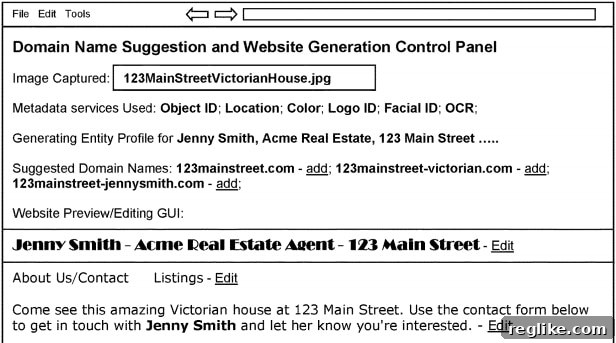
In a significant step forward for digital entrepreneurship and web presence creation, the U.S. Patent and Trademark Office has officially granted GoDaddy patent number 10,630,639. Titled “Suggesting a domain name from digital image metadata,” this innovative patent outlines a system designed to simplify the often-complex process of launching an online identity. At its core, the technology leverages the rich data embedded within or discoverable from digital images to intelligently suggest relevant domain names and subsequently, to automatically construct a foundational website.
This groundbreaking invention holds immense potential for individuals and small businesses looking to establish an online presence with minimal technical hurdles. By transforming a visual input – a simple image – into a fully functional website, GoDaddy aims to democratize access to the digital world, making it easier than ever to turn an idea or an asset into a compelling online platform. The patent represents a fusion of artificial intelligence, image recognition, and user-friendly web development, promising to streamline a journey that traditionally requires considerable time and technical expertise.
The Core Innovation: From Pixels to Digital Presence
The essence of GoDaddy’s patent lies in its sophisticated ability to analyze an image and derive actionable insights for domain naming and website content generation. It moves beyond traditional keyword-based suggestions by tapping into the visual context and associated data of an image. This approach recognizes that an image often encapsulates the very essence of a business, product, or idea, making it an ideal starting point for crafting a relevant and memorable online identity.
Unlocking Data: Metadata and Visual Content Analysis
The patent details a multi-layered approach to extracting information from digital images:
- Digital Image Metadata: Every digital image carries a wealth of hidden information. This includes, but is not limited to, the filename (e.g., “house_for_sale_main_street.jpg”), the source of the image (e.g., a specific camera model or software), the date and time the image was captured, and crucial geolocation data (GPS coordinates where the photo was taken). For businesses, metadata might also include details about the device used for capture, offering clues about the professional context of the image.
- Visual Content Analysis: Beyond explicit metadata, the system employs advanced image recognition and artificial intelligence to interpret the visual content itself. This could involve identifying objects within the image (e.g., a house, a business logo, a menu item, a specific product), recognizing text (e.g., an address on a storefront, items on a menu, contact details on a business card through Optical Character Recognition or OCR), and even understanding the broader scene or context (e.g., “residential property,” “restaurant interior,” “retail store exterior”). The patent envisions analyzing color palettes, common themes, and key visual elements that could inform branding and design choices.
The Power of Reverse Image Search
A particularly clever aspect of this patent involves the utilization of reverse image search technology. If an image is, for instance, a photograph of a house for sale, the system could perform a reverse image search across various online platforms. This could include real estate listing services (MLS systems), social media, or other public databases. By finding instances of the same image online, the system can gather additional, richer context and data points. For the house example, this might yield:
- Detailed property descriptions.
- Sale prices and historical data.
- Agent contact information.
- Architectural styles (e.g., Victorian, modern farmhouse).
- Neighborhood amenities and local points of interest.
This external data significantly enhances the system’s ability to generate highly relevant and informed domain name suggestions and initial website content.
Intelligent Domain Name Suggestion: Beyond Keywords
Once all this information is gathered – from metadata, visual analysis, and reverse image searches – the GoDaddy system leverages it to propose suitable domain names. Unlike conventional domain name generators that often rely on simple keyword inputs, this patented method is contextually aware and highly personalized. Consider the following enhanced examples:
- For a House for Sale:
- Based on an image of a Victorian house at 123 Main Street in Anytown, the system might suggest:
123MainStreetAnytown.com,VictorianOnMain.com,AnytownHomesForSale.net,Historic123Main.org. - If the image also reveals a distinctive feature, such as a large garden, suggestions could include:
MainStreetGardenHome.comor123MainWithYard.net.
- Based on an image of a Victorian house at 123 Main Street in Anytown, the system might suggest:
- For a Scanned Business Card:
- If an image is a business card for “Sarah’s Artisan Bakery” with a phone number and address, the system could suggest:
SarahsArtisanBakery.com,ArtisanBakeryAnytown.com,FreshBakedBySarah.net, or incorporate the street name likeSarahsBakeryElmSt.com. - OCR would extract the business name, contact person, and services, driving highly targeted domain options.
- If an image is a business card for “Sarah’s Artisan Bakery” with a phone number and address, the system could suggest:
- For a Picture of a Business Storefront:
- An image of “The Cozy Corner Cafe” storefront, displaying its logo and a sign for “Organic Coffee & Pastries,” could lead to:
CozyCornerCafe.com,OrganicCoffeeCozy.net,AnytownCafeFavorites.com. - Geolocation data from the image could further refine suggestions to include the city or neighborhood name.
- An image of “The Cozy Corner Cafe” storefront, displaying its logo and a sign for “Organic Coffee & Pastries,” could lead to:
- For an Image of a Restaurant Menu:
- If an image shows a menu featuring “Italian Cuisine” and “Wood-Fired Pizza,” potential domains could be:
AnytownItalianEats.com,WoodFiredPizzaHub.net,BestPastaAnytown.com. - The system would extract key food items and cuisine types to generate highly relevant, descriptive domains.
- If an image shows a menu featuring “Italian Cuisine” and “Wood-Fired Pizza,” potential domains could be:
- For a Product Image:
- An image of a unique handmade ceramic mug could result in suggestions like:
HandmadeCeramicsStore.com,UniqueMugsAnytown.net,ArtisanMugShop.com, based on object recognition and potential textual descriptions on the product itself.
- An image of a unique handmade ceramic mug could result in suggestions like:
This intelligent filtering and suggestion process significantly reduces the time and effort required for users to find a suitable, memorable, and SEO-friendly domain name that accurately reflects their online venture.
Seamless Website Creation: Bridging the Gap
The innovation doesn’t stop at domain name suggestions. Once a user selects a domain, GoDaddy’s patented system is designed to automatically build a basic, yet functional, website. This automation leverages all the rich data collected during the image analysis phase. This is a critical feature, as the process of building a website from scratch can be daunting for many small business owners and individuals.
The system could auto-populate various elements of a website, including:
- Initial Text Content: Based on property descriptions, business card details, menu items, or general information gleaned from reverse image searches. For example, a real estate listing might automatically generate an “About This Property” section, complete with features, square footage, and neighborhood details.
- Image Galleries: The original image, along with any other related images found through reverse search, could be used to create an initial image gallery or hero section.
- Contact Forms: If contact details (phone, email, address) are extracted from a business card or online listing, they can be pre-filled into a contact page or footer.
- Location Maps: Geolocation data from the image or online listings can automatically embed a map widget pointing to the business or property location.
- Service/Product Lists: Information extracted from menus or product descriptions can populate service pages or initial e-commerce listings.
- Design Templates: The system might even suggest design templates or color schemes based on the visual style or branding implied by the original image, ensuring a cohesive look and feel from the outset.
This automated website generation capability significantly lowers the barrier to entry for establishing an online presence, providing users with a strong starting point that can then be easily customized and expanded using GoDaddy’s intuitive website builder tools. It augments GoDaddy’s existing website builder, which already takes business information to create basic sites, by adding a powerful visual input mechanism.
Practical Applications and Broader Impact
The implications of this GoDaddy patent extend across numerous industries and user types:
- Real Estate Agents: Quickly generate property-specific websites for new listings, enhancing marketing efforts and buyer engagement.
- Small Business Owners: From local cafes and boutiques to service providers, a picture of their storefront or business card can instantly kickstart their online identity without needing to hire a web developer.
- Restaurants and Food Services: A photo of their menu can swiftly create a digital menu and an online presence, making it easier for customers to find them and view offerings.
- E-commerce Entrepreneurs: A single product image could be the genesis of a micro-storefront, accelerating the launch of new product lines.
- Event Organizers: An image from a past event or a promotional poster could generate an event landing page with key details.
- Artists and Creatives: A portfolio piece or a headshot could effortlessly launch a personal branding or portfolio website.
This patent underscores a broader trend in web development towards greater automation, personalization, and accessibility. By harnessing the power of artificial intelligence and visual data, GoDaddy is making the journey from an idea to a live website more intuitive and efficient than ever before. It democratizes the web, empowering millions more to bring their visions to life online, reducing friction, and saving valuable time and resources.
The Visionary Behind the Innovation
The patent lists Jesse Bilsten, a Principal Designer at GoDaddy, as the inventor. This highlights the critical role of design thinking in technological innovation, demonstrating how user-centric approaches can lead to solutions that are not only technologically advanced but also deeply practical and impactful for everyday users. Bilsten’s work exemplifies how understanding user pain points – such as the complexity of domain selection and website building – can drive the creation of truly transformative tools.
Conclusion: A New Era for Digital Presence
GoDaddy’s patent for “Suggesting a domain name from digital image metadata” marks a significant milestone in the evolution of online presence creation. By intelligently processing images – extracting metadata, analyzing visual content, and leveraging reverse image searches – the system provides highly relevant domain name suggestions and then seamlessly builds a foundational website. This innovative approach simplifies and accelerates what has traditionally been a formidable task for many. It embodies GoDaddy’s commitment to empowering everyday entrepreneurs and small businesses, enabling them to establish their digital footprint with unprecedented ease and efficiency. As technology continues to advance, we can anticipate even more integrated and intuitive tools that will continue to reshape how we envision and create our online identities, making the internet truly accessible to all.