
GoDaddy’s Experiment with 404 Error Page Monetization: A Deep Dive into Parked Domain Ads on Free Hosting
In the ever-evolving digital landscape, companies are continuously seeking innovative methods to monetize their services, even in unconventional corners of the internet. One such recent experiment by GoDaddy, a giant in web hosting and domain registration, involved placing advertisements on 404 error pages of its customers’ free hosting accounts. This test, which utilized parked domain ads from DomainSponsor, sparked considerable discussion regarding user experience, industry best practices, and the ethics of digital monetization. While the practice is now being phased out, it offers a fascinating case study into the complex balance between revenue generation and maintaining user trust.
Understanding the Anatomy of a 404 Error Page and Its Significance
A 404 error page is a standard HTTP response code indicating that the client was able to communicate with a given server, but the server could not find what was requested. In simpler terms, it means the web page a user is trying to reach doesn’t exist. Far from being a mere technical glitch, a 404 page is a critical touchpoint in a website’s user experience. A well-designed 404 page can guide users back to relevant content, prevent frustration, and even reinforce brand identity. Conversely, a poorly handled 404 can lead to a dead end, increase bounce rates, harm search engine optimization (SEO), and ultimately damage a site’s credibility.
For website owners, optimizing 404 pages is an SEO best practice. It involves providing helpful links, a search bar, or a clear message to redirect users, thus preventing them from leaving the site entirely. When a hosting provider, even for free accounts, alters this crucial page for monetization purposes, it introduces a new layer of complexity and potential conflict with the site owner’s objectives and the end-user’s experience.
GoDaddy’s Rationale: Monetizing Undefined Traffic
GoDaddy’s decision to run this test was likely driven by the persistent challenge of monetizing its vast ecosystem, particularly its free, ad-supported hosting services. Providing free hosting incurs significant costs for infrastructure, bandwidth, and support. To offset these expenses, hosting providers often embed their own ads or partner with ad networks on these free accounts. The 404 error page represents “dead traffic” – users landing on a non-existent page. From a purely business perspective, this unused real estate could be viewed as an untapped revenue stream.
The experiment was specifically limited to “free, ad-supported hosting accounts,” signaling a clear trade-off communicated to these users: in exchange for free services, they implicitly agree to certain advertising placements. However, the nature and extent of these placements, especially on error pages, became the focal point of the debate. The ads were not simply small banners but full landing pages, significantly altering the standard expectation of an error message.
The Mechanism of the Test: GoDaddy, DomainSponsor, and Parked Domains
The fascinating aspect of GoDaddy’s test was not just the placement of ads but also the specific nature of those ads and the partnership involved. Rather than serving ads from GoDaddy’s internal advertising feed, the 404 pages featured complete landing pages served by DomainSponsor. DomainSponsor is a prominent player in the domain parking industry, specializing in monetizing undeveloped or “parked” domain names through targeted advertisements.
In practice, when a user landed on a non-existent page of a GoDaddy-hosted free site (e.g., example.com/non-existent-page), they would first encounter GoDaddy’s standard ads at the top, followed by an error message, and then a full DomainSponsor landing page filled with ads at the bottom. This multi-layered approach to advertising maximized the revenue potential from a single page view, effectively turning a navigational dead end into a commercial opportunity.
An example of such an altered error page visually demonstrates this setup:
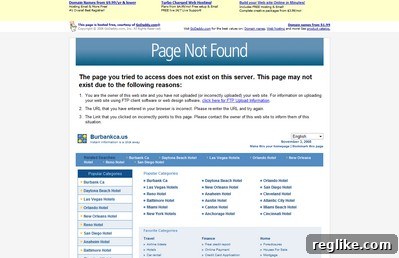
This integration meant that GoDaddy was essentially leasing a portion of its customer’s error page traffic to DomainSponsor, allowing them to serve their own network’s ads, often powered by major ad networks like Google AdSense. This created a complex web of monetization where GoDaddy profited from the traffic directed to its hosting customers’ error pages, which were then further monetized by a third-party domain parking service.
The Controversy and Industry Standards: Google’s Stance and User Experience
The decision to implement parked domain ads on 404 pages drew immediate scrutiny, particularly from industry experts familiar with online advertising policies. A significant point of contention revolved around Google’s established guidelines. Google, a major ad network that powers many parked domain services like DomainSponsor, clearly categorizes and treats “parked page traffic” differently. Typically, traffic to parked domains or non-existent URLs is considered lower quality and monetized less aggressively or under stricter rules.
The author of the original article expressed surprise, highlighting that Google typically provides error page feeds to ISPs and computer companies for non-existent domain names, not necessarily for non-existent pages within an existing website. While parked pages also serve ads on non-existent URLs (like domainname.com/something), extending this to a client’s 404 page within an active site raised questions about compliance and ethical implications within the broader ad ecosystem.
Beyond regulatory concerns, the primary issue lay with user experience. Landing on a 404 page is already a frustrating experience for users. To then be confronted with a barrage of unrelated advertisements, often indistinguishable from legitimate content, further degrades that experience. It can lead to confusion, distrust, and a higher likelihood of users abandoning the site or even the hosting provider. For site owners, even those on free plans, this practice could undermine their efforts to build a credible online presence, as their error pages were effectively hijacked for third-party monetization.
GoDaddy’s Decision to Discontinue: Acknowledging the Test’s Outcome
Following industry attention and feedback, GoDaddy promptly addressed the situation. A spokesperson for the company provided a concise explanation, confirming the nature of the experiment and its impending cessation:
Go Daddy has some hosted Web sites using ad placement on 404 pages. This applies only to specific, free ad-supported hosting accounts. This was a test we conducted and are phasing it out.
The “phasing it out” statement signifies that GoDaddy acknowledged the test’s outcome, which presumably did not meet expectations or faced sufficient opposition to warrant its continuation. While the exact reasons for discontinuation were not explicitly detailed, it’s reasonable to infer that a combination of factors contributed to the decision:
- Negative Industry Reaction: The clear discomfort among digital marketing and web hosting professionals.
- Potential User Backlash: While free users might have fewer rights, a sufficiently degraded experience could lead to churn or negative brand perception.
- Regulatory or Ad Network Concerns: Ensuring compliance with ad network policies (like Google’s) is crucial for large-scale operations.
- Performance or Ethical Questions: The monetization might not have been as effective as anticipated, or the ethical implications became too pronounced.
The swift decision to discontinue highlights the responsiveness of major players like GoDaddy to industry feedback and the importance of maintaining a positive brand image in a competitive market.
Broader Implications for Web Hosting and Digital Monetization
GoDaddy’s experiment, though short-lived, offers valuable insights into the broader challenges and strategies within web hosting and digital monetization. It underscores the perpetual tension between providing valuable services (especially free ones) and generating sustainable revenue. For free hosting providers, the line between acceptable monetization and intrusive advertising is often blurry. This case reminds us that:
- Transparency is Key: Users, even those on free plans, expect a certain level of transparency regarding how their online presence might be used for monetization.
- User Experience Trumps Short-Term Gains: Sacrificing user experience for immediate revenue can lead to long-term brand damage and loss of trust.
- Industry Standards Matter: Adhering to widely accepted best practices and respecting ad network policies is crucial for maintaining credibility.
- Innovation Comes with Risks: While experimentation is vital for growth, not every monetization strategy will be successful or well-received.
The future of web hosting will continue to see providers exploring diverse monetization models, from premium upgrades and additional services to affiliate partnerships and display advertising. However, the lesson from GoDaddy’s 404 page test is clear: these strategies must be carefully balanced with user expectations, ethical considerations, and the overarching goal of supporting a positive online experience.
Conclusion: The Importance of a Thoughtful Approach to Monetization
GoDaddy’s attempt to monetize 404 error pages on its free hosting accounts with DomainSponsor parked domain ads serves as a poignant reminder of the intricate challenges in digital monetization. While the pursuit of revenue is a fundamental business objective, particularly when offering free services, it must be carefully weighed against the principles of user experience, ethical conduct, and industry standards. The prompt decision to discontinue the practice indicates a recognition that certain monetization efforts, despite their potential, may not align with broader expectations or the long-term vision of fostering a trusted online environment.
Ultimately, a 404 error page should primarily serve to help a user who has encountered a broken link or mistyped URL, guiding them back to relevant content or providing a clear path forward. Transforming it into a dense advertising portal, particularly for unrelated parked domain ads, undermines its core purpose and can lead to frustration and distrust. This episode highlights that in the digital realm, where user attention is currency, a thoughtful and user-centric approach to monetization is not just a best practice, but a necessity for sustainable success.
Thanks Elliot for the insightful tip that brought this story to light.