
Revolutionizing Domain Search: GoDaddy’s Patented Approach to Personalized Results
In the vast and ever-expanding digital landscape, securing the perfect domain name is often the first, critical step for any individual or business establishing an online presence. However, with millions of registered domains and an increasing number of top-level domains (TLDs) available, finding a domain that is both memorable and relevant can be a daunting task. GoDaddy, a global leader in domain registration and web services, has taken significant strides to address this challenge by developing and patenting innovative techniques for highly targeted domain name search results.
These groundbreaking patents signal a new era in how users discover and acquire their ideal web addresses. By leveraging sophisticated data analysis and predictive algorithms, GoDaddy aims to transform the generic domain search experience into a personalized journey, deeply tailored to a user’s specific needs, location, and business identity. This strategic move not only enhances user experience but also empowers businesses to find domain names that truly resonate with their brand and target audience, ultimately contributing to a more effective online strategy.
The Evolution of Domain Name Discovery
Traditionally, domain name searches relied heavily on keyword matching and availability checks. Users would input desired terms, and the system would display a list of available options, often prioritizing popular TLDs like .com, .net, or .org. While functional, this approach often overlooked the nuanced requirements of diverse users and the strategic importance of choosing a domain that aligns with specific geographical markets or industry sectors. The explosion of new generic top-level domains (gTLDs) over the past decade, ranging from .shop and .tech to .photography and .app, further complicated the process, offering more choice but also demanding more sophisticated filtering mechanisms.
The need for a more intelligent search mechanism became evident. A small local business in London might benefit more from a .london or .co.uk domain, while a global tech startup would likely prefer a .com or .tech. A non-profit organization, distinct from a for-profit entity, has different branding considerations. GoDaddy’s patented methods directly address these complexities, moving beyond simple keyword availability to predict and suggest domains that are contextually relevant and strategically advantageous for the user.
GoDaddy’s Patented Framework for Intelligent Domain Search
GoDaddy’s commitment to innovation in domain discovery is encapsulated in three key patent applications. Two of these applications were initially filed in August 2013, with a subsequent continuation patent filed in September 2014. All three applications were officially published by the U.S. Patent and Trademark Office, revealing the intricate details of their advanced targeting system. These patents outline methods that move beyond conventional search, creating a highly adaptive system that learns about the user and their intent.
At the core of these patents lies a sophisticated methodology designed to determine crucial user attributes: location, language, and business type. Once these parameters are established, the system intelligently targets both top-level domain names (TLDs) and second-level domains (SLDs) to present results that are not just available, but optimally suited to that specific individual or entity. This personalized approach dramatically improves the chances of a user finding a domain that precisely matches their requirements, reducing the time and effort typically associated with domain hunting.
Understanding the User: Key Data Points for Personalization
The success of GoDaddy’s targeted domain search hinges on its ability to accurately identify key characteristics of the user. This data collection is multi-faceted and robust:
- User Location Determination: While seemingly straightforward, determining a user’s geographical location involves several techniques. This can range from analyzing the user’s IP address, which provides a general geographical area, to more precise methods like browser location settings, explicit user input during signup, or even historical interaction data. Understanding the user’s location is paramount for suggesting relevant country-code TLDs (ccTLDs) or location-specific gTLDs, such as .nyc or .london, which can significantly boost local search engine optimization (SEO) and build trust with a local audience.
- User Language Detection: The language a user prefers for their web experience is another vital piece of information. This is typically determined through browser language settings or explicit selections made by the user on GoDaddy’s platform. Presenting domain suggestions in the user’s native language or suggesting domains relevant to a specific linguistic community can greatly enhance relevance, especially for businesses targeting non-English speaking markets.
- Business Type and Industry Categorization: This is arguably the most innovative and impactful aspect of GoDaddy’s patented system. Unlike location or language, inferring a user’s business type is a more complex task that requires advanced analytical techniques. The patents describe several novel methods for achieving this:
- Website Content Analysis: If a customer already has an existing website, GoDaddy’s system can analyze its content for keywords, themes, and common phrases. For instance, if a website frequently uses terms like “gear,” “trail,” “helmet,” and “bicycle repairs,” the system can infer that the customer operates a bike shop. This allows GoDaddy to make highly relevant suggestions based on their existing online identity.
- Website Template Selection: For users in the process of building a new website, their choice of a website template can be a strong indicator of their business type. Many templates are designed with specific industries in mind (e.g., templates for restaurants, law firms, e-commerce stores). If a user selects a template commonly associated with, say, small law practices, the system can infer that their business falls into the legal services category.
- Historical Registration Data & User Interactions: GoDaddy can also analyze a user’s past domain registrations, hosting choices, or other interactions within their ecosystem to build a profile of their business interests.
- Third-Party Data Integration (Potential): While not explicitly detailed as a primary method in the provided snippet, registrars often integrate with or consider publicly available business directories or classification systems to enrich their understanding of a business type.
This precise categorization enables GoDaddy to suggest domains that are not only available but also highly pertinent to the user’s specific industry, such as .legal for law firms, .restaurant for eateries, or .shop for e-commerce ventures.
By combining these data points, GoDaddy constructs a comprehensive profile of the user, allowing for a level of personalization previously unseen in domain search.
Targeting Strategies: Delivering Contextually Relevant Domain Suggestions
With a clear understanding of the user’s context, GoDaddy’s system springs into action, employing sophisticated targeting strategies to present the most valuable domain options. The patent examples illustrate how this intelligent filtering works in practice:
The system can determine the most popular TLDs based on a company’s type (e.g., for-profit, non-profit) and location. For instance, a non-profit organization in Canada might be shown .org, .ca, or .ngo as primary suggestions, while a for-profit tech startup in the US might see .com, .io, or .tech. The suggestions are dynamically weighted based on historical registration data and current trends relevant to the inferred user profile. This significantly streamlines the decision-making process for users, guiding them towards TLDs that are widely accepted and trusted within their specific context.
Historical registration data plays a crucial role, allowing the system to learn patterns of domain choice within different business industries. If past data shows that businesses in the “automotive repair” industry frequently register domains ending in .auto or use specific keywords in their SLDs, the system can prioritize these suggestions for new users identified as being in that sector.
Consider a hypothetical search for “bicicletta” (bicycle) and “negozio” (shop) by a user in Italy. GoDaddy’s system would combine the detected location (Italy) with the inferred business type (bike shop). Based on this, it could present highly relevant suggestions like:
bici-negozio.it(a ccTLD popular in Italy)lanostrabici.shop(a gTLD specifically for e-commerce)biciclettaonline.com(a global TLD with relevant keywords)ilmio.bike(an industry-specific gTLD)
This contextual mapping ensures that the suggestions are not only available but also strategically valuable for the user’s specific business and market.
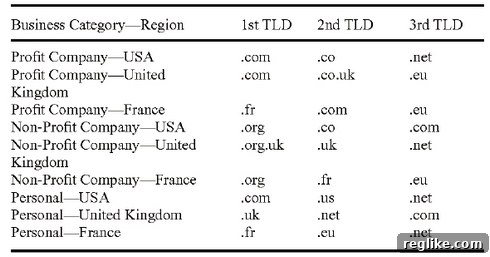
Example of how TLD popularity might be displayed based on company type and location, guiding users to appropriate choices.
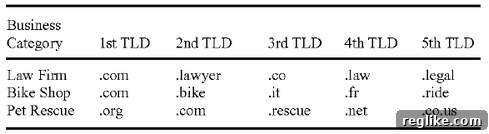
Illustrative example of how historical domain registration data for various industries could inform search results, showing trends in domain name usage.
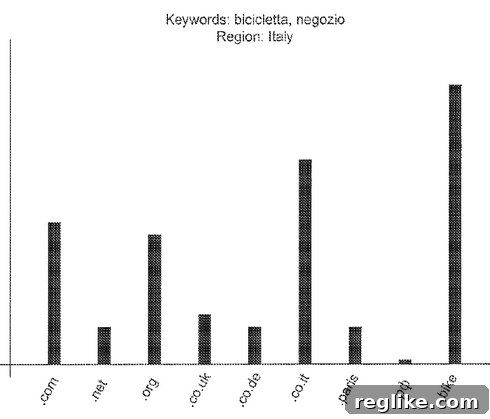
A hypothetical chart demonstrating how combining location and business category data for a search like “bicicletta negozio” in Italy can generate highly localized and relevant domain suggestions.
The Technological Backbone and Benefits
The implementation of such an intelligent system requires a robust technological infrastructure. GoDaddy’s approach likely leverages advanced machine learning algorithms, big data analytics, and predictive modeling. With its immense database of domain registrations and user interactions, GoDaddy is uniquely positioned to train these algorithms to recognize patterns and make highly accurate suggestions. This sophisticated technological backbone allows for real-time analysis and personalized recommendation generation, making the domain search process faster, more intuitive, and significantly more effective.
The benefits of this targeted search paradigm are manifold:
- For Users: It dramatically simplifies the complex task of finding a domain. Users are presented with highly relevant options upfront, reducing cognitive load and saving valuable time. This leads to a higher satisfaction rate and a greater likelihood of finding a domain that perfectly fits their vision.
- For Businesses: Especially for small and medium-sized enterprises (SMEs), these targeted suggestions can be a game-changer. They can secure a domain that not only represents their brand effectively but also improves their visibility in local search results or within their specific industry niche. A relevant domain enhances professionalism, builds trust, and provides a strong foundation for their online presence.
- For the Domain Industry: This innovation pushes the boundaries of domain registration services, setting a new standard for intelligent and user-centric platforms. It encourages more thoughtful domain selection, potentially leading to more successful websites and businesses.
The Visionaries Behind the Innovation
The patents list several key individuals as inventors, highlighting the collaborative effort and depth of expertise required for such a significant innovation. James Carroll, EVP of International; Takao Suzuki, Senior Product Manager; and Arnold Blinn, Chief Architect, are credited with these visionary methods. Their combined experience in international markets, product development, and architectural design underscores the strategic importance and technical sophistication of these patents.
Further insights into GoDaddy’s strategy for domain search targeting were also shared by Mike McLaughlin, GoDaddy’s GM and SVP of Domains, on Domain Name Wire Podcast #16. Such discussions underscore GoDaddy’s commitment not only to technical innovation but also to thought leadership within the domain name industry, openly discussing the challenges and future directions of domain discovery.
The Future of Domain Name Search
These patents represent more than just a technological advancement; they signify a fundamental shift in how domain names are discovered and perceived. By moving towards a more intelligent, user-centric search experience, GoDaddy is not only solving a pain point for millions of users but also shaping the future of online identity. As the internet continues to grow and diversify, the ability to find a truly relevant and impactful domain name will become even more critical. GoDaddy’s patented methods lay a robust foundation for this future, promising a more intuitive and empowering journey for every individual and business embarking on their digital adventure.
The continuous innovation in areas like personalized search ensures that GoDaddy remains at the forefront of the domain name industry, offering tools that are not just functional but truly transformative for its vast global customer base. These patents solidify GoDaddy’s position as a leader committed to enhancing user experience through smart technology, making the digital world more accessible and effective for everyone.
View Godaddy Targeting Patent on Scribd