
GoDaddy’s domain listings will no longer misleadingly appear as auctions when they are, in fact, “make offer” opportunities. This pivotal update marks a significant step towards a clearer and more transparent domain acquisition process for countless users.
Unraveling Years of Confusion: The GoDaddy “Auction” Misconception
For an extended period, a recurring source of frustration and confusion plagued domain buyers on GoDaddy’s platform. The issue stemmed from the way certain domain listings were presented, often leading users to believe they were participating in a traditional auction when the reality was quite different.
Consider a recent example: a prospective domain buyer reached out for assistance, recounting a perplexing experience. They had discovered a seemingly desirable domain listed on GoDaddy and, noting a starting price of $250, confidently placed a bid, believing they were entering an auction. To their dismay, the “auction” concluded, only for the domain to be relisted almost immediately, prompting them to place yet another bid. This cycle of bidding on relisted domains, without any clear resolution, left them utterly confused and understandably frustrated.
Anyone with an understanding of how Afternic listings are integrated into GoDaddy’s marketplace would recognize the underlying truth: the domain was never truly an auction. Instead, it was a “make offer” listing, with the $250 merely representing the minimum acceptable offer price, not an opening bid in a competitive auction. This subtle but critical distinction caused immense confusion, generating a steady stream of inquiries and complaints from end-users who felt misled by the platform’s presentation.
Indeed, this scenario was far from isolated. On a regular basis, I received at least one or two emails monthly from individuals grappling with this very same conundrum. Such widespread confusion not only tarnished the user experience but also created unnecessary friction in what should be a straightforward transaction process.
The Root of the Problem: Afternic Integration and Ambiguous Labeling
The core of this long-standing issue lay in the integration of Afternic listings with GoDaddy. Afternic, a leading domain marketplace, facilitates the sale of premium domains through various methods, including fixed-price sales, auctions, and “make offer” options. When these listings were syndicated to GoDaddy, the system’s display sometimes blurred the lines between these distinct selling mechanisms, particularly for “make offer” domains.
By labeling these listings with a “starting price” and presenting a “bid” button, GoDaddy inadvertently mimicked the interface of a genuine auction. For users accustomed to traditional online bidding platforms, this presentation created a strong expectation of a competitive, time-sensitive event where the highest bidder would win. When this expectation was not met, and the domain simply relisted after the “auction” ended, it shattered trust and created a perception of inefficiency or even dishonesty.
The consequences of such ambiguity extended beyond mere confusion. Potential buyers might have been deterred, abandoning their pursuit of a valuable domain out of frustration. Domain sellers, on the other hand, might have experienced slower sales cycles or missed opportunities due to the opaque nature of the listing. In the fast-paced world of digital assets, clarity is paramount, and this ambiguity presented a significant hurdle for both buyers and sellers alike.
A Welcome Change: GoDaddy’s Commitment to Clarity and User Experience
Thankfully, the era of this particular confusion is now drawing to a close. Paul Nicks, a key figure at GoDaddy, recently confirmed that the display for “Make Offer” domains has been decisively fixed. This update reflects a clear commitment from GoDaddy to enhancing user experience and fostering greater transparency in its domain marketplace.
Going forward, domain names that are available via a “make offer” mechanism, like the one that caused so much bewilderment, will now be clearly designated as “Premium” listings. Crucially, these listings will explicitly state a “Minimum Offer Price,” setting a clear expectation for prospective buyers from the outset. Instead of a misleading “bid” button, users will now find a distinct and unambiguous “Make Offer” button, guiding them directly into the intended negotiation process.
Here’s a visual representation of this improved clarity:
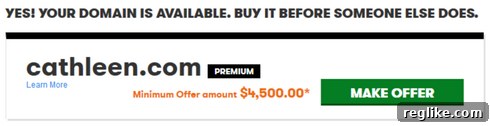
This streamlined interface ensures that users are no longer left guessing about the nature of the transaction. They will instantly understand that they are entering a negotiation for a premium domain, with a defined floor price, rather than participating in an auction.
Distinguishing Listing Types: Empowering Buyers with Clear Information
This enhancement is not just about “make offer” domains; it’s part of a broader effort to differentiate between various domain acquisition methods on the platform. It’s vital for a robust marketplace to clearly articulate its selling mechanisms, thereby empowering buyers to make informed decisions.
With this update, actual domain auctions will continue to be presented as such, featuring a prominent “Bid” button that accurately reflects the competitive, time-bound nature of the sale. Similarly, fixed-price domains, which can be purchased instantly at a set price, will remain straightforward and purchasable as usual.
The distinction is critical. When a user sees a “Bid” button, they expect to compete against other buyers, with the highest bid securing the domain. When they see “Make Offer,” they understand they are initiating a private negotiation, often with the domain owner or their representative, to reach an agreeable price above a specified minimum. This clarity builds trust and prevents the wasted time and emotional investment that often accompanies misleading listings.
The Profound Impact of a Seemingly “Trivial” Change
While this might appear to be a minor aesthetic adjustment on the surface, its impact on user satisfaction and operational efficiency is anything but trivial. The previous ambiguity led to significant frustration, not only for end-users but also for GoDaddy’s customer support teams, who had to repeatedly explain the nuances of “make offer” listings versus true auctions. Each confused customer represented a potential lost sale, a tarnished brand interaction, and an avoidable expenditure of support resources.
By providing a crystal-clear display, GoDaddy significantly reduces the cognitive load on its users. Buyers can now approach domain acquisition with confidence, knowing exactly what kind of transaction they are entering. This fosters a more positive and efficient buying journey, which is crucial for a platform that handles millions of domain registrations and sales annually.
Moreover, this change underscores the importance of intuitive user experience (UX) design in any online marketplace. For high-value digital assets like domain names, transparency is not just a nicety; it’s a necessity. Clear communication about the buying process builds consumer trust, encourages engagement, and ultimately contributes to a healthier and more active marketplace for both buyers and sellers.
Navigating the Domain Market with Confidence
This pivotal update from GoDaddy serves as a testament to the platform’s responsiveness to user feedback and its dedication to refining the domain acquisition experience. For anyone looking to acquire a domain name, whether for a personal blog, a startup, or an established enterprise, understanding the different listing types is fundamental.
The domain name market is dynamic, offering a variety of ways to secure that perfect online identity. Now, with GoDaddy’s enhanced clarity, buyers can navigate these options with greater ease and certainty. When you encounter a domain you wish to purchase, pay close attention to the specific labeling: look for “Premium” and a “Minimum Offer Price” if you’re engaging in a negotiation, or a “Bid” button for a true auction, and of course, the straightforward “Add to Cart” for fixed-price sales.
In conclusion, this resolution to a long-standing point of confusion on GoDaddy’s platform is a commendable and impactful change. It marks a significant improvement in the domain buying journey, translating directly into fewer bewildered customers and a more seamless, transparent experience for everyone involved in acquiring valuable digital real estate. This move not only enhances GoDaddy’s user interface but also reinforces its position as a trusted and user-friendly gateway to the internet’s naming infrastructure.