
Revolutionizing Domain Discovery: GoDaddy’s Advanced Suggestion Patents for Personalized Domain Names
In the expansive and ever-evolving digital realm, securing the ideal domain name is often the cornerstone of establishing a robust online presence. For businesses, entrepreneurs, and individuals, the process of finding an available, relevant, and memorable domain can be surprisingly complex, given the millions of existing registrations and the continuous introduction of new Top-Level Domains (TLDs). Domain name registrars serve as critical navigators in this process, guiding users through a vast sea of choices. Recognizing the growing need for more intelligent and tailored assistance, industry leader GoDaddy (NYSE: GDDY) has recently been granted a significant patent by the United States Patent and Trademark Office (USPTO). This patent signals a substantial advancement in how domain names are presented and recommended to customers, promising a more efficient and effective discovery journey.
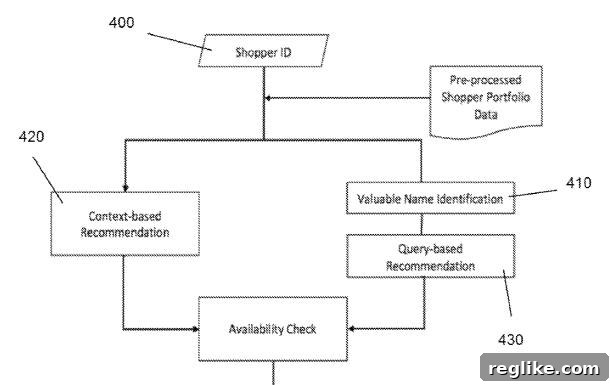
Issued as patent #10,387,959, and aptly titled “Portfolio-based domain name recommendations,” this innovative framework outlines sophisticated methodologies that enable domain registrars to fine-tune their suggestion algorithms. The core objective is to move beyond generic lists of available names and instead offer a personalized, streamlined, and ultimately more successful domain acquisition experience. The patent delves into strategic approaches designed to significantly enhance user satisfaction and optimize the registrar’s ability to connect customers with domain names that genuinely align with their vision and goals. For those interested in the technical specifics, the full details of the patent (pdf) provide an in-depth exploration of these cutting-edge techniques.
Strategic Domain Suggestion Management: Overcoming ‘Suggestion Fatigue’
One of the principal challenges in domain name suggestions is the potential for ‘suggestion fatigue.’ Users can quickly become overwhelmed or disengaged when repeatedly presented with the same or irrelevant domain options. GoDaddy’s patent addresses this directly by proposing an intelligent system to manage the frequency and context with which specific domain recommendations are displayed to a customer. This goes far beyond a simple counter; it’s a nuanced approach to understanding user interaction and inferring interest or disinterest.
For example, the patent describes a scenario where a registrar’s system might present a particular domain name a set number of times—say, five instances. If, after these five presentations, the customer has not taken any affirmative action (such as adding it to a favorites list, clicking for more information, or initiating a registration), the system can deduce that the customer is likely not interested. Consequently, that specific suggestion would be intelligently removed from future recommendation sets. This dynamic adjustment is vital for several reasons that collectively enhance the user experience:
- Reduces Cognitive Load: By filtering out repeatedly ignored or irrelevant suggestions, the overall list of options becomes cleaner, more concise, and easier for the customer to process. This minimizes the feeling of being overwhelmed.
- Increases Relevance: The algorithm can then prioritize presenting fresh, potentially more fitting alternatives, ensuring that the domain search remains dynamic and engaging, and that users are consistently exposed to new possibilities.
- Boosts User Satisfaction: Customers are less likely to experience frustration from seeing the same unappealing options time and again. This leads to a smoother, more positive, and less tedious domain discovery journey.
- Enables Data-Driven Optimization: This adaptive mechanism allows registrars to gather subtle, implicit feedback from user behavior. By tracking which suggestions are ignored and which are engaged with, recommendation engines can be continuously refined, improving their accuracy and effectiveness over time through machine learning.
This intelligent limitation extends beyond mere suppression; it can involve analyzing various engagement metrics, such as how long a user hovers over a suggestion, their click-through rates, and even the broader context of their current search session. By proactively adapting to signals of disinterest, registrars can ensure their suggestion systems remain valuable aids rather than sources of frustration, ultimately streamlining the path to successful domain registration.
Portfolio-Based Domain Recommendations: Leveraging Existing Digital Assets
Perhaps one of the most innovative and forward-thinking elements within GoDaddy’s patent is its concept of “portfolio-based domain name recommendations.” This embodiment represents a significant leap from traditional keyword-matching by analyzing a customer’s existing domain portfolio to generate highly relevant new suggestions. It effectively uses a customer’s established digital footprint as a sophisticated predictor for future domain interests. Intriguingly, the patent highlights a specific discovery: customers exhibit a higher propensity to register new domains that are related to “middle-aged” domains within their current portfolio.
Defining and Understanding “Middle-Aged” Domains
While the patent does not provide an absolute, universal definition for what constitutes “middle-aged,” it offers illustrative benchmarks. For example, domains registered for less than one year might be classified as “new,” while those held for over five years could be designated as “old.” This implies that “middle-aged” domains would typically fall within this intermediate timeframe—perhaps domains registered between one and five years ago. The rationale behind why this specific category of domains proves more influential in a customer’s decision-making process for new acquisitions is compelling:
- Sign of Sustained Commitment and Growth: “Middle-aged” domains often represent projects, businesses, or brands that have successfully navigated their initial launch phase and are now in a period of consolidation, development, or expansion. The customer has invested significant time, effort, and resources, indicating a sustained commitment and a clear potential for further growth. These are not fleeting ideas but established endeavors.
- Evidence of Operational Success or Strategic Learning: These domains are frequently associated with ventures that have achieved a degree of operational success, prompting the customer to seek complementary domains for brand extensions, new product lines, or strategic diversification. Alternatively, they might represent projects where valuable lessons have been learned, driving a desire for related, perhaps refined, new ventures.
- Strategic Expansion Opportunities: A customer holding a “middle-aged” domain is often in a phase where they are actively considering how to expand their brand’s reach, protect intellectual property with variations (e.g., .net, .org, or country-specific extensions), or launch subsidiary micro-sites or services. New domains related to these established assets offer clear, actionable strategic advantages that align with ongoing business development.
- Contrast with “New” and “Old” Domains for New Acquisitions:
- New Domains: Very recently registered domains (e.g., less than a year old) might still be in an experimental or foundational stage. Customers may not yet be fully committed to a long-term direction, making them less likely to immediately seek related domains for substantial expansion. Their immediate need might be focused on developing the initial site.
- Old Domains: Domains held for a very long duration (e.g., over five years) might represent mature, stable assets that require less immediate expansion, or possibly even dormant or fully established projects. The impetus for acquiring related new registrations for growth might be lower, as the primary needs are already met.
By meticulously analyzing the age and activity of domains within a customer’s portfolio, registrars can gain a much deeper and more nuanced understanding of their current business stage and strategic aspirations. This advanced insight enables the generation of highly targeted domain suggestions that genuinely resonate with the customer’s operational focus and growth trajectory. For instance, if a customer owns a four-year-old domain for a thriving software-as-a-service (SaaS) platform, the system might suggest variations, feature-specific subdomains, or domains for international expansion, recognizing the sustained investment and probable expansion plans associated with that “middle-aged” asset.
Integrating SEO Value into Domain Suggestions for Enhanced Online Visibility
Beyond analyzing user engagement and existing portfolios, GoDaddy’s patent also emphasizes the integration of “domain and SEO value” into the suggestion process. This aspect is profoundly significant in today’s digital landscape, where strong search engine visibility is not merely an advantage but a fundamental requirement for online success. A domain name is far more than just a web address; it’s a foundational component of a brand’s overall search engine optimization (SEO) strategy and directly impacts its discoverability.
The patent opens the door for registrars to develop and implement sophisticated mechanisms for objectively assessing and then intelligently presenting domain names based on their potential SEO benefits. This comprehensive approach could involve several critical elements:
- Keyword Relevance and Authority: Identifying and prioritizing domain names that contain high-value, industry-specific keywords relevant to the user’s business, target audience, or primary search queries. This moves beyond simple keyword inclusion to evaluating the keyword’s actual search potential.
- Search Volume and Competitive Analysis: Providing prospective registrants with actionable insights into the estimated search volume for keywords associated with suggested domains, alongside an analysis of the competitive landscape for those terms. This helps users understand the potential traffic and the effort required to rank.
- TLD Impact and Geographic Relevance: Considering the perceived SEO value, industry relevance (e.g., .tech, .shop), or local/regional authority of different TLDs (e.g., .com for global reach, .co.uk for the UK market, .de for Germany). The choice of TLD can influence both user perception and search engine interpretation.
- Strategic Balance: Brandability vs. Keyword Richness: Offering a balanced mix of highly brandable, unique names and exact-match or partial-match keyword domains that might offer an initial SEO boost. This caters to different business objectives—some prioritize branding, others immediate search visibility.
- Predictive Analytics for Emerging Trends: Utilizing advanced data analytics and machine learning to predict which domain names might gain significant SEO traction in the future, based on emerging market trends, evolving search behaviors, and new technological shifts. This provides a forward-looking advantage.
- Content and Industry Alignment: Suggesting domains that align not just with keywords but with the broader content and industry context of the user’s intended website, ensuring a cohesive digital identity.
By thoughtfully integrating SEO value into the domain suggestion process, registrars can empower customers to make far more informed and strategic decisions. These decisions are not solely based on brand appeal or memorability, but also on the practical utility of a domain for attracting organic traffic, achieving higher search rankings, and ultimately driving online visibility and business growth. This transforms the domain suggestion tool from a basic availability checker into a strategic business asset planning resource, directly contributing to a customer’s long-term online success.
The Broader Impact: Paving the Way for a Highly Personalized Domain Acquisition Future
GoDaddy’s patent #10,387,959 transcends a mere technical update; it represents a monumental shift within the domain industry towards highly intelligent, profoundly personalized, and intensely data-driven domain acquisition experiences. These innovative methodologies are poised to create a profound impact across several critical dimensions of the digital ecosystem:
Significantly Enhanced User Experience and Optimized Conversion Rates
For individuals and businesses navigating the often-complex journey of finding the perfect domain name, the traditional process can frequently be characterized by frustration and indecision. By systematically reducing irrelevant suggestions, intelligently leveraging insights derived from existing domain portfolios, and integrating critical, actionable SEO data, this patent promises a vastly streamlined, more intuitive, and highly engaging user experience. Customers will feel more guided, understood, and confident in their choices, leading to significantly higher satisfaction levels. Crucially, for registrars, this translates directly into improved conversion rates, as customers are far more likely to discover and register a domain name that genuinely and strategically aligns with their specific needs and aspirations.
Optimized Registrar Operations, Increased Efficiency, and Robust Revenue Growth
From the perspective of domain registrars, these patented techniques offer a formidable competitive advantage in an increasingly crowded market. More intelligent and responsive suggestion engines directly equate to more effective sales channels. By gaining a deeper understanding of customer intent through the analysis of their existing digital assets and observed engagement patterns, registrars can not only optimize their domain inventory presentation but also identify nascent trends in popular TLDs or high-performing keywords. This data-driven approach allows for more agile business strategies, ultimately leading to a surge in domain registrations, enhanced customer loyalty, and robust revenue growth.
The Indispensable Role of AI and Machine Learning in Domain Intelligence
The sophisticated level of analysis and pattern recognition required for implementing portfolio-based recommendations, intelligent suggestion limitations, and predictive SEO value assessments inherently points to the critical and growing application of Artificial Intelligence (AI) and Machine Learning (ML). These cutting-edge technologies are absolutely essential for processing the vast quantities of user data generated daily, for discerning intricate behavioral patterns, and for delivering highly accurate and predictive recommendations in real-time. GoDaddy’s patent provides a comprehensive theoretical and practical framework within which advanced algorithms can continuously learn from every single user interaction, iteratively refining the domain suggestion process and making it progressively smarter, more precise, and more valuable over time.
Future Implications for the Dynamic Domain Industry Landscape
This pivotal patent firmly underscores a broader and undeniable trend towards advanced personalization that is sweeping across all digital services, from e-commerce to content streaming. For the domain industry specifically, it signifies a transformative shift away from rudimentary keyword lookups towards a holistic, 360-degree understanding of a customer’s entire online journey, their evolving business objectives, and their long-term digital strategy. It also powerfully highlights the enduring and escalating importance of robust data analytics and predictive modeling in shaping future product development, informing marketing strategies, and continuously improving user services. As the landscape of new TLDs continues its rapid expansion, intelligent and adaptive domain suggestion systems will become not just beneficial, but absolutely indispensable in effectively guiding users through an ever-growing and complex domain universe.
Conclusion
GoDaddy’s patent #10,387,959 represents a monumental and transformative milestone in the ongoing evolution of domain name registration and discovery. By introducing highly intelligent mechanisms for mitigating suggestion fatigue, pioneering innovative portfolio-based recommendations that strategically leverage the unique value of “middle-aged” domains, and seamlessly integrating critical, actionable SEO insights, GoDaddy is setting an ambitious new standard for how domain registrars can truly assist customers in their crucial quest for the ideal online identity. These multifaceted advancements are poised to not only deliver a significantly more efficient, intuitive, and satisfying user experience but also to fundamentally reshape the domain industry. They pave the way for a more intelligent, data-driven, and personalized future, ensuring that the foundational first step of choosing a domain name is as insightful, strategic, and successful as possible for every individual and business embarking on their digital journey.