
Empowering Domain Investors: Afternic’s Enhanced Self-Brokering Features Unveiled
In the dynamic world of domain investing, efficiency and insight are paramount. As digital real estate continues to appreciate, the tools and platforms available to domain owners directly impact their success in monetizing their portfolios. Afternic, a leading domain aftermarket platform, recognized this need early on. While its initial foray into self-brokering—a feature allowing sellers more direct control over their domain sales—was functional, it was admittedly a foundational, almost ‘alpha’ version upon its launch in March. Fast forward, and the platform has not rested on its laurels, diligently rolling out a series of significant enhancements designed to empower sellers with more data and streamline the entire offer submission and deal finalization process.
These recent updates represent a pivotal shift, moving Afternic’s self-brokering capabilities from a basic utility to a more robust and user-centric solution. They address critical pain points identified by the domain investing community and underscore Afternic’s commitment to refining the domain sales experience for both buyers and sellers. By focusing on areas that directly influence conversion rates and negotiation success, Afternic is setting a new standard for direct domain transactions. Let’s delve into the three most impactful improvements that are reshaping how domainers interact with their leads and close deals.
Key Enhancements Transforming Afternic Self-Brokering
The journey from a “bare bones” system to a more sophisticated platform is marked by continuous iteration and responsiveness to user feedback. Afternic’s development team has clearly been attentive, delivering improvements that tackle common frustrations and amplify the effectiveness of its self-brokering tool. These three specific updates stand out for their potential to significantly boost a seller’s chances of closing a deal successfully and efficiently.
1. Deeper Lead Insights: Beyond Basic Demographics
One of the most frustrating aspects of domain sales can be the lack of actionable information about potential buyers. Previously, Afternic’s self-brokering only offered rudimentary lead data, limited to the buyer’s country and timezone. While these data points provide a geographical context, they offer little strategic value for tailoring a sales approach or understanding buyer intent. The recent update dramatically changes this landscape, providing sellers with a much richer tapestry of information.
Now, sellers can access crucial details from Afternic’s screening questions. This includes insights into why the buyer is interested in the domain and whether they are a first-time domain buyer. This elevated level of intelligence is a game-changer for domain investors. Knowing a buyer’s motivation—whether for a startup, a specific project, branding, or investment—allows sellers to craft highly personalized and persuasive communication. For instance, if a buyer indicates they need the domain for a new startup, the seller can emphasize the branding potential, ease of recall, or market authority the domain conveys. Conversely, if the interest stems from a specific industry expansion, the conversation can pivot towards market reach and competitive advantage.
Furthermore, identifying first-time buyers is invaluable. New buyers might require more guidance, reassurance, and explanations about the domain acquisition process, potential uses, or the value proposition. An experienced buyer, on the other hand, might prefer a more direct negotiation focused purely on price and terms. This ability to instantly categorize and understand buyer intent significantly reduces wasted effort, allowing sellers to focus their energy on serious leads with a clear strategy. It transforms the selling process from a shot in the dark into a targeted, informed engagement, ultimately increasing the likelihood of successful negotiations and higher conversion rates for domain portfolios.
2. Streamlined Offer Submission: Eliminating the Account Registration Hurdle
A significant friction point in any online transaction funnel is mandatory account registration. Many potential buyers, especially those casually browsing or making an initial inquiry, are deterred by the requirement to create a new account, remember another password, or share excessive personal information upfront. This barrier often leads to abandoned carts and lost sales opportunities. Afternic’s initial self-brokering system mandated the creation of a GoDaddy account for buyers to submit an offer, a hurdle that was widely noted as a drag on inquiry rates.
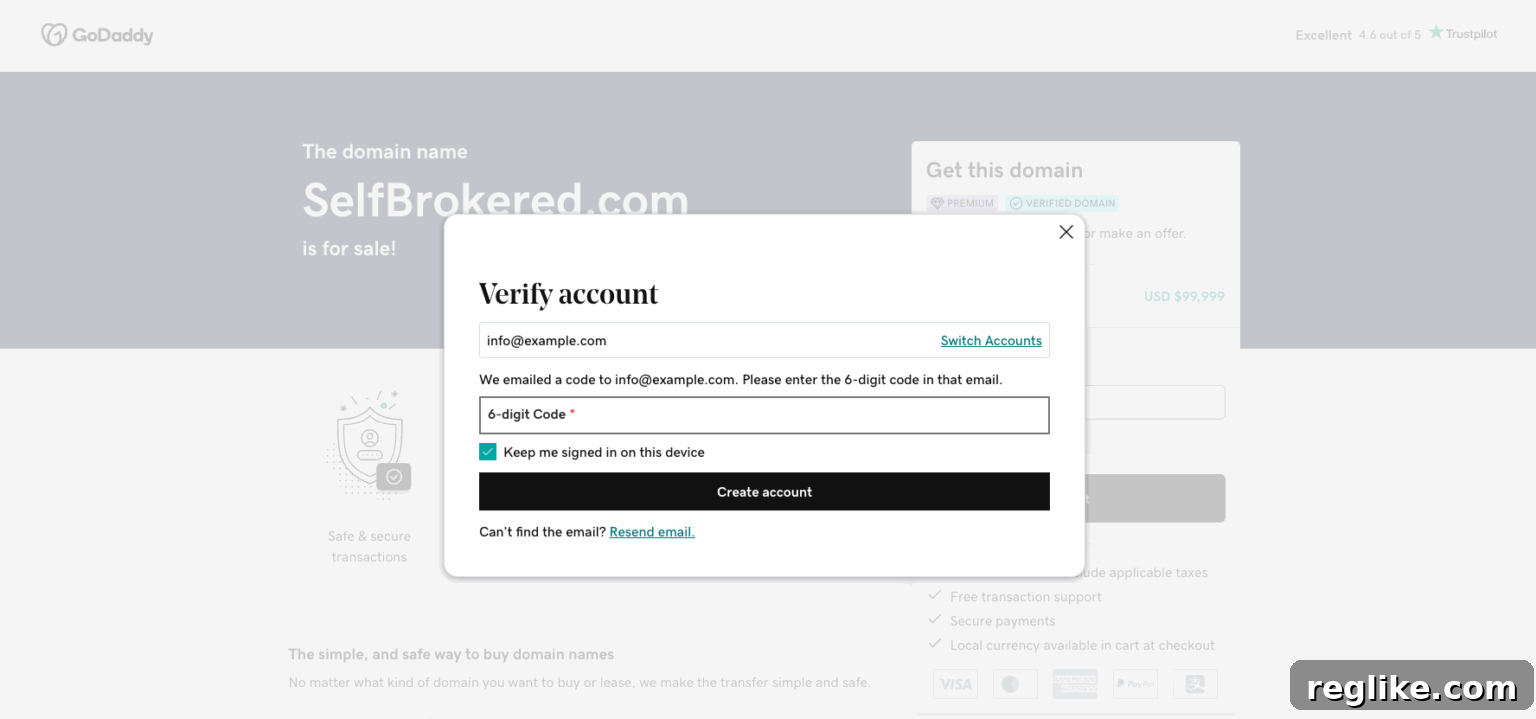
The new update elegantly addresses this issue by allowing buyers to submit an offer with just an email address verification. This seemingly small change has a profound impact on the buyer journey. By simplifying the initial step to a mere email verification, Afternic has drastically lowered the entry barrier for interested parties. Buyers can now express their interest and make an offer without the perceived commitment or time investment of a full account setup. This change is designed to capture more leads at the top of the sales funnel, as fewer potential buyers will drop off due to an onerous initial process.
While the process for buyers appears as a simple email verification, Afternic’s backend cleverly uses this step to create an actual GoDaddy account for the user. This approach is a strategic compromise: it offers the buyer an immediate, low-friction experience while still integrating them into the GoDaddy ecosystem, which can facilitate future interactions and payment processing. The previous “significant friction point” has been largely mitigated, paving the way for a smoother, more accessible offer submission process that benefits both sellers (more offers) and buyers (easier access). However, the platform’s verbiage during this process could still be refined to explicitly state that an account is being created, ensuring full transparency for users who might otherwise feel misled or confused.
3. Post-Acceptance Communication: Crucial for Closing the Deal
Securing an accepted offer is a significant milestone, but it’s not the final step in a domain sale. The period between offer acceptance and actual payment can often be fraught with uncertainty, buyer cold feet, or logistical hurdles. In the previous iteration of Afternic’s self-brokering, sellers lacked a direct channel to communicate with buyers after an offer was accepted, making it challenging to guide them through the payment process or address any last-minute questions. This often led to deals stalling or falling through entirely.
Recognizing the critical importance of human interaction in closing high-value transactions, Afternic has introduced the ability for sellers to communicate directly with buyers once an offer has been accepted. This feature is indispensable. It empowers sellers to proactively engage with buyers, clarify next steps, provide instructions for payment, answer any lingering questions, and generally build rapport. This direct line of communication helps to maintain momentum, alleviate buyer anxieties, and prevent deals from unraveling due to a lack of follow-up or clear guidance. For instance, sellers can now confirm payment methods, provide necessary documentation, or even offer assistance if a buyer encounters technical difficulties during the payment phase.
This improvement bridges a critical gap in the sales funnel, transforming an impersonal, automated process into a more supported and collaborative one. By enabling sellers to nurture the accepted offer through to final payment, Afternic significantly increases the chances of successful transaction completion. It adds a layer of professionalism and personal touch that is often essential for significant purchases like premium domain names, ensuring that both parties feel supported and confident in finalizing the deal.
The Collective Impact and Future Outlook for Afternic Self-Brokering
These incremental improvements, while seemingly distinct, collectively elevate the Afternic self-brokering experience from a basic tool to a more sophisticated and effective sales platform. For domain investors, this translates into a clearer path to monetization, enhanced control over their sales process, and ultimately, higher conversion rates for their domain assets. The platform is now more aligned with the needs of professional domainers who seek efficiency, actionable data, and robust communication tools to navigate the complexities of domain sales.
However, the journey towards an ideal domain marketplace is continuous. While these updates are commendable, there remains scope for further refinement. The clarity of the login/verification process, particularly the verbiage used when a buyer “verifies their email” but simultaneously creates a GoDaddy account, could benefit from increased transparency. Users appreciate knowing exactly what action they are performing and what the implications are.
Furthermore, a highly anticipated enhancement would be the ability to self-broker leads generated through the “Request Price lander,” not just the “Custom Lander.” Expanding self-brokering capabilities to include all types of inbound leads would provide sellers with even greater flexibility and control, allowing them to capture and manage buyer interest from diverse entry points. This would cater to a broader range of buyer intents and ensure that no potential opportunity is left unaddressed. Imagine the power of handling inquiries directly, regardless of how the buyer initially expressed interest – it would create a truly unified and comprehensive self-brokering ecosystem.
Afternic’s proactive approach in addressing user feedback and continuously enhancing its platform signals a strong commitment to serving the domain investing community. These updates confirm that self-brokering is maturing into a powerful feature, promising a more efficient and profitable future for domain sales. As the platform evolves, it will undoubtedly continue to empower domain investors with the tools they need to thrive in the competitive digital landscape. Keep an eye on further announcements, as Afternic seems poised to roll out even more functionalities that will cement its position as a leading choice for domain monetization, as detailed in recent GoDaddy updates.