

Exploring GoDaddy’s Ambitious Foray into the Goods Marketplace in 2009
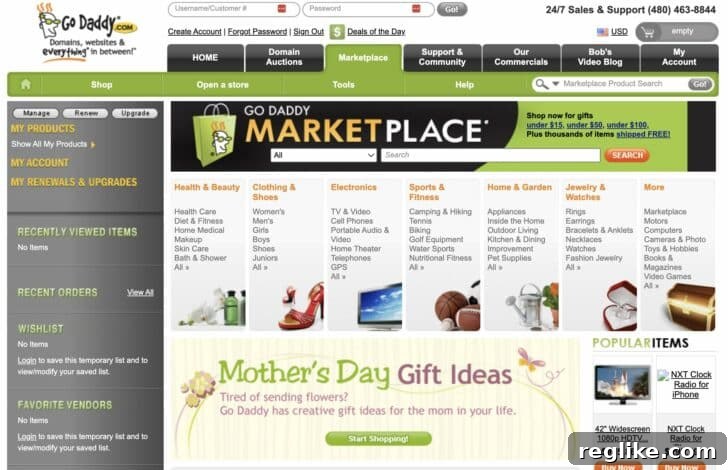
For those deeply immersed in the ever-evolving landscape of the domain name and web hosting industry, certain historical footnotes tend to resurface. One such intriguing chapter in the story of GoDaddy, a giant in its field, involves its venture into the competitive world of online marketplaces. Back in 2009, long before the current era of diversified digital services, GoDaddy made a significant move that aimed to challenge established platforms like eBay and Amazon, launching its very own goods marketplace.
GoDaddy’s Vision: Leveraging Traffic for E-commerce Dominance
The year 2009 marked a pivotal moment for GoDaddy. Already a dominant force in domain registrations and a rapidly growing player in web hosting, the company commanded an immense amount of website traffic. With millions of small businesses and individuals relying on GoDaddy for their online presence, the natural question arose: how could this colossal user base be further monetized and engaged? The answer, at least for a time, seemed to lie in direct e-commerce – not just enabling users to build online stores, but creating a centralized marketplace where they could actively buy and sell physical goods.
The motivation was clear: to diversify revenue streams beyond core domain and hosting services and to tap into the lucrative, high-volume transactional model of online retail. GoDaddy envisioned a platform where its existing customers, as well as new users, could set up digital storefronts, list products, and engage in sales, all within the GoDaddy ecosystem. This strategic pivot aimed to transform GoDaddy from primarily an infrastructure provider into a broader facilitator of online commerce, positioning it as a direct competitor to the then-reigning e-commerce giants.
The Marketplace Model: Fees, Commissions, and a New Frontier
When GoDaddy officially unveiled its marketplace initiative in 2009, it detailed a business model designed to generate revenue through a combination of monthly fees and sales commissions. Sellers signing up for the platform would pay a recurring subscription charge, in addition to a substantial 10% commission on every item sold. This tiered approach was common in the marketplace industry, aiming to cover operational costs while also profiting from successful transactions. The model was ambitious, reflecting a genuine belief that GoDaddy could replicate the success of other platforms by leveraging its brand recognition and massive customer base.
It’s crucial to distinguish this marketplace endeavor from GoDaddy’s existing e-commerce solutions. At the time, GoDaddy already offered products that allowed customers to build their own online stores on their own websites. These tools provided users with the infrastructure to sell products directly to consumers under their own brand. The marketplace, however, represented a fundamentally different business strategy. Instead of providing the tools for individual storefronts, GoDaddy sought to become the storefront itself, a central hub where multiple sellers converged, and buyers could browse a vast array of products. This shift from “powering a store” to “being the store” demanded a different set of competencies and a far more complex operational framework.
The Intricacies of Building an Online Marketplace: A Steep Learning Curve
Building and successfully scaling an online marketplace is one of the most challenging feats in the digital economy, and GoDaddy’s venture quickly ran into these inherent difficulties. The primary hurdle is often referred to as the “chicken-and-egg problem”: a marketplace needs sellers to attract buyers, but buyers won’t come if there aren’t enough products from sellers. Conversely, sellers won’t join a platform if there aren’t enough buyers to make sales. Creating this initial liquidity and momentum requires substantial investment in marketing, incentives, and a compelling value proposition for both sides.
Furthermore, operating a physical goods marketplace requires an entirely different operational skillset compared to managing domain names or web servers. GoDaddy, an expert in digital infrastructure, suddenly found itself needing to contend with aspects such as:
- Trust and Safety: Ensuring product quality, combating fraud, verifying sellers, and protecting buyers are paramount for user confidence. This necessitates robust review systems, dispute resolution mechanisms, and proactive moderation.
- Logistics and Fulfillment: While GoDaddy wasn’t directly handling shipping, it had to provide the framework and support for sellers to manage their orders, shipping, and returns efficiently. This often involved integrating with third-party payment gateways and shipping carriers.
- User Experience (UX) and Design: A marketplace needs an intuitive interface for both buyers to discover products and sellers to manage their listings, orders, and customer interactions. The screenshot from 2011, with its stark design, might now seem dated, highlighting the rapid evolution of web design and user expectations.
- Marketing and Discoverability: In a crowded online retail space dominated by giants, gaining visibility for individual product listings and the marketplace as a whole is a massive undertaking. This involves complex SEO strategies, advertising campaigns, and establishing a unique brand identity for the marketplace itself.
- Customer Support: Beyond technical support for domains or hosting, marketplace support involves handling transactional issues, product-related queries, and mediating disagreements between buyers and sellers – a resource-intensive task.
- Product Catalog Management: Maintaining a diverse, high-quality, and up-to-date catalog of products is essential to keep buyers engaged and returning. This often requires complex categorization, search functionality, and personalization features.
These challenges collectively underscored the reality that running a physical goods marketplace was indeed “a bit outside of GoDaddy’s wheelhouse.” It required a fundamental shift in corporate culture, technological focus, and market strategy.
The Outcome and Lessons Learned
As history shows, GoDaddy’s ambitious marketplace venture ultimately proved to be short-lived. After a couple of years of operation, the company quietly retired the service. The inherent complexities of attracting sufficient numbers of both buyers and sellers, coupled with the immense operational overhead and the formidable competition from established players, likely made the initiative unsustainable. The investment required to truly compete with eBay and Amazon was monumental, and diverting resources from GoDaddy’s core, highly profitable domain and hosting services may have been deemed strategically unwise.
While the marketplace itself did not achieve lasting success, such experiments are invaluable learning experiences for any large corporation. It likely provided GoDaddy with deeper insights into the e-commerce landscape, the needs of small businesses selling online, and the challenges of platform diversification. These lessons may have informed subsequent product developments, leading GoDaddy to refine its offerings for building individual online stores and integrating payment solutions, rather than attempting to be the central marketplace itself. The company ultimately refocused on strengthening its position as the premier provider of tools and infrastructure for businesses to build their own independent online presences.
A Glimpse into the Past: Nostalgia and Digital Evolution
Revisiting the GoDaddy marketplace of 2011, as depicted in the screenshot from the Wayback Machine, offers a fascinating journey back in time. The design, functional yet somewhat austere by today’s standards, reflects the aesthetic and technological limitations of the era. It serves as a vivid reminder of how rapidly digital interfaces and user expectations have evolved over just a decade. The mention of checking out “Bob’s Video Blog” and the need for a Flash player further cements this nostalgic trip, highlighting a technological requirement that is now largely obsolete.
Ultimately, GoDaddy’s venture into a goods marketplace stands as a testament to the company’s innovative spirit and its willingness to explore new frontiers. Though it didn’t redefine the e-commerce landscape, it offers valuable historical context to GoDaddy’s journey and the perpetual challenges of competing in the dynamic world of online commerce. It’s a reminder that even industry giants sometimes embark on paths that ultimately lead back to reinforcing their core strengths, learning valuable lessons along the way.