
GoDaddy’s Inaugural Signature Auction: A Deep Dive into a Stuttering Start
The highly anticipated launch of GoDaddy’s Signature Auctions, a new venture into the premium domain name market, kicked off with more of a whimper than a bang. The first day of the three-day event concluded with a stark outcome: a mere single domain sale. This result has sparked significant discussion and raised questions within the domain investing community regarding GoDaddy’s strategy and the prevailing market sentiment for high-value digital assets. While expectations were high for a platform backed by such a prominent industry player, the initial performance suggests a significant disconnect between seller expectations, GoDaddy’s pricing strategy, and actual buyer interest.
The lone success story from the first day was VirtualServer.com, which found a buyer at its reserve price of $20,000. This sale, while positive, highlights a critical observation: it sold *at* the reserve, not above it, indicating a lack of competitive bidding. This suggests that even the domains deemed “good” with “reasonable” reserves struggled to ignite a bidding war, a common characteristic of successful auctions.
The Elephant in the Room: Exorbitant Reserve Prices
From an experienced domain investor’s perspective, the primary culprit for the lackluster sales performance appears to be the reserve prices set for the auctioned domains. These figures seemed unusually high, significantly exceeding what many seasoned observers would expect these assets to command in established marketplaces like Sedo or Moniker. High reserves, while protecting the seller’s minimum desired price, can often deter potential bidders, especially in a market where buyers are increasingly value-conscious.
Let’s take a closer look at the reserve prices for the domains offered on the first day, and reflect on why they likely contributed to the poor turnout:
- BestPhone.com: $15,000 – A decent category killer, but $15k might be pushing it for the current market without strong competitive bids.
- DietAids.com: $37,000 – A strong keyword in a lucrative niche, but a $37k reserve could be seen as ambitious for a direct sale, let alone an auction.
- Dentists.mobi: $15,000 – While “.mobi” domains have niche utility, a $15k reserve for a highly specific industry domain in this extension is likely to be a hard sell.
- SportUtility.com: $125,000 – A descriptive, high-value keyword. However, a six-figure reserve for a non-exact-match, non-brandable dot-com carries substantial risk for an auctioneer.
- HowtoInvest.com: $39,000 – A valuable “how-to” domain in a profitable educational niche, but again, the reserve might be too rich for the current appetite.
- VirtualServer.com: $20,000 – (Sold at reserve) – This was the only domain that met its price, suggesting that this particular reserve was indeed at the very edge of market acceptability.
- Even.com: $175,000 – A strong, short, four-letter dot-com. However, “Even” lacks immediate commercial obviousness, making a $175k reserve extremely challenging to meet in an open auction.
- Media.mobi: $20,000 – Similar to Dentists.mobi, this .mobi domain with a substantial reserve faces an uphill battle.
- TravelUpdate.com: $10,000 – A reasonable reserve for a descriptive domain in the travel sector, yet still failed to attract a buyer, suggesting broader market hesitancy.
- Bob.com: $1,000,000 – The highlight of the excessive reserves. A one-million-dollar reserve for a common first name dot-com is an extraordinary ask, effectively ensuring no bids in this format. This price point typically demands a private, brokered sale to a specific end-user, not an open auction.
The consensus among domain experts is that most of these reserves were at least two to three times greater than what these domains might realistically fetch in a competitive auction environment on platforms like Sedo or Moniker, which are known for their established buyer bases and more liquid markets. Such high entry barriers not only deter initial bids but also signal to potential buyers that the sellers might be unrealistic in their valuations, discouraging participation altogether.
A Glimpse into the Unique Auction Platform
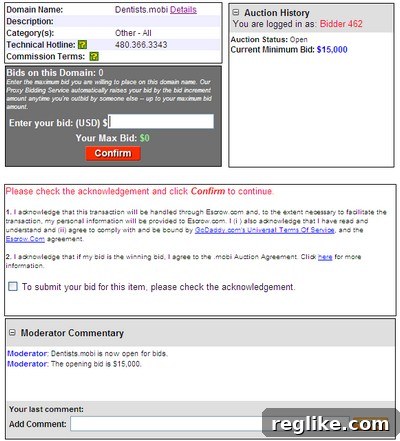
Beyond the pricing strategy, GoDaddy’s Signature Auctions introduced an interesting, albeit unconventional, platform mechanic. Unlike traditional timed auctions that conclude at a specific hour, these auctions lacked a fixed ending time. Instead, a chatroom moderator held the reins, initiating and concluding the bidding process dynamically. This interactive, live-moderated format represents a departure from the automated systems prevalent across most online auction platforms.
The user interface, as depicted in the provided screenshot, reflects this chat-centric approach. While potentially offering a more engaging and immediate experience for some, this system also presents certain challenges. The absence of a clear end-time could create uncertainty for bidders, who prefer knowing precisely when they need to be active. Moreover, relying on a moderator to open and close bidding introduces a human element that might affect transparency or perceived fairness, compared to the strict, algorithmic countdowns of other platforms. This unique setup might also require bidders to be present and attentive for prolonged periods, which could be a barrier for those with busy schedules or in different time zones.
Anticipating Days Two and Three: A Look Ahead
With the first day’s results setting a cautious tone, the question naturally arises: will the final two days of the Signature Auctions be more successful? Based on the pattern of high reserves, many analysts remain skeptical. The remaining inventory, while containing some valuable names, is still burdened by reserve prices that seem out of sync with current market demand. This could lead to a similar outcome, with many domains going unsold.
Here’s a preview of the domains scheduled for the subsequent auction days, along with their respective reserve prices, offering further insight into the challenges ahead:
November 11 Auction Offerings:
- Campaign2008.com: $10,000 – A timely domain for a specific election cycle, but its relevance might diminish over time.
- BargainBuy.com: $29,000 – Strong descriptive name with commercial appeal; however, the reserve is quite high for a generic term.
- Apartments.mobi: $20,000 – This one stands out as a potential contender. The term “Apartments” is highly relevant, and a $20k reserve for a strong .mobi could attract interest from a specific niche buyer.
- Roadwork.com: $45,000 – A specific industry term; the high reserve makes it a long shot.
- ForeignTravel.com: $14,000 – A solid travel domain; this reserve seems more reasonable than many others and could potentially find a buyer.
- Grapes.com: $150,000 – A single, common noun dot-com. While powerful, a $150k reserve demands a very specific end-user with deep pockets.
- Moving.mobi: $20,000 – Similar to other .mobi domains, this reserve is on the higher side.
- TopBeaches.com: $18,000 – A strong descriptive travel domain with good potential; the reserve is still slightly elevated.
- Houses.mobi: $20,000 – Another .mobi in the real estate niche, facing similar challenges as Apartments.mobi but perhaps with less universal appeal.
- YB.com: $200,000 – A two-letter dot-com. These are premium assets, but $200k for “YB” is a significant investment requiring a very specific brand or strategic buyer.
November 8 Auction Offerings:
- BestService.com: $15,000 – A highly desirable descriptive term; the reserve here might be more within reach.
- Maillist.com: $20,000 – Strong keyword for email marketing, but the reserve feels somewhat high.
- WhyHybrid.com: $10,000 – A query-based domain, potentially appealing for content sites, with a more approachable reserve.
- MobileSecurity.com: $150,000 – A robust keyword in a booming industry, but the six-figure reserve is a major hurdle.
- BeautyCounter.com: $25,000 – A brandable and descriptive domain for the beauty industry, with a reserve that might be considered fair by some.
- CollegeFootball.mobi: $20,000 – A niche .mobi in a passionate sports category, but a $20k reserve remains a challenge.
- Earl.com: $80,000 – A common first name, similar to Bob.com, but with a slightly more realistic (though still high) reserve.
- HDTVshop.com: $10,000 – A good descriptive domain for e-commerce, and this reserve is one of the more attainable ones.
- Smoked.com: $10,000 – A short, versatile verb, which could appeal to various niches; the reserve is quite reasonable.
- 1x.com: $25,000 – A short, numeric-letter combination. These are rare and valuable, and $25k is a relatively fair reserve for such an asset.
- Six.com: $1,000,000 – Mirroring Bob.com, another one-million-dollar reserve for a short, generic number. This again points to a severe overestimation of auction liquidity for such premium assets.
Broader Implications for Domain Investing and GoDaddy
The initial performance of GoDaddy’s Signature Auctions offers valuable lessons for both sellers and auction platforms. For sellers, it underscores the critical importance of setting realistic reserve prices that align with current market conditions and buyer sentiment. Overpricing, even for premium assets, can lead to unsold inventory and wasted marketing efforts. For GoDaddy, this inaugural event serves as a crucial test of its ability to attract high-end buyers and facilitate significant transactions in a segment where established players like Sedo and Moniker have years of experience and cultivated networks.
The domain market, while robust for certain niches and end-user acquisitions, often demands liquidity and competitive pricing in an auction format. When reserves are perceived as too high, the incentive for speculative bidding diminishes, and only direct end-users with specific needs might consider engaging. Even then, many prefer to negotiate privately rather than compete in an auction with inflated minimums.
GoDaddy’s entry into this high-stakes auction space could be a game-changer if refined. However, the current strategy of very high reserves combined with a novel, perhaps less transparent, auction mechanism seems to have alienated rather than attracted the target audience of serious domain investors and end-users. The next two days will be critical in determining whether GoDaddy can adapt its approach or if its Signature Auctions will continue to struggle to gain traction in the competitive premium domain market.
In conclusion, while GoDaddy’s ambition to host premium domain auctions is commendable, the first day’s solitary sale highlights fundamental challenges in its execution. The exorbitant reserve prices, coupled with an unfamiliar auction format, appear to have stifled buyer enthusiasm. For GoDaddy to truly establish itself as a formidable player in the high-value domain arena, a recalibration of its pricing strategy and a careful review of the auction experience will likely be essential to foster a more vibrant and successful marketplace.