
GoDaddy’s Unexpected Snail Mail: A Deep Dive into Physical Domain Renewal Notices
In an age dominated by instant digital communication, the arrival of a physical letter often sparks a mix of curiosity and mild alarm. Imagine, then, the surprise of receiving a traditional “snail mail” envelope from a prominent tech company like GoDaddy, especially when it concerns something as inherently digital as domain name renewals. This article delves into a recent experience where a GoDaddy customer received a physical renewal notice, exploring the implications, inconsistencies, and broader questions it raises about customer communication strategies in the domain industry.
The Curious Case of a Tangible Reminder
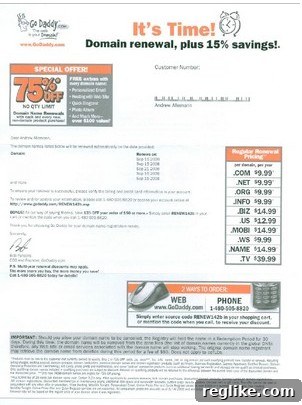
The weekend brought an unexpected delivery: a bright orange envelope from GoDaddy, emblazoned with the words “RENEWAL NOTICE!” This wasn’t an email notification or a pop-up alert; it was a tangible piece of mail, reminiscent of a bygone era. For anyone accustomed to managing their domain portfolio entirely online, this marked a distinct departure from the norm. The initial thought was naturally one of inquiry: why would a leading domain registrar revert to paper mail when digital channels are so efficient and cost-effective?

This was, in fact, the first time this particular customer could recall receiving such a notice from GoDaddy. The immediate assumption leaned towards GoDaddy potentially trialing paper mailers as a new strategy to bolster domain renewal rates, perhaps targeting users less engaged with email or those who might overlook digital reminders. However, as the contents of the letter were examined, a more perplexing scenario began to unfold, challenging these initial hypotheses.
The Auto-Renewal Paradox: Redundancy in Print
The most striking revelation contained within the physical renewal notice was its core message. Despite the urgent “RENEWAL NOTICE!” proclamation on the envelope, all the domain names listed inside were already meticulously configured for automatic renewal. The letter itself explicitly confirmed this, stating: “The domain names listed below will be renewed automatically on the date provided.” This detail immediately raised questions about the purpose and efficiency of sending a physical reminder for services already set to continue without intervention.
Such an action seems counterintuitive for a company that prides itself on digital innovation and streamlined online processes. Why allocate resources to print, postage, and distribution for renewals that are already secured? Several theories emerge from this paradox. It could be a broad, untargeted marketing campaign, where all customers receive mail regardless of their auto-renewal status, a “shotgun approach” aimed at overall brand engagement or upselling. Alternatively, it might signify a backend system lag, where the print notices are generated from a batch process that doesn’t fully synchronize with real-time auto-renewal settings. Or, perhaps, GoDaddy views this as an extra layer of reassurance, ensuring that even the most digitally disconnected customer is aware of their upcoming renewals, offering peace of mind or an opportunity to review their portfolio.
Outdated Pricing and a Missed Opportunity
Adding another layer of complexity to this paper puzzle was the content related to pricing and promotional offers. The letter included a 15% off coupon code for renewals, seemingly a generous gesture. However, it also listed “regular renewal pricing” that was noticeably out of sync with current GoDaddy rates. For instance, .ws domain names were listed at $9.99, whereas the prevailing price at the time was $14.99, with a bulk renewal rate of $13.99.
This discrepancy highlights one of the inherent challenges of using traditional print media for time-sensitive information in a dynamic market. Domain pricing can fluctuate, and physical mail simply cannot keep pace with the rapid changes that characterize the digital economy. The offer of a discount code, while appreciated in principle, also fell flat, as the customer had already completed their renewals the week prior, rendering the coupon moot. While the letter did contain a disclaimer stating that “prices may change at any time,” its practical utility was diminished by the outdated figures and the timing of its arrival. This situation underscores the potential for customer frustration when promotional offers arrive too late or contain information that no longer accurately reflects current market conditions, raising questions about the overall effectiveness of such marketing efforts.
When Snail Mail Makes Strategic Sense
While the specific instance discussed here raises eyebrows due to its redundancy, there are undeniably strategic scenarios where physical mail remains a valuable, even crucial, communication tool for domain registrars. For domain names not set to automatically renew, a physical letter can serve as a vital last-resort reminder. In such cases, where email notifications might be overlooked, caught in spam filters, or sent to an outdated address, a physical notice can be the critical factor in preventing a domain from expiring and potentially being lost forever. This is especially true for high-value domains where the consequences of expiration are significant.
Moreover, physical mail can act as an essential backup when digital communication channels fail. If a domain owner’s email address is incorrect, their inbox is full, or they simply aren’t engaging with email alerts, a physical letter can bridge that communication gap. Some customers, particularly those less comfortable with online transactions or from older demographics, may also prefer receiving official notices through traditional mail. In these specific contexts, the investment in print and postage transforms from a potential inefficiency into a necessary and effective customer retention strategy, offering a robust safety net for critical notifications.
The “RENEW07” Enigma and GoDaddy’s Historical Practices
Adding to the intrigue of this unexpected mailer was a small, almost cryptic code “RENEW07” visible in the lower-left corner of the envelope. This detail immediately sparked speculation: could this indicate that sending physical renewal notices is not a new initiative but rather a legacy practice, perhaps originating as far back as 2007? If so, it suggests a deeply embedded operational routine within GoDaddy that predates much of the current reliance on purely digital communication.
The presence of such a code might point to a system that dispatches these mailers based on a predetermined schedule, irrespective of real-time account settings. This raises questions about the cost-effectiveness and adaptive capabilities of such a system in today’s fast-paced digital environment. Understanding whether this is an isolated incident, part of a larger, ongoing, or resurrected campaign, or simply an artifact of an older system, provides valuable insight into the diverse and sometimes perplexing operational layers of a global domain giant like GoDaddy.
Exceptional Service Despite the Confusion
Amidst the bewilderment caused by the redundant and outdated renewal notice, one aspect of the experience shone brightly: the customer service. Upon contacting GoDaddy to inquire about the significant price discrepancies, the customer encountered what was described as perhaps the nicest and most helpful customer service representative they had ever spoken with. This individual was not only empathetic but also exceptionally efficient, successfully offering a price match for the renewals, despite the complexities introduced by the physical mailer’s outdated information.
This positive interaction underscores the critical importance of human intervention and excellent customer support, especially when automated systems or marketing campaigns lead to confusion or dissatisfaction. It highlights GoDaddy’s commitment to customer satisfaction, proving that even when their automated processes might be a bit out of sync, their human element is ready and able to rectify issues. Such service can significantly mitigate any negative impressions left by unconventional communication methods and reinforce customer loyalty, turning a potentially frustrating situation into a commendable service experience.
Broader Implications and Industry Trends in Domain Management
The receipt of a physical domain renewal notice from GoDaddy in the digital age is more than just an isolated incident; it prompts a broader discussion about communication strategies within the domain registration industry. While digital methods offer unparalleled speed, cost-efficiency, and environmental benefits, this occurrence suggests that traditional methods may still hold a place in certain operational frameworks. It challenges the assumption that all aspects of domain management have fully transitioned to purely digital interfaces, inviting consideration of the diverse needs and preferences of a vast customer base.
This event also brings to light the delicate balance between automation and personalized communication. For large corporations managing millions of domains, the logistical challenge of ensuring every customer receives timely and accurate information is immense. However, when automated systems produce redundant or outdated messages, it can erode trust and create unnecessary confusion. The industry constantly grapples with optimizing these communication workflows, aiming to be both efficient and effective without resorting to what might be perceived as unnecessary or wasteful practices. Furthermore, this situation could stimulate conversations among domain owners about their own notification preferences and the expectations they have from their registrars, pushing for clearer, more consistent communication regardless of the medium. The future of domain management communication will likely continue to evolve, seeking a hybrid approach that leverages the best of both digital and, where truly necessary, traditional methods.
Conclusion: A Glimpse into GoDaddy’s Communication Strategy
The arrival of a physical domain renewal notice from GoDaddy, particularly for domains already set to auto-renew, presented a perplexing yet insightful experience. It highlighted a potential disconnect between GoDaddy’s digital-first reputation and its underlying operational practices. The outdated pricing and redundant reminder for auto-renewed domains certainly raised questions about efficiency and relevance. However, the subsequent interaction with GoDaddy’s exemplary customer service salvaged the experience, reaffirming the company’s commitment to user satisfaction. This unusual mailer prompts us to consider the various layers of communication strategies employed by major domain registrars and encourages a dialogue within the user community: Have you, too, received similar paper renewal notices from GoDaddy or other registrars? Understanding these varied experiences can help shed light on the evolving landscape of domain management communication.