
Surge in ad rates drives organic growth at CentralNic.
CentralNic’s Strategic Ascent: How Google Ad Rates Fueled Organic Growth in 2020
CentralNic (London AIM: CNIC), a prominent player in the domain name and online advertising sector, unveiled its robust financial results for the first nine months of 2020, showcasing a period of significant expansion and strategic evolution. The company’s impressive performance underscores its adeptness at leveraging both strategic acquisitions and burgeoning market opportunities. While major corporate takeovers undeniably propelled CentralNic’s top-line figures, an underlying organic growth story, largely driven by an unexpected surge in Google’s advertising rates, proved to be a critical highlight.
The financial report revealed a staggering 118% year-over-year increase in revenue, soaring to an impressive $168.5 million. This remarkable growth was, to a significant extent, a direct outcome of CentralNic’s ambitious acquisition strategy, which saw the company integrate several key businesses into its portfolio. However, looking beyond the impact of these new additions, CentralNic’s management calculated that revenue grew by a healthy 17% on an organic, pro forma basis. This calculation assumes the acquired businesses had been part of CentralNic’s operations in the previous year, providing a clearer picture of the company’s underlying operational momentum and market penetration without the immediate accounting effects of new mergers.
Central to this substantial organic uplift was a pivotal factor: the escalating ad rates commanded by Google. As a major partner in CentralNic’s monetization efforts, Google’s pricing adjustments had a profound and positive ripple effect across the company’s revenue streams, particularly within its high-growth monetization segment. Understanding the intricacies of CentralNic’s business model and its interaction with Google’s advertising ecosystem is key to appreciating the full scope of this financial achievement.
Unpacking CentralNic’s Diverse Business Segments
To fully grasp the magnitude of Google’s influence on CentralNic’s financial trajectory, it’s essential to examine the company’s operational framework, which is strategically divided into three distinct segments: Indirect, Direct, and Monetization. Each segment caters to different facets of the domain name and online advertising market, contributing uniquely to the company’s overall revenue profile.
-
Indirect Segment: Powering the Domain Ecosystem
The Indirect segment serves as a crucial backbone for the wider domain name industry. It encompasses revenue derived from the reseller registrar channel, where CentralNic provides essential services to other domain registrars. This includes offering backend registry services, such as powering specific top-level domains like .XYZ, ensuring smooth operation and management for these digital assets. Furthermore, CentralNic is responsible for running the country code top-level domain .sk, demonstrating its diverse operational capabilities.
In the first nine months of 2020, this segment saw a significant revenue increase of 51%, reaching $63.5 million. This robust growth was primarily attributable to strategic acquisitions, which expanded CentralNic’s market reach and service offerings within this channel. On an organic, pro forma basis, the Indirect segment still demonstrated healthy growth, climbing 8% or $4.9 million, indicating steady demand and efficient service delivery independent of new acquisitions. This consistent organic performance highlights the underlying strength and resilience of CentralNic’s foundational services in the domain infrastructure market.
-
Direct Segment: Connecting with End-Users
The Direct segment represents CentralNic’s retail arm, focusing on direct sales to end consumers, particularly small businesses that require domain registrations, hosting services, and related online presence solutions. This channel is crucial for maintaining a direct relationship with the ultimate users of domain names and understanding their evolving needs.
During the period, revenue in the Direct segment experienced a 9% year-over-year decrease, settling at $31.1 million. This decline was partially attributed to an internal rejiggering of segments, which led to a reallocation of certain revenue streams. CentralNic reported that on a pro forma basis, the segment saw a more modest decline of 2%. It is noteworthy that CentralNic employs a distinct revenue recognition method for domain registrations in both its reseller and retail channels, recognizing revenue upfront rather than distributing it over the entire registration period. This approach differs from that of many other publicly traded domain name companies, offering a unique perspective on its immediate financial reporting, but potentially smoothing out future revenue recognition from long-term registrations.
-
Monetization Segment: The New Growth Engine
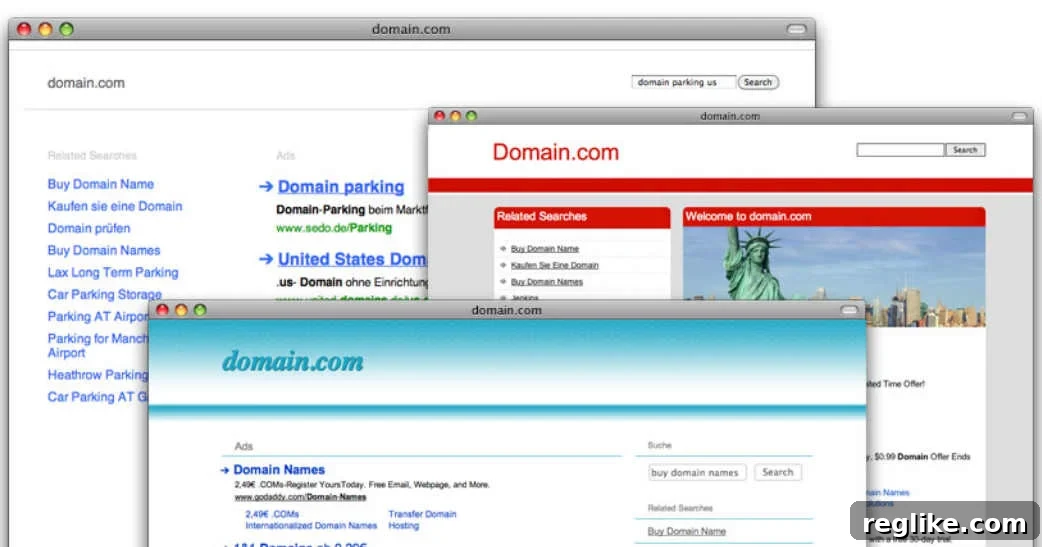
The Monetization segment emerged as CentralNic’s most dynamic and impactful business unit, largely thanks to the acquisition of the Team Internet business at the close of the previous year. This segment is primarily focused on generating revenue through online advertising on domain parking pages. In essence, it leverages high-traffic parked domains by displaying targeted advertisements to visitors who land on these pages, thereby monetizing previously dormant or underutilized web properties.
On a pro forma basis, assuming the Team Internet business had been part of CentralNic for the entire prior year, this segment demonstrated an extraordinary 39% growth, generating $72.9 million in the first nine months of 2020. This makes the Monetization segment not only the largest but also the newest major segment within CentralNic’s diverse portfolio, signaling a strategic shift towards capitalizing on online advertising opportunities linked to its vast domain name holdings.
The Power of RPM: Google’s Role in Monetization
The impressive surge in monetization revenue wasn’t primarily driven by an increase in traffic; surprisingly, traffic to these parked domains only saw a modest 2% rise. Instead, the real catalyst was a dramatic improvement in Revenue Per Thousand (RPM). RPM is a crucial metric in online advertising, measuring the amount of revenue generated for every 1,000 views or impressions. In an astounding development, CentralNic’s RPM soared by a staggering 36% during the year.
This phenomenal increase in RPM directly translates into significant financial gains for CentralNic. Specifically, the enhanced ad rates were responsible for approximately $19 million of CentralNic’s total $25 million organic growth for the year. To put this into perspective, if the RPM had remained constant, the monetization segment’s growth would have been a mere $1.2 million. This stark contrast underscores the critical role that Google’s willingness to pay higher rates for ad placements played in CentralNic’s overall financial health and organic expansion.
The overwhelming majority of CentralNic’s monetization revenue originates from its partnership with Google. Google’s advertising network provides the ads displayed on CentralNic’s vast network of parking pages. In the first nine months of 2020, an impressive 92% of CentralNic’s total monetization revenue—amounting to $66.9 million out of $72.9 million—was sourced directly from Google. This profound dependency on a single advertising giant presents both tremendous opportunities and inherent risks.
The Google Nexus: A Double-Edged Sword
CentralNic’s deep integration with Google for its monetization efforts is a classic example of a “double-edged sword,” offering both substantial advantages and considerable vulnerabilities.
The Upside of Google Dependence
On the one hand, Google’s enhanced ad rates represent fantastic news for CentralNic. The sustained growth in RPMs, particularly evident in the third quarter, provides a strong basis for optimism that these rates could continue their upward trajectory. The global advertising market, still grappling with the lingering effects of the COVID-19 pandemic, saw certain segments, such as travel, significantly depressed. As economies recover and a semblance of normalcy returns, potentially in 2021 and beyond, these segments are expected to rebound vigorously, driving overall ad spending higher and, consequently, increasing RPMs even further. CentralNic, through its partnership with Google, is perfectly positioned to capture this potential resurgence, leveraging its expansive inventory of parked domains to benefit from a broader economic recovery.
Furthermore, aligning with Google offers CentralNic the benefits of scale, advanced advertising technology, and a vast advertiser network that would be incredibly challenging and costly to replicate. Google’s sophisticated algorithms ensure that relevant ads are served, optimizing click-through rates and, ultimately, revenue. This partnership allows CentralNic to focus on its core competencies while relying on Google’s market dominance and innovation in online advertising.
The Perils of Over-Reliance
However, as any seasoned domain name owner or online publisher will attest, relying so heavily on a single entity like Google for a significant portion of revenue carries inherent risks. The “double-edged sword” metaphor perfectly encapsulates this precarious balance. Changes in Google’s algorithms, shifts in its advertising policies, or even a strategic decision by Google to alter its revenue-sharing models could have a profound and immediate impact on CentralNic’s profitability. A sudden downturn in Google’s ad rates, or increased competition from other ad networks, could severely diminish the lucrative revenue streams currently enjoyed by CentralNic.
Moreover, Google’s unilateral control over its advertising platform means that CentralNic has limited leverage should disputes arise or if Google’s strategic priorities diverge from those of its partners. Diversification of advertising partners, the development of proprietary ad solutions, or the integration of more value-added services onto parked domains could be potential strategies for CentralNic to mitigate this risk in the long run. While the current scenario is highly favorable, prudent business strategy often dictates a more diversified approach to revenue generation to ensure long-term stability and resilience against market fluctuations or partner-specific changes.
Broader Market Implications and Future Outlook
CentralNic’s performance in 2020 serves as a compelling indicator of the dynamic interplay between strategic acquisitions, robust organic growth, and the overarching influence of major advertising platforms like Google in the digital economy. The company’s ability to integrate new businesses while simultaneously capitalizing on favorable market conditions, particularly surging ad rates, paints a picture of a well-managed and agile entity within the domain name industry.
Looking ahead, CentralNic’s future growth will likely hinge on several factors: its continued ability to identify and successfully integrate accretive acquisitions, its strategies for diversifying monetization avenues beyond primary reliance on Google, and its ongoing innovation within its Indirect and Direct segments. The strong foundation built in 2020, significantly bolstered by an unexpected boost from Google’s advertising ecosystem, positions CentralNic favorably for continued expansion and market leadership. The challenge will be to sustain this momentum while proactively addressing the inherent risks associated with its concentrated monetization strategy.
Conclusion: A Strong Position Amidst Evolving Digital Landscapes
In conclusion, CentralNic’s financial results for the first nine months of 2020 paint a clear picture of a company experiencing accelerated growth, both through strategic inorganic expansion and powerful organic drivers. The remarkable surge in Google’s ad rates proved to be an indispensable catalyst, injecting substantial organic growth into CentralNic’s monetization segment and, by extension, its overall financial performance. While this symbiotic relationship with Google has been immensely beneficial, it also highlights an area for potential strategic consideration regarding diversification.
With its robust segment performance and a clear understanding of the market dynamics at play, CentralNic is well-positioned within the evolving landscape of domain names and online advertising. Its ability to adapt to changing market conditions and capitalize on emerging trends will define its trajectory moving forward, as it seeks to balance the opportunities presented by dominant partners with the imperative of sustainable, diversified growth.