
Google Domains’ Unforced Error: A Major Email Privacy Blunder Exposes Over 1,600 Customer Addresses
In the digital age, where safeguarding personal information is paramount, even the largest technology companies are not immune to critical communication errors. A recent incident involving Google Domains brought this reality into sharp focus when a significant oversight led to the inadvertent exposure of over 1,600 customer email addresses. This lapse, stemming from the incorrect use of the “To:” field instead of “Bcc:” in a mass email, quickly escalated into a stark reminder of the meticulous attention to detail required in all digital interactions, especially those concerning customer data and privacy.
The sequence of events unfolded over a single weekend, beginning with what might have seemed like a relatively minor administrative glitch. Google Domains, the service responsible for registering and managing internet domain names, initially dispatched renewal reminder emails to a segment of its customer base. The irony? These customers had already configured their domains for automatic renewal. This initial, redundant communication caused understandable confusion among recipients and likely generated a wave of support inquiries, signaling an early misstep in the company’s customer communication strategy.
The Initial Hiccup: Unnecessary Renewal Reminders to Auto-Renew Customers
Effective and accurate communication is a cornerstone of maintaining customer trust and ensuring operational efficiency for any service provider. The first reported issue, sending renewal reminders to customers with auto-renew enabled, while not a privacy breach, represented a flaw in Google Domains’ automated systems or process. Such an occurrence, though seemingly minor, can be a source of frustration for users who expect seamless and intelligent service from a tech giant. It can lead customers to question the reliability of their settings and the overall attention to detail of the platform, potentially overwhelming support channels with easily avoidable inquiries. For a critical service like a domain registrar, which manages the online identities of countless businesses and individuals, precision in every interaction is not merely beneficial; it is absolutely essential.
The Core Blunder: The “To:” Field Catastrophe and Public Email Exposure
However, what transpired next elevated the situation from an inconvenience to a serious privacy concern. In an attempt to address the initial error and reassure customers that their auto-renew settings were indeed correctly configured, Google Domains prepared and sent an apology email. This message was intended to clarify the situation, confirming that no further action was required from the customers.
Regrettably, this corrective email introduced a far more significant problem. The apology, dispatched on a Friday, was sent to a total of 1,664 individuals. Critically, instead of utilizing the “Bcc:” (Blind Carbon Copy) field, which would have hidden individual recipient addresses from one another, the email was sent with all recipients listed in the “To:” field. This fundamental error meant that every single one of the 1,664 recipients could view the email addresses of the other 1,663 individuals who received the same message. The inadvertent disclosure effectively transformed a private customer communication into a public list of Google Domains users. The stark reality of this oversight was plainly visible to affected users, including the original author:
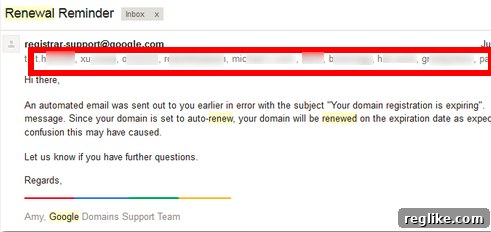
As the accompanying image graphically illustrates, the complete list of recipients was fully exposed, leaving no ambiguity about the extent of the data disclosure. The ramifications of such a public display of personal contact information are broad and potentially severe. Email addresses, despite appearing innocuous, serve as crucial identifiers and often act as gateways to a multitude of online services. Their exposure can facilitate various malicious activities, ranging from targeted spam and sophisticated phishing attacks to more elaborate identity theft schemes. For a global corporation like Google, which routinely champions data security and user privacy, this incident represented a significant and embarrassing setback.
Immediate Response and the “Apology for the Apology”
The immediate fallout from this public blunder was swift and predictable. The widespread revelation of email addresses sparked considerable alarm among the affected customer base and quickly drew critical attention from the wider tech community. Recognizing the severe nature of the privacy breach, Google Domains acted with commendable speed to issue yet another communication. This time, thankfully, the subsequent “apology for the apology” email, dispatched on Saturday afternoon, was handled with the utmost care and correctness. The personal information of the more than 1,600 Google Domains customers was properly protected, with the message being delivered using the appropriate “Bcc:” protocol, ensuring no further public disclosure.
While the prompt issuance of a correctly handled corrective email demonstrated Google’s crisis responsiveness, the initial incident itself left a significant impact on customer perception. It underscored not only a procedural failure but also raised broader questions regarding quality assurance, review protocols, and employee training within such a vast and complex organization. For customers, trust in a service provider is meticulously built on consistent reliability, robust security measures, and an unwavering commitment to handling sensitive data with the highest degree of confidentiality. When such fundamental errors occur, especially concerning personal privacy, it can substantially erode that hard-earned trust and confidence.
Why Email Address Exposure is a Serious Concern: Privacy and Security Implications
In our hyper-connected digital world, an email address is far more than a simple contact point; it is a primary identifier that often grants access to personal accounts, financial information, and private communications. The exposure of 1,664 email addresses, even without directly associated passwords or other immediate identifiers, introduces several significant and concerning risks:
- Increased Spam and Unsolicited Communications: Exposed email addresses become prime targets for automated spam bots, unscrupulous marketers, and various unsolicited mailers, leading to an overwhelming influx of unwanted commercial and potentially malicious emails.
- Heightened Risk of Phishing and Social Engineering Attacks: Malicious actors can leverage these exposed addresses to launch highly targeted phishing campaigns. By knowing the recipients are Google Domains users, attackers can craft more convincing emails designed to trick individuals into divulging sensitive information like passwords, credit card details, or other personal data by impersonating legitimate entities.
- Contribution to Identity Theft Risk: Although not a direct pathway to immediate identity theft, an email address is a critical puzzle piece. When combined with other publicly available information, or data gleaned from other historical breaches, it can help bad actors construct comprehensive profiles for more sophisticated and personalized attacks.
- Violation of Privacy Expectations: Irrespective of any malicious intent, the unsolicited disclosure of personal contact information fundamentally constitutes a breach of privacy. Customers rightfully expect their data to be handled with the highest standards of care, discretion, and confidentiality, especially by reputable and security-conscious companies like Google.
- Compliance with Data Protection Regulations: Depending on the geographical location of the affected customers, such an incident could fall under the strict mandates of robust data protection regulations such as the General Data Protection Regulation (GDPR) in Europe, the California Consumer Privacy Act (CCPA), or similar global frameworks. These regulations impose stringent protocols for data handling, require timely breach notifications, and carry significant financial penalties for non-compliance.
Key Lessons and Best Practices: Upholding Digital Trust in the Future
This incident at Google Domains serves as a powerful and enduring lesson for all organizations, irrespective of their scale or technological sophistication, emphasizing the indispensable importance of digital due diligence. Several critical takeaways and best practices emerge from Google Domains’ email blunder:
- Implement Rigorous Review Processes: Before dispatching any mass communication, particularly those involving customer personal data, multiple layers of review, verification, and approval should be mandated. This includes meticulously checking recipient lists, confirming the correct usage of “To,” “Cc,” and “Bcc” fields, and thoroughly reviewing content for absolute accuracy and clarity.
- Leverage Automated Email System Safeguards: Organizations should invest in and utilize robust email platforms that incorporate built-in safeguards specifically designed to prevent such common errors. Modern marketing automation tools and bulk email services frequently default to “Bcc” or offer specific features to anonymize recipient lists, thereby significantly mitigating the risk of human error.
- Prioritize Employee Training and Awareness: Regular, comprehensive training for all employees on data privacy best practices, the correct and secure use of communication tools, and the potential far-reaching consequences of errors is absolutely indispensable. This proactive approach cultivates a strong organizational culture of security, accountability, and privacy awareness.
- Establish Comprehensive Testing Protocols: For all critical or large-scale email campaigns, it is crucial to conduct small-scale tests, internal dry runs, or A/B tests. This allows for the early identification and rectification of errors before they can impact and potentially expose a broader customer audience.
- Embrace Privacy by Design: Integrating privacy considerations into the fundamental design and development of all systems, processes, and products from their inception, rather than treating privacy as a secondary afterthought, is paramount. This proactive “privacy by design” approach helps to build inherently resilient and secure operations that protect user data from the ground up.
- Ensure Transparency and Prompt Remediation: When an error inevitably occurs, absolute transparency with all affected parties and swift, accurate remediation are of the utmost importance. Google’s rapid follow-up apology, correctly sent, was a positive step in managing the crisis, although the primary goal should always be to prevent such initial errors entirely.
Conclusion: The Enduring Challenge of Human Error in the Digital Age
The Google Domains email blunder, while perhaps appearing minor in its direct data impact when compared to massive, malicious data breaches, powerfully underscores a profound and persistent truth: human error remains one of the most significant and often overlooked vulnerabilities in our increasingly digital world. Even with the deployment of highly sophisticated systems, advanced technologies, and seemingly stringent protocols, a momentary lapse in attention, a simple misclick, or a procedural oversight can lead to substantial privacy infringements, significant reputational damage, and a tangible erosion of customer trust.
For Google, a global technology leader synonymous with innovation, reliability, and cutting-edge solutions, this incident serves as a stark and humbling reminder that even the most fundamental and seemingly straightforward communication tasks demand the highest possible level of scrutiny and precision. For customers, it reiterates the ongoing and vital need for unwavering vigilance regarding their personal data and a careful, informed choice about which services and platforms they choose to entrust with their sensitive information. In an ever more interconnected global landscape, where every piece of data holds inherent value, safeguarding digital privacy is not merely a regulatory obligation; it is a fundamental pillar upon which customer confidence, brand integrity, and long-term business success are built.