
Unlocking Direct Domain Monetization: Google’s Pivotal Move in AdSense for Domains
In a landscape continually reshaped by technological giants, Google (NASDAQ: GOOG) has once again made a significant splash, dramatically altering the domain monetization ecosystem. Historically, domain owners seeking to profit from their unused web addresses relied heavily on third-party domain parking services such as DomainSponsor and Sedo. These platforms acted as crucial intermediaries, facilitating the display of advertisements on parked domains and managing revenue sharing with Google’s AdSense program. However, in a surprising and strategic shift, Google has now opened its doors directly to AdSense publishers, offering them the unprecedented opportunity to park their domains directly with the search giant. This move bypasses the traditional aggregators, promising a more streamlined and potentially disruptive path to domain monetization.
The implications of this development are vast, touching every corner of the domaining community, from casual domain investors to large-scale portfolio holders. The initial announcement, first noted by Domain Name News and confirmed by an official Google post, signaled a departure from Google’s previous stance, which often seemed to distance itself from the “long tail” of domain parking. This article delves into the intricacies of Google’s expanded AdSense for Domains program, exploring its potential benefits, challenges, and the broader impact it could have on the industry.
Google’s Shifting Stance on Domain Parking: A Historical Perspective
Google’s relationship with the domain parking industry has been a dynamic and, at times, contradictory one. For years, the company appeared to be retreating from direct involvement, implementing policies that seemingly aimed to discourage mass domain parking. Early iterations of AdSense for Domains were often characterized by stringent requirements, such as a minimum threshold of 750,000 visits per month – a barrier that effectively excluded the vast majority of small and medium-sized domain owners. Subsequently, Google even shut down applications for AdSense for Domains altogether, signaling a clear intention to work primarily with established, high-volume partners rather than individual publishers managing a handful of parked domains.
This historical context makes Google’s recent pivot even more remarkable. Far from further distancing itself, Google is now doing precisely the opposite: embracing the entire spectrum of domain owners. This reversal suggests a strategic recalculation on Google’s part, perhaps recognizing the untapped potential within the long tail of parked domains, or aiming to exert greater control over the advertising revenue generated from this significant segment of the internet. Whatever the underlying motivation, this shift marks a pivotal moment for domain investors worldwide, offering a new, direct avenue to leverage the power of Google’s advertising network.
Understanding the New AdSense for Domains Offering
The expanded AdSense for Domains program directly integrates domain parking capabilities into the familiar AdSense interface. This means that any publisher with an active AdSense account can now apply to park their domains directly with Google, effectively cutting out the middleman. The promise is simplicity and direct control, allowing domain owners to manage their parked pages and ad displays from a single, centralized dashboard. This direct relationship with Google holds the potential to simplify processes, reduce administrative overhead, and offer a more transparent view of earnings.
However, the transition comes with its own set of considerations and potential trade-offs. While the allure of “going direct” to Google is strong, particularly for those previously excluded by aggregator requirements, it’s crucial to examine the practical implications. The program is designed to be accessible, but its initial features suggest a more foundational approach compared to the sophisticated tools offered by traditional parking companies. Understanding these nuances is key for domain owners weighing their options.
Potential Downsides and Challenges for Direct Publishers
While the prospect of bypassing intermediaries is appealing, domain owners should approach Google’s direct parking solution with a clear understanding of its potential limitations. One of the most significant concerns revolves around revenue share. Domain parking aggregators like DomainSponsor and Sedo, by consolidating vast portfolios of domains and generating immense traffic, possess considerable negotiation leverage with Google. This enables them to secure higher revenue shares than an individual publisher could ever hope to achieve. When parking directly with Google, individual domain owners are likely to receive Google’s standard AdSense revenue splits, which may be less favorable than those offered by well-established aggregators. This could translate into a noticeable decrease in earnings per domain, despite the absence of an aggregator’s cut.
Beyond revenue, customization and control present another area of concern. Google’s direct AdSense for Domains offering, at least in its initial rollout, provides limited templating options. Publishers are restricted to Google’s standard AdSense for Domains landing pages, which, while functional, may not offer the advanced optimization and conversion capabilities found in the sophisticated landers developed by traditional domain parking companies. These third-party providers often invest heavily in A/B testing, dynamic content, and advanced user interface designs to maximize click-through rates and, consequently, earnings. Google’s simpler templates might not convert traffic as effectively, potentially impacting overall profitability.
Furthermore, the technical setup required for direct parking with Google introduces a layer of complexity that might deter some domain owners. Unlike simply changing nameservers or forwarding domains – a common practice with aggregators – Google requires publishers to create specific A records and CNAME entries for each domain. While not overly complex for experienced users, this technical requirement can be a hurdle for those less familiar with DNS management, adding a manual, potentially time-consuming step for larger portfolios.
Google’s Strategic Play: Why This Move Now?
The expansion of AdSense for Domains is unlikely to be a purely altruistic gesture on Google’s part. It’s more probable that this move represents a calculated strategic play aimed at solidifying its position within the advertising ecosystem and potentially exerting pressure on existing domain parking companies. By opening its system to anyone with an AdSense account, Google directly competes with its long-standing partners, effectively disintermediating them.
There are several compelling reasons behind such a strategic shift:
- Increased Control and Data: Direct interaction with domain publishers gives Google unprecedented access to granular data on parked domain traffic, ad performance, and user behavior across a wider spectrum of domains. This data is invaluable for refining its advertising algorithms, enhancing targeting capabilities, and improving overall ad relevance.
- Market Share Expansion: By offering a direct channel, Google can capture a larger share of the revenue generated from parked domains that might otherwise flow through aggregators. This directly impacts its bottom line and strengthens its dominant position in online advertising.
- Competitive Pressure: This move puts significant pressure on existing domain parking companies. They will now need to justify their value proposition more vigorously, potentially by offering superior templates, advanced analytics, specialized support, or more attractive revenue splits to retain their client base. It forces innovation and potentially consolidates the market.
- Accessibility to the “Long Tail”: While Google previously shied away from smaller domain portfolios, opening up the program to all AdSense publishers allows it to tap into the vast “long tail” of domains that were previously uneconomical or inaccessible. This represents a massive pool of potential ad impressions and clicks.
- Simplification for Some: For smaller domain owners with just a handful of domains who might struggle to get accepted by major parking companies due to traffic requirements or other criteria, Google’s direct offering provides a straightforward entry point into monetization. This democratizes access to domain parking revenue.
Initially, this program may primarily attract those with smaller portfolios who have historically struggled to find suitable parking solutions. However, it’s reasonable to expect Google to refine and expand the program, potentially adding more features and attracting larger players over time, further intensifying competition in the domain parking sector.
A Glimpse Inside: Setting Up AdSense for Domains
For those curious about the practicalities, exploring the AdSense interface reveals the new option. Upon logging into an AdSense account, the “Ad Setup” tab now presents “AdSense for Domains” as a distinct service. The process is designed to be relatively straightforward for initial setup:
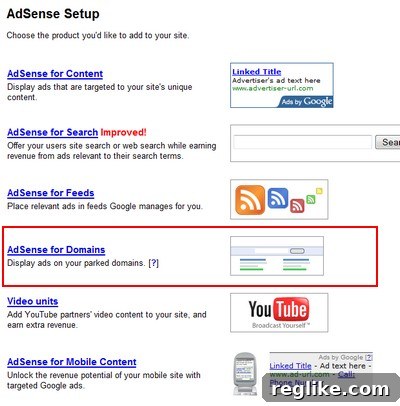
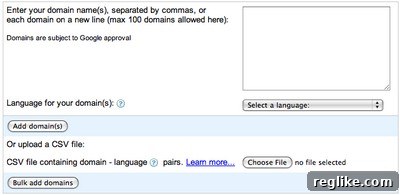
Publishers submit their domains for consideration, after which they enter a “pending” status. During this phase, Google likely conducts an automated scan, primarily checking for potential trademark infringements and adherence to its content policies. This approval process ensures that only legitimate and compliant domains are monetized through the platform.
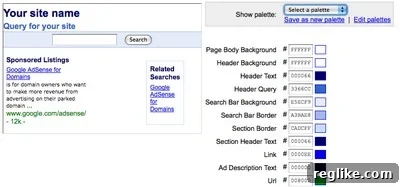
Once approved, limited customization options become available. Publishers can modify the color scheme of their landing pages to align with their branding preferences and suggest keywords that Google should use to trigger relevant advertisements. However, this customization is notably constrained. Features such as editing the overall layout of the page, embedding specific ad pictures, or customizing the textual content beyond basic keyword suggestions are not currently supported. This highlights the “one-click” simplicity, but also the potential for lower optimization compared to advanced, tailor-made solutions.
Initial User Experience and Performance Insights
Upon setting up a domain with the new service, the practical experience reveals both the benefits and the current limitations. The setup process, as noted, can be somewhat “painful” due to the requirement of manually configuring A records and CNAME entries for each domain. This contrasts with the simpler nameserver changes often associated with third-party parking providers, and can become particularly cumbersome for domain investors managing extensive portfolios.
Regarding the landing page experience, Google’s system currently employs a “simple one-click template.” A critical observation is that the front-page advertisements predominantly originate from the content feed rather than the search feed. This distinction is significant: content ads are typically contextual, based on the perceived topic of the parked domain, while search ads are triggered by explicit user queries, often indicating higher commercial intent. This means that merely landing on the parked page primarily displays less targeted, and potentially less lucrative, content ads. Search ads only appear if the user actively types a search term into the provided search box on the landing page, suggesting a reliance on user initiative to generate higher-value ad impressions.
Early feedback from beta testers has also indicated mixed, and often poor, results regarding earnings. This isn’t entirely surprising given the factors discussed: potentially lower revenue shares, limited customization, and the reliance on content ads for initial impressions. While Google is a master of ad technology, a basic, one-size-fits-all approach might not yield optimal results in the highly specialized niche of domain parking, where sophisticated landers and dynamic ad selection are often key to maximizing revenue.
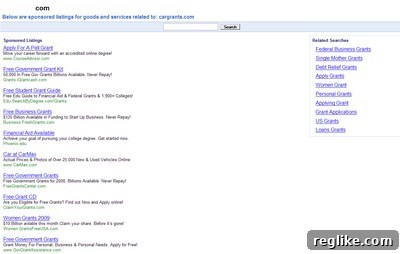
Despite these initial limitations, it’s crucial not to underestimate Google’s long-term strategy. The company is renowned for its iterative development and its capacity to refine and enhance its offerings over time. While the current iteration might be basic, it serves as a foundation. It’s entirely plausible that Google has “tricks up its sleeves” – future updates, advanced features, or deeper integrations that could significantly improve the performance and appeal of AdSense for Domains. This could include more sophisticated templates, better ad-matching algorithms for parked domains, or improved revenue models as the program matures and gathers more data.
The Future of Domain Parking in Google’s Direct Era
Google’s direct entry into the domain parking space marks a new chapter for the industry. While it presents immediate challenges for existing parking companies and potential initial revenue adjustments for some publishers, it also opens up new possibilities. For small domain owners, it offers an accessible path to monetization previously unavailable. For larger investors, it necessitates a careful re-evaluation of existing strategies and a comparison of performance between aggregators and Google’s direct service.
The long-term success of Google’s AdSense for Domains will depend on several factors: how quickly and effectively Google addresses the current limitations in customization and optimization, whether it can offer competitive revenue shares, and its willingness to invest in features that cater to the specific needs of domain owners. The industry is dynamic, and Google’s move is a powerful reminder that even established business models can be disrupted. Domain investors and parking companies alike will need to adapt, innovate, and strategically position themselves in this evolving landscape, with Google now a direct and formidable player in the monetization of parked domains.