
Google acquires a pivotal domain name: RealTimeBidding.com, signaling strategic intent in the evolving ad tech landscape.
As the curtains rise on the bustling Ad-Tech conference in San Francisco, an acquisition of significant strategic weight has emerged from the depths of the internet: Google has secured the domain name RealTimeBidding.com. This move isn’t merely a routine portfolio update; it’s a profound statement from one of the world’s leading technology giants about its enduring commitment to, and anticipated future in, the highly competitive and rapidly innovating realm of online advertising.
For those outside the intricate world of digital marketing and ad technology, the term “real-time bidding” (RTB) might sound esoteric. However, it represents the very engine that powers much of modern online advertising. At its core, real-time bidding is a sophisticated mechanism that allows advertisers to bid on individual ad impressions as they become available on a publisher’s website or app. This occurs in milliseconds, essentially an auction unfolding every time a user loads a webpage. What makes RTB revolutionary is its ability to base these bids not just on ad placement, but crucially, on rich audience data, ensuring that the right ad reaches the right person at the right moment. This micro-level targeting significantly enhances the efficiency and effectiveness of advertising campaigns, moving beyond broad demographics to highly specific user profiles and intent signals.
The Strategic Significance of RealTimeBidding.com for Google
Google’s acquisition of RealTimeBidding.com underscores the monumental importance of programmatic advertising within its vast ecosystem. As the dominant force in search advertising and a major player in display and video advertising through platforms like Google Ads, AdSense, and the DoubleClick suite, Google relies heavily on sophisticated bidding mechanisms. A domain name as descriptive and central to the ad tech lexicon as RealTimeBidding.com is more than just a URL; it’s a strategic asset. It serves multiple purposes: solidifying Google’s brand authority in this critical sector, potential future branding for new services or initiatives, and pre-empting competitors from owning such a valuable digital property.
In the digital age, a memorable, industry-specific domain can act as a beacon, guiding users directly to relevant information or services. While the direct SEO benefits of exact-match domains have evolved, their intrinsic value for direct navigation, brand recognition, and establishing thought leadership remains undeniable. For Google, a company synonymous with online advertising, owning RealTimeBidding.com reinforces its position as an authoritative voice and a central player in the programmatic landscape. It suggests a long-term vision where this domain could serve as a central hub for educational content, developer resources, or even a future product suite dedicated to advanced RTB solutions.
A Deep Dive into Real-Time Bidding and the Programmatic Ecosystem
To fully appreciate the gravity of this acquisition, one must understand the intricate machinery of programmatic advertising, where RTB plays a starring role. Programmatic advertising automates the buying and selling of ad inventory, replacing traditional manual processes. When a user visits a website, an ad impression becomes available. This impression data (user demographics, browsing history, location, device, etc.) is sent to an ad exchange. Demand-Side Platforms (DSPs), used by advertisers, automatically bid on these impressions based on predefined campaign parameters and target audience criteria. Simultaneously, Supply-Side Platforms (SSPs), used by publishers, manage and optimize their ad inventory, facilitating its sale. The highest bid wins, and the ad is served – all within milliseconds, before the webpage even fully loads.
This lightning-fast auction process allows advertisers unprecedented control over their spending and targeting, maximizing their return on investment. Publishers, in turn, can optimize their ad revenue by selling their inventory to the highest bidder in real-time. Google, through its sophisticated platforms like Display & Video 360 (DV360, formerly DoubleClick Bid Manager) and AdX (DoubleClick Ad Exchange), is at the forefront of this technology, facilitating billions of these real-time auctions daily. The acquisition of RealTimeBidding.com signals an even greater emphasis on strengthening and communicating its leadership in this complex, data-driven domain.
The Intriguing History of RealTimeBidding.com
The domain name RealTimeBidding.com carries a surprisingly rich and somewhat circuitous history, adding another layer to Google’s recent acquisition. Its journey began in 2001 when it was first registered, long before real-time bidding became the ubiquitous industry standard it is today. This early registration highlights the foresight of some early internet pioneers who recognized the potential of descriptive web addresses. It was then re-registered in 2005, interestingly, by a company that specialized in services for both offline and online auctions, though notably, it had no direct affiliation with the then-nascent online advertising space.
The domain subsequently expired in 2010. This period of lapse saw it picked up by an individual or entity utilizing GoDaddy’s anonymous WHOIS privacy service. Such privacy services are common for individual domain owners, but they can obscure the true ownership of a valuable digital asset, adding a layer of mystery to its chain of custody. This transitional phase underscores the dynamic nature of domain ownership and the potential for valuable properties to change hands, sometimes through expiration and re-registration, before finding their permanent home.
Initial speculation suggested that Google might have directly acquired the domain upon its expiration. However, subsequent investigations revealed a more plausible scenario, aligning with Google’s broader strategic movements. It appears the domain was implicitly acquired as part of Google’s significant AdMeld acquisition. AdMeld, a prominent supply-side platform (SSP) that helped publishers manage and monetize their ad inventory, was purchased by Google in 2011. A cached version of RealTimeBidding.com from March 29 of the same year notably resolved to the AdMeld website, strongly indicating that the domain was indeed part of AdMeld’s assets.
The fact that the domain then seemingly went dormant or experienced transfer issues post-acquisition suggests that Google might have, in essence, “dropped the ball” during the complex integration process of AdMeld’s assets. Managing a vast portfolio of domains, especially during major corporate acquisitions, can be an incredibly intricate logistical challenge. It’s plausible that the domain’s transfer was delayed or overlooked amidst the larger strategic imperatives of integrating AdMeld’s technology and client base. For a brief period, it even appeared to have been forwarded, indicating a lack of consistent resolution. This brief period of ambiguity, however, has now been definitively resolved.
The Final Transfer and Future Outlook
The definitive transfer of RealTimeBidding.com to Google’s control was officially completed recently. The domain name was moved to MarkMonitor, a specialized registrar renowned for its brand protection services and managing high-value domain portfolios for major corporations. This move in itself is a strong indicator of the domain’s perceived value and the level of corporate protection Google intends to afford it. Subsequently, the WHOIS record, the public database of domain ownership, was updated to reflect Google as the official registrant, leaving no doubt about its new custodian.
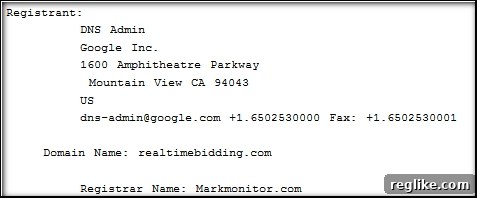
While the domain currently points to Google’s nameservers, indicating that Google has administrative control, it does not yet actively resolve to a live website. This is a common step in the domain transfer process; after nameservers are updated, there is typically a propagation period during which DNS records update across the internet. During this time, the domain might not immediately display content. However, this preparatory phase strongly suggests that Google has concrete plans for RealTimeBidding.com. Its future could entail a dedicated microsite explaining Google’s programmatic offerings, an educational portal for advertisers and publishers, a new product landing page, or even a re-branding initiative related to its RTB capabilities.
Google’s Enduring Commitment to Ad Technology Leadership
This domain acquisition, while seemingly minor on the surface, speaks volumes about Google’s enduring commitment to leading the ad technology space. In an era marked by evolving privacy regulations, the deprecation of third-party cookies, and the rise of new advertising formats, the programmatic sector, underpinned by real-time bidding, remains critical. Google has continually invested in enhancing its ad infrastructure, from optimizing its ad exchanges to developing advanced machine learning algorithms for bidding and targeting.
The acquisition of a direct and powerful domain like RealTimeBidding.com is a subtle yet effective reinforcement of this commitment. It serves as a clear signal to the industry, to competitors, and to its vast network of advertisers and publishers that Google intends to remain at the forefront of innovation in real-time bidding and programmatic advertising. As the ad tech world continues to evolve at breakneck speed, Google’s foresight in securing such a foundational domain positions it strategically for future developments, ensuring its continued influence and dominance in the digital advertising landscape for years to come.
The story of RealTimeBidding.com – from its early registration and varied ownership to its eventual strategic acquisition by Google – mirrors the dynamic evolution of the internet itself. It’s a testament to the unforeseen value that seemingly simple digital assets can accrue over time, especially when they intersect with groundbreaking technologies like real-time bidding. Google’s move not only secures a valuable digital property but also strategically strengthens its narrative as an undisputed leader in the complex and crucial world of digital advertising.