
Google’s Unwavering Stance: Combating Deceptive Typosquatting and Online Survey Scams
In an ongoing commitment to protect its brand integrity and user base, Google continues its aggressive campaign against malicious domain names that exploit its trademarks for deceptive online survey schemes. The tech giant has once again initiated a Uniform Domain-Name Dispute-Resolution Policy (UDRP) case, this time targeting the owner of three domains that are blatant typographical errors of its highly popular Gmail service. This action underscores Google’s relentless pursuit of those who seek to profit by misleading internet users through cybersquatting and fraudulent online practices.
The Growing Threat of Typosquatting and Online Scams
Typosquatting, also known as URL hijacking, is a malicious practice where cybersquatters register domain names that are common misspellings or variations of legitimate, popular websites. The primary goal is to capitalize on users’ typographical errors, directing them to alternative sites that often host advertisements, malware, or, as in this case, deceptive surveys designed to harvest personal information or generate affiliate revenue through dubious offers. This phenomenon poses a significant threat not only to the brand owners, who suffer from dilution and reputational damage, but more critically, to unsuspecting internet users who can fall prey to various scams, data theft, and security vulnerabilities.
Online survey sites, particularly those employing deceptive tactics, represent a particularly insidious form of internet fraud. These sites typically lure users with promises of valuable prizes or cash rewards in exchange for completing short questionnaires. However, the completion of these surveys is merely the first step in a predatory funnel that often leads to demands for personal financial information, subscriptions to unwanted services, or the completion of numerous other “offers” which are difficult to cancel and rarely deliver on the initial promise of a prize. This sophisticated form of online trickery erodes consumer trust in legitimate online interactions and creates a hostile environment for genuine digital engagement.
Google’s Proactive Defense: The Gmail Typosquatting Case
Unpacking the UDRP Complaint
Google’s latest UDRP filing targets three specific domain names: gmaill.com, gmal.com, and gmiail.com. These domains are clear instances of typosquatting, deliberately chosen to mimic the globally recognized Gmail trademark by incorporating common typing errors. Instead of leading to Google’s official email service, all three domains redirect users to a website identified as VideoRewardsNow.com. What makes this redirection particularly egregious is the presence of a logo on VideoRewardsNow.com that bears a striking and arguably intentional resemblance to Google’s distinctive Gmail logo. This visual deception is a critical element in misleading users into believing they are interacting with a legitimate or Google-sanctioned platform.
The use of a deceptively similar logo significantly amplifies the potential for user confusion. A quick glance might convince a user that they have indeed landed on a page related to Gmail, or at least one offering legitimate rewards endorsed by a reputable entity. This visual cue acts as a gateway, leveraging Google’s established brand trust to ensnare users in the subsequent stages of the scam. Such tactics not only infringe on Google’s trademark rights but also exploit the trust users place in prominent online brands, making them more vulnerable to the underlying predatory scheme.
The Deceptive User Journey: From Survey to “Prize”
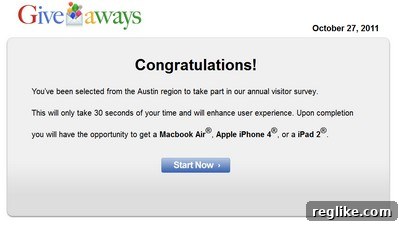
Upon landing on VideoRewardsNow.com via one of the typo domains, users are immediately presented with a brief “three-question survey.” This initial interaction is designed to appear innocuous and quick, minimizing the barrier to entry for the unsuspecting user. The questions themselves are typically generic and non-intrusive, further lulling the user into a false sense of security regarding the legitimacy of the site. The deceptive nature of this process begins to unfold after the survey’s completion.
Following the survey, users are “invited” to select a prize, often a desirable high-value item such as an iPad. The allure of a seemingly free, high-value reward acts as a powerful motivator, driving users to proceed further into the scam. However, the catch soon becomes apparent: to “claim” their chosen prize, users are informed that they must complete a series of “online offers.” These offers are typically third-party promotions requiring users to sign up for trials, provide personal information, or even make small purchases. The user is often led through a labyrinth of these offers, with each completed step supposedly bringing them closer to their prize, which in reality, is rarely, if ever, delivered. This convoluted process is primarily designed to generate affiliate revenue for the scam operators, who earn a commission for each completed offer, while the user is left with nothing but wasted time, potential spam, and compromised personal data.
Why Google Fights So Aggressively: Protecting Brand and User Trust
Google’s intense focus on combating these types of fraudulent sites stems from a deeper concern than mere trademark infringement. The company is particularly alarmed by the “ill will” that such deceptive practices can generate towards its brand. When users are tricked into believing they are interacting with a Google-related service, only to find themselves ensnared in a scam, their negative experience inevitably reflects poorly on Google. This erosion of user trust can have long-term consequences, impacting brand loyalty, user engagement, and even perceptions of Google’s security measures.
Unlike simple pay-per-click (PPC) parked pages, which, while potentially infringing, are generally less deceptive and harmful, these survey scam sites represent a more insidious threat. PPC pages typically present a list of links, clearly marked as advertisements, offering information or services related to the typed domain. While they might divert traffic, they rarely employ the intricate psychological manipulation and outright deception seen in these survey schemes. The direct engagement required by the survey sites, coupled with the false promise of high-value prizes, makes them significantly more dangerous to consumers and thus more damaging to the reputation of the mimicked brand. Google’s commitment to user safety and maintaining the integrity of its brand name, particularly for ubiquitous services like Gmail, necessitates such an aggressive stance against these malicious actors.
A History of Legal Action: Google’s Broader War on Cybersquatting
The current Gmail-related UDRP case is not an isolated incident but rather a continuation of Google’s long-standing and comprehensive strategy to combat cybersquatting and protect its intellectual property. The company has a well-documented history of initiating legal actions against various forms of domain abuse, demonstrating its unwavering resolve to defend its trademarks, which are among the most recognized and valuable in the world.
Previous Victories and Setbacks
Google has successfully pursued numerous UDRP cases against domain owners attempting to capitalize on its various brands. Prior instances include successful actions against multiple YouTube-related sites that engaged in similar deceptive survey practices or other forms of brand exploitation. These victories reinforce the effectiveness of the UDRP system in protecting trademark holders and deterring illicit domain registrations.
However, Google’s path has not been without its challenges. A notable case involved the domain Goggle.com, which Google sought to acquire through a UDRP filing. In this particular instance, Google ultimately lost the case. The reason cited was often related to “some prior history with the domain,” which can include factors such as the domain’s registration predating the complainant’s trademark rights, the term being considered generic, or legitimate non-infringing use by the registrant. Such outcomes highlight the nuances and complexities of trademark law and UDRP proceedings, where various factors beyond mere similarity can influence the panel’s decision. Despite this setback, the original article’s author wisely speculated that the case wasn’t truly over, implying Google’s potential to explore other legal avenues or maintain its vigilance regarding the domain. This demonstrates that for a company like Google, protecting its core brand is a marathon, not a sprint, and a single loss does not deter its overall mission.
These actions, both successful and challenging, serve as a clear message to potential cybersquatters: Google is actively monitoring the domain landscape and will employ all available legal mechanisms to protect its intellectual property and, by extension, its users from deceptive online practices. The sheer volume and consistency of these actions underscore that this is not merely a reactive measure but a proactive and integral part of Google’s brand management strategy.
The Dangers for Internet Users: Identifying and Avoiding Scams
The prevalence of typosquatting and deceptive survey sites poses significant dangers for internet users, extending far beyond the immediate disappointment of not receiving a prize. These scams are effective because they exploit common human tendencies: the desire for something free or valuable, curiosity, and a general trust in well-known brands. The psychological triggers employed by these sites – urgency, the illusion of exclusivity, and the promise of easy rewards – make them particularly potent for ensnaring unwary individuals.
The risks associated with falling victim to such schemes are multifaceted:
- Data Harvesting: Users are often prompted to provide extensive personal information, including names, addresses, phone numbers, email addresses, and sometimes even sensitive financial details, which can be sold to third parties, leading to relentless spam or even identity theft.
- Malware and Viruses: Some deceptive sites may attempt to install malicious software on a user’s device, ranging from adware to more dangerous viruses and spyware that can compromise system security and privacy.
- Privacy Breaches: By completing various “offers,” users inadvertently agree to terms and conditions that allow third parties to collect and use their data, leading to a deluge of unwanted marketing communications.
- Financial Loss: While rare, some scams may trick users into signing up for costly subscription services that are difficult to cancel, or making small payments that accumulate over time.
- Wasted Time: Even in less severe cases, users spend valuable time interacting with these sites, only to find their efforts fruitless.
To mitigate these risks, internet users should adopt a vigilant approach:
- Verify URLs: Always double-check the URL in the address bar for any misspellings or unusual characters, especially when accessing highly sensitive sites like email or banking.
- Skepticism Towards “Free” Offers: Be highly suspicious of any website promising valuable prizes or large sums of money in exchange for minimal effort. If something sounds too good to be true, it almost certainly is.
- Look for Security Indicators: Ensure websites use HTTPS (indicated by a padlock icon) and have legitimate security certificates, although these alone are not foolproof against sophisticated scams.
- Avoid Clicking Suspicious Links: Exercise caution with links received via email or social media, even if they appear to come from a known sender. Direct navigation by typing the URL is always safer.
- Use Reputable Security Software: Antivirus and anti-malware tools can help detect and block malicious websites and software.
The Future of Domain Enforcement: A Continuous Battle
The ongoing battle against typosquatting and online scams highlights a fundamental challenge in the digital age: maintaining order and trust in a vast, decentralized internet. For trademark holders like Google, the fight is continuous, requiring constant vigilance and a proactive legal strategy. The frameworks established by organizations like ICANN (Internet Corporation for Assigned Names and Numbers), particularly the UDRP, provide essential tools for brand protection. However, the sheer scale of domain registrations and the ingenuity of malicious actors mean that new threats constantly emerge.
The enforcement efforts extend beyond legal battles. Domain registrars and hosting providers also play a crucial role. Many registrars have policies against abusive registrations and cooperate with trademark holders in takedown procedures. Yet, the cat-and-mouse game persists, with new domain extensions (gTLDs) and privacy registration services often complicating the identification and prosecution of offenders. Therefore, the future of domain enforcement will likely involve greater collaboration between legal entities, technological solutions for monitoring and detection, and enhanced education for internet users. The goal is to create a safer, more trustworthy online environment where legitimate brands can thrive, and users can interact without fear of deception or harm.
Google’s sustained efforts against deceptive typosquatting and survey scams serve as a vital deterrent and a beacon for brand protection in the digital realm. By aggressively pursuing those who exploit its trademarks and mislead its users, Google not only safeguards its valuable brand assets but also contributes significantly to overall internet safety. This ongoing commitment underscores the critical importance of vigilance, both from corporate entities defending their intellectual property and from individual users navigating the complex landscape of the internet.