
Google made a small change that could make domain investing more difficult.
The Shifting Sands of Domain Investing: Google’s Quiet Update and Its Impact
The digital landscape is constantly evolving, and for those deeply entrenched in the world of domain investing, understanding these shifts is paramount. Recently, Google, the undisputed king of search, rolled out a subtle but potentially impactful change that has sent ripples through the domain community: the inconsistent display of total search results. This seemingly minor tweak could fundamentally alter how domain investors evaluate potential assets, making the acquisition and renewal process significantly more challenging.
Last week, while navigating the annual ritual of renewing a substantial portfolio of domain names ahead of this week’s price increase, a crucial piece of my traditional due diligence process vanished. This wasn’t just a fleeting glitch; it represented a critical missing data point that many in our industry rely upon for informed decision-making. The absence of this metric highlights a broader trend in Google’s evolution, one that demands attention from anyone serious about SEO strategy and digital asset valuation.
Understanding the Implications for Domain Valuation
When it comes to renewing or acquiring domain names, particularly those that are more descriptive than brandable, a rigorous evaluation process is essential. My personal strategy, shared by many seasoned domain investors, heavily leans on several key factors. One of the most critical has always been the sheer volume of search results a specific term generates on Google. This metric provides a quick, albeit rough, gauge of a term’s popularity and overall market demand.
Consider a scenario where you own a domain like “bestbluewidgets.com.” If a quick Google search for “best blue widgets” yielded millions of results, it would signal a highly competitive and active market, suggesting potential value. Conversely, if the same search returned only a few thousand results, it would indicate a niche, possibly less popular term, affecting its perceived value and potential for future development. This direct correlation between search volume and perceived market interest has long been a cornerstone of domain valuation for descriptive phrases.
The Vanishing Act: Google’s Inconsistent Search Result Counts
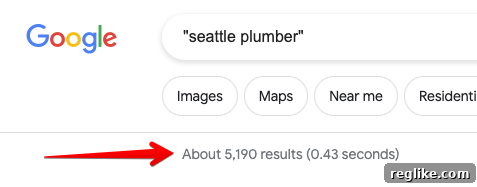
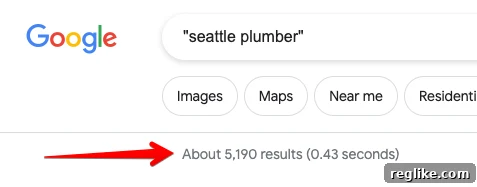
The problem I encountered was stark: when I searched for the terms associated with a couple of my domains, Google simply didn’t display the total number of results. This wasn’t just an isolated incident for me; anecdotal reports suggest this is part of a broader, ongoing test by Google. While I hadn’t personally noticed it before, and your own search experience might differ (indeed, today, when conducting similar searches, the result counts were intermittently back for me, as seen in the image above), the inconsistent nature of this feature is profoundly unsettling.
This fluctuation introduces an element of unpredictability that can destabilize traditional domain investment strategies. For years, the number of search results served as a quick litmus test for keyword strength and market interest. Without this reliable indicator, investors must now either seek alternative, often more time-consuming, methods of assessment or make decisions with increased uncertainty. The days of easily glancing at a result count might indeed be limited, forcing a re-evaluation of fundamental processes within the domain industry.
Why Google Might Be Making This Change
From Google’s perspective, the decision to remove or limit the display of search result counts isn’t entirely without logic. Honestly, for the typical Google user, the exact number of search results—whether it’s 2 million or 20 million—is rarely a meaningful piece of information. Most users are focused on finding relevant answers quickly, not on the statistical breadth of the internet’s response. Providing a concise, helpful answer often trumps a comprehensive tally of every page that might contain a keyword.
Furthermore, as Google increasingly expands its efforts into artificial intelligence (AI), particularly with initiatives like Search Generative Experience (SGE), the very definition of a “result” is undergoing a radical transformation. Instead of merely listing web pages, AI-powered search aims to synthesize information and provide direct answers. In such a paradigm, a raw count of individual pages becomes less relevant, as the search engine itself is doing the heavy lifting of interpretation and summarization. This pivot towards AI-driven answers suggests a future where the traditional SERP (Search Engine Results Page) as we know it might look dramatically different, placing less emphasis on quantitative metrics like total results and more on qualitative relevance and direct utility.
Beyond Domain Investing: Broader Implications for SEO and Digital Marketing
The implications of Google’s evolving approach extend far beyond just domain investing. This change signals a broader shift in how Google wants users and, consequently, marketers and SEOs, to interact with its search engine. If result counts are becoming less prominent, what does this mean for traditional keyword research and competitive analysis?
For years, SEO professionals have used search volume data and competitive metrics (like the number of indexed pages for a keyword) to gauge the difficulty and potential ROI of targeting specific terms. While direct search volume from tools like Google Keyword Planner remains invaluable, the disappearance of the on-the-fly total result count removes a quick sanity check for long-tail keywords or emerging trends. This nudges the industry further towards a deeper understanding of user intent and semantic search rather than relying solely on keyword exactness and quantity.
Digital marketers must increasingly focus on creating high-quality, authoritative content that directly addresses user queries, rather than optimizing purely for keyword density or trying to rank for every possible iteration of a phrase. The emphasis shifts to building genuine relevance and providing comprehensive value, anticipating user needs even before they are explicitly typed into the search bar. This change reinforces the ongoing narrative that Google values quality and user experience above all else.
Adapting to the New Reality: Strategies for Domainers and SEOs
In light of these changes, both domain investors and SEO professionals must adapt their strategies. The good news is that alternative methods and tools exist to fill the void left by Google’s inconsistent result counts.
For Domain Investors:
- Leverage Third-Party Keyword Tools: Tools like Ahrefs, SEMrush, Moz Keyword Explorer, and Google Keyword Planner provide detailed insights into search volume, keyword difficulty, and related terms. These tools offer a more nuanced understanding of market demand than a simple result count ever could.
- Analyze Google Trends: Google Trends remains an excellent resource for gauging the popularity and trajectory of terms over time. Identifying rising trends can be far more valuable than a static count of existing results.
- Focus on Brandability and Broad Concepts: As exact-match domains potentially lose some of their historical valuation anchors, the emphasis on brandable, memorable, and conceptually strong domain names will only grow. These domains tend to be less reliant on specific keyword search volumes for their inherent value.
- Evaluate CPC (Cost Per Click) Data: If a term has a high CPC in advertising platforms, it suggests commercial intent and value, regardless of the organic result count.
- Deep Dive into SERP Analysis: Instead of just counting results, meticulously examine the top-ranking pages. What kind of content ranks? Are there strong brands, informational sites, or e-commerce platforms? This qualitative analysis provides richer context than a mere number.
For SEO Professionals:
- Prioritize User Intent: Google’s AI-driven future prioritizes understanding and satisfying user intent. Focus on answering comprehensive questions and providing complete solutions rather than just optimizing for keywords.
- Content Authority and E-E-A-T: Build expertise, experience, authoritativeness, and trustworthiness (E-E-A-T). High-quality, well-researched, and expert-driven content will continue to be rewarded.
- Embrace Semantic SEO: Move beyond exact-match keywords to understand the broader semantic field around your topics. Use natural language and cover related concepts comprehensively.
- Monitor SERP Features: Pay close attention to how Google is presenting information—featured snippets, People Also Ask boxes, knowledge panels, and image/video carousels. Optimizing for these features can be more impactful than traditional organic rankings.
- Diversify Data Sources: Don’t rely on a single metric. Combine data from various keyword tools, analytics platforms, and competitive analysis tools to form a holistic view of your target market.
The Future of Search and Domain Assets
The days of seeing search results numbers might indeed be limited, or at least highly inconsistent. This change is not just a minor interface tweak; it reflects Google’s strategic trajectory towards a more sophisticated, AI-centric search experience. While the immediate impact for domain investors is a loss of a quick, familiar metric, it also presents an opportunity to refine and enhance their due diligence processes, moving towards more robust and data-driven methods.
The definition of a “result” is certainly changing. As AI capabilities advance, Google aims to provide not just pointers to information, but direct, synthesized answers. This evolution demands that anyone involved in digital assets, from domain investors to content creators and SEO strategists, remains agile and forward-thinking. Adapting to Google’s continuous innovations is not just about keeping pace; it’s about staying ahead in the ever-competitive digital arena. The future of domain investing and SEO will undoubtedly be shaped by these ongoing shifts, rewarding those who prioritize deep understanding, quality, and adaptability over reliance on fleeting metrics.