
Failed in its initial cybersquatting claim, a prominent cybersecurity firm now escalates its legal battle, pursuing the domain owner for alleged trademark infringement. This evolving dispute underscores the complex interplay between domain name rights and intellectual property law in the digital age.
GoSecure.com Saga: From Failed Cybersquatting to Trademark Infringement Lawsuit
The digital landscape is often a battleground for brand identity, and the ongoing legal saga surrounding the domain name GoSecure.com serves as a compelling case in point. Cybersecurity company GoSecure Inc. finds itself embroiled in a federal lawsuit against Billa Bhandari, the long-standing owner of GoSecure.com, following a prior unsuccessful attempt to claim the domain through a Uniform Domain-Name Dispute-Resolution Policy (UDRP) proceeding. This dispute highlights the intricate challenges companies face when their desired .com address is already held, and the persistent legal avenues they may explore to assert their brand online.
The Initial Skirmish: A Failed UDRP and Reverse Domain Name Hijacking
The conflict began to unfold when GoSecure Inc. initiated a UDRP complaint against GoSecure.com in July. The UDRP is an administrative procedure established by the Internet Corporation for Assigned Names and Numbers (ICANN) to provide a streamlined, relatively inexpensive mechanism for trademark owners to resolve disputes with cybersquatters – individuals who register domain names in bad faith, often to profit from another’s trademark. To succeed in a UDRP, a complainant must prove three key elements:
- The domain name is identical or confusingly similar to a trademark or service mark in which the complainant has rights.
- The domain name holder has no rights or legitimate interests in respect of the domain name.
- The domain name has been registered and is being used in bad faith.
However, GoSecure Inc.’s complaint hit a significant roadblock. In August, a three-person panel from the National Arbitration Forum, after careful consideration of the evidence presented by both parties, delivered a decisive ruling. The panel found the case to be entirely baseless. A crucial factor in their decision was the stark chronological disparity: Billa Bhandari had registered the GoSecure.com domain a remarkable 16 years before GoSecure Inc. had established any rights to the “GoSecure” name. This extensive prior registration inherently undermined GoSecure Inc.’s ability to prove bad faith registration on Bhandari’s part, as it’s impossible to register a domain in bad faith to target a trademark that doesn’t yet exist.
Furthermore, the panel went a step further, making a finding of Reverse Domain Name Hijacking (RDNH). RDNH is a serious determination by a UDRP panel, signifying that the complainant (in this case, GoSecure Inc.) brought the dispute in bad faith, attempting to unjustly wrest a domain name from its rightful owner. This can occur when a complainant knows or should know that they cannot succeed on any of the three required UDRP elements, yet proceeds with the complaint anyway, often to harass the domain owner or coerce a transfer. The panel’s finding of RDNH against GoSecure Inc. was a clear signal of the weakness of their initial claim and hinted at potentially aggressive tactics.
It is likely this historical context that explains why GoSecure Inc., a cybersecurity entity of considerable standing, chose to build its primary online presence on GoSecure.net, rather than the more coveted .com extension. The .com domain has long been considered the premium online address, offering perceived authority and brand recognition. The inability to secure GoSecure.com from the outset likely led to the adoption of the .net alternative, setting the stage for the current dispute.
The Evolution to a Federal Trademark Infringement Lawsuit
Undeterred by the UDRP setback and the RDNH finding, GoSecure Inc. has now taken its fight to federal court, filing a lawsuit against Bhandari. This strategic pivot marks a significant escalation in the legal battle. Notably, the federal lawsuit does not seek a finding of cybersquatting, an action that would almost certainly be “dead on arrival” given the irrefutable evidence of Bhandari’s prior domain registration date. Instead, GoSecure Inc. has reframed its argument, alleging that Bhandari is infringing upon its trademark rights.
The specific claims of trademark infringement center around Bhandari’s alleged uses of the “GoSecure” mark and the associated domain. GoSecure Inc. asserts that Bhandari is violating their trademark by:
- Sending emails using the gosecure.com domain.
- Operating a blog at gosecure.wordpress.com.
- Utilizing the domain for additional purposes that allegedly infringe upon GoSecure Inc.’s trademark.
Intriguingly, these allegations are not based on independent investigation by GoSecure Inc. Rather, they stem from admissions Bhandari himself made during his response to the initial UDRP complaint. In an effort to demonstrate his legitimate interests and rights to the domain, Bhandari provided evidence of his usage. What was intended as a defense in the UDRP appears to have inadvertently provided ammunition for GoSecure Inc.’s subsequent trademark infringement claim. This highlights the delicate balance and potential pitfalls involved in responding to domain name disputes, where transparency can sometimes be leveraged against a respondent in future legal actions.
Bhandari’s Prior Use: A Potential Game-Changer in Trademark Law
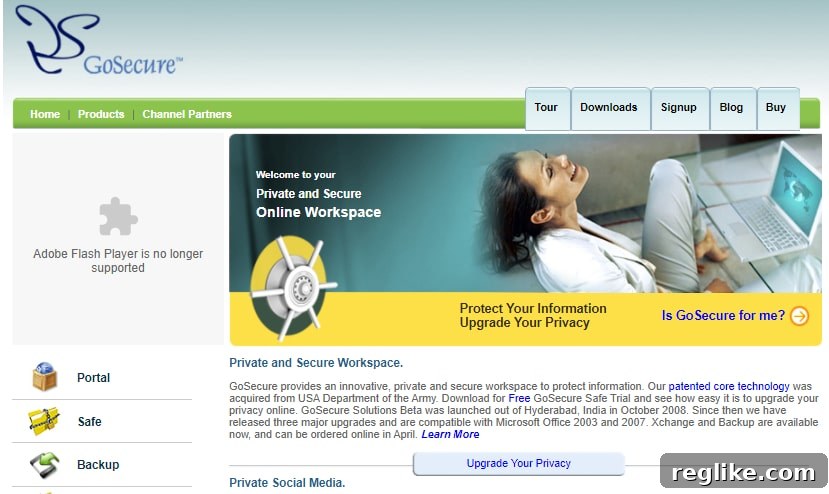
While GoSecure Inc. now asserts trademark infringement, the historical record suggests a powerful defense for Bhandari. Archives from the Wayback Machine, dating back to 2010—well before GoSecure Inc. even existed—clearly show that Bhandari was actively using “GoSecure” as a trademark for an online privacy and security service. This evidence of prior use is paramount in trademark law.
In the United States, trademark rights are primarily established through use in commerce, not merely through registration (though registration offers significant advantages). If Bhandari can demonstrate continuous and bona fide use of “GoSecure” as a mark for his services before GoSecure Inc. ever adopted the name, he could possess superior common law trademark rights in the term. This principle, known as the “first to use” rule, could fundamentally undermine GoSecure Inc.’s trademark infringement claims.
However, the complexities of trademark law introduce further nuances. One critical question that arises is whether Bhandari’s usage of the mark was continuous. The article notes, “I’m not sure if it matters that he apparently ceased using it for a while, at least through the public website.” If Bhandari ceased using “GoSecure” in commerce for an extended period with an intent not to resume, he could be deemed to have “abandoned” his trademark rights. Trademark abandonment can occur after three consecutive years of non-use. Proving abandonment can be challenging, as it requires demonstrating both non-use and an intent not to resume. The implications of potential abandonment on Bhandari’s defense in this trademark lawsuit are substantial and will likely be a key battleground in court.
Strategic Intent and Broader Implications
GoSecure Inc. is not explicitly asking for the GoSecure.com domain name to be transferred in this federal lawsuit. However, it is highly plausible that their overarching strategy is to exert immense legal and financial pressure on Bhandari, ultimately compelling him to settle the case by transferring the domain. Domain names, especially desirable .com addresses, are often seen as essential components of a brand’s online identity and can be invaluable assets. The cost and stress of defending a federal trademark lawsuit can be overwhelming for an individual, potentially forcing a capitulation even if their legal position is strong.
The continuity of legal representation further underscores the resolve of GoSecure Inc. The same law firm, Mintz, Levin, Cohn, Ferris, Glovsky and Popeo, P.C., which represented GoSecure Inc. in the failed UDRP and RDNH case, is now representing them in this federal trademark infringement lawsuit. This suggests a concerted and well-resourced effort by GoSecure Inc. to acquire the GoSecure.com domain, regardless of the initial legal setbacks. The financial and reputational costs for both parties in such prolonged litigation are considerable, highlighting the high stakes involved in domain name and trademark disputes.
This case serves as a powerful reminder of the intricate legal landscape governing online identities. It showcases how companies, driven by the desire for brand coherence and online presence, might pursue multiple legal avenues when faced with existing domain registrations. The outcome of this federal lawsuit will undoubtedly offer significant insights into the balance between prior domain registration rights, established trademark use, and the concept of trademark abandonment, shaping future strategies for brand protection and domain acquisition in the digital realm.