
A bit of domain name satire to get your week started right.
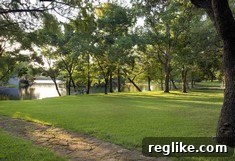
This past weekend, I stumbled upon yet another one of those pervasive online rants — a website passionately railing against “parked” domain names, blaming them for a myriad of internet woes. The typical argument was laid out with predictable fervor: parked domains are essentially unused digital real estate, and it’s an egregious injustice that someone genuinely committed to developing these domains can’t acquire them at a ‘reasonable’ price. The underlying premise suggests that any asset not actively contributing to its perceived purpose should be forcibly made available, often at a discounted rate, to those promising to unlock its potential. In response to this recurring digital indignation, I’ve crafted a satirical retort, drawing a striking, yet often overlooked, parallel to an issue far more tangible: the pervasive problem of empty, undeveloped land.
The Outrage Over Empty Land: A Call for Immediate Intervention
I am utterly fed up. Outraged, in fact, to my very core. It’s high time the government ceased its complacency and took decisive action against a scandal that, in my considered opinion, truly plagues our magnificent country: the scandalous and infuriating existence of empty, undeveloped land. The sheer audacity of landowners allowing prime real estate to sit fallow, year after year, while communities struggle for growth and individuals search for affordable housing, is beyond frustrating.
Allow me to illustrate my point with a glaring example. Just a stone’s throw, or rather, a few miles down the lake from my own peaceful neighborhood, lies a truly magnificent waterfront lot. Spanning a generous 1.4 acres, it boasts unparalleled lake views and direct access to the water – a genuine gem. Yet, for what seems like an eternity, it remains stubbornly, infuriatingly undeveloped. The owner, when confronted, offers the classic, flimsy excuse: he’s “thinking about building a house there one day.” But let’s be realistic; we all know the true motive. He purchased it as a purely speculative investment, a gamble with the sole aim of flipping it to some desperate buyer for significantly more than his original outlay. The property advertisement itself practically gives the game away, proudly describing a “football-field sized green, lakefront yard.” This explicitly signals that the owner understands its broad appeal as a generic, highly desirable piece of land, ripe for a multitude of luxurious development options. And what is his asking price for this untouched potential? A mind-boggling $4.25 million! To me, this isn’t shrewd investment; it’s a brazen act of financial extortion against genuine development and community progress.
Mandating Development or Fair Price Acquisition: A Government Imperative for Land Use
The era of polite suggestions and hopeful waiting must end. It is unequivocally time for our government to implement robust, decisive action. We need concrete mandates! Valuable land, especially prime real estate like the aforementioned waterfront parcel, must either be developed within a clearly defined, reasonable timeframe, or it should be legally surrendered to any individual or entity demonstrating a sincere and actionable commitment to building upon it. The idea that someone can simply hoard such a vital resource indefinitely, contributing nothing tangible to the local economy, housing supply, or aesthetic appeal, while others are actively seeking opportunities to build and contribute, is utterly absurd.
For those who might find outright surrender too drastic, I propose a pragmatic alternative: a mandatory policy compelling owners of undeveloped land to sell their property to any qualified party genuinely intending to develop it. Crucially, this transaction must occur at a fair and, most importantly, capped price. My proposed cap? A maximum of $50,000. Any price point above this, in my impassioned view, transcends fair market value and descends into pure, unadulterated extortion. Why should speculative investors be allowed to hold entire communities hostage, artificially inflating prices for land that could otherwise become vibrant new neighborhoods, essential commercial spaces, or much-needed affordable homes? This isn’t a truly free market; it’s an economic bottleneck, stifling progress and opportunity for the many.
The Persistent Blight of Empty Lots: A Grievance from the Home Front
This vexing issue of undeveloped potential strikes even closer to home, quite literally. Along my very own street, several empty lots stand as silent accusations. Each day, as I traverse my neighborhood, a wave of frustration washes over me. They are monuments to missed opportunities, stark testaments to potential unrealized. These neglected plots could be transformed into so much more! Imagine a vibrant community garden, a tranquil mini-park for local residents, or perhaps even modest, affordable homes providing shelter for deserving families. Instead, they sit vacant, overgrown with weeds, diminishing the overall appeal and value of our collective neighborhood.
Adding insult to injury, some of the owners of these desolate lots exhibit the sheer audacity to display “For Sale” signs directly on their property. This isn’t always a genuine effort to facilitate development; more often, it feels like a defiant declaration of their intent to continue hoarding. And it’s fundamentally unjust that I, or any other earnest aspiring homeowner or developer, should be forced to shell out exorbitant sums, often upwards of $100,000 per lot, simply to build on this long-neglected land. These specific lots, I can confirm, have languished, unproductive and abandoned, for over five decades! If the owners harbored any genuine intention of building on them, or actively contributing to the community’s growth, they would have done so by now. Am I truly expected to lend credence to the tired old narrative from that one neighbor who perpetually promises he’s going to construct his ‘retirement home’ on his plot ‘someday’? I’ve heard that particular fable countless times; it’s a worn-out excuse designed solely to justify inaction and perpetuate self-serving speculation.
Investment or Squatting? Redefining Responsible Property Ownership
Let’s abandon euphemisms and speak plainly. It’s time to galvanize our collective resolve. Let’s initiate a petition, an urgent public outcry that cannot be ignored. We must march, figuratively or literally, to the land management office—or whatever bureaucratic body presides over these matters—and demand immediate, tangible action. We need to unequivocally declare that these “mean, ill-spirited land owners” who selfishly hoard valuable property under the guise of “investment purposes” are actively doing a profound disservice to society. Let’s call their behavior what it truly is: squatting. Not in the conventional sense of illegally occupying someone else’s property, but rather, squatting on potential, squatting on community progress, and fundamentally squatting on the very fabric of sustainable development.
This isn’t an attack on legitimate, active property rights, let me be clear. Instead, this is a direct challenge to the very definition of what constitutes ‘responsible’ ownership, especially when it pertains to resources that possess inherent community value and societal benefit. When does the right to possess an asset without developing it transition from a passive holding into an active impediment to collective growth? When does passive speculation cross the ethical line into detrimental hoarding, actively preventing others from building, innovating, and contributing? These are profound questions that we, as an engaged and forward-thinking society, must confront and address with unwavering resolve.
The Broader Implications: A Speculative Conundrum Across All Assets
The parallels, once fully acknowledged, are undeniably stark. The passionate arguments leveled against “parked domains”—the cries of wasted potential, the indignant demands for accessibility at nominal costs, the accusations of unfair hoarding—resonate almost perfectly with the scenario of undeveloped physical land. Both represent valuable assets with inherent potential utility, currently held by individuals who, for a myriad of reasons, choose not to immediately unlock or maximize that potential. Yet, the societal outrage and call for intervention are often selectively applied. One is frequently deemed a digital blight, deserving of governmental or collective intervention and regulation, while the other is often staunchly defended as a fundamental tenet of sacrosanct property rights and the unfettered principles of free-market investment.
Perhaps it’s time for a comprehensive re-evaluation of our definitions across all asset classes. If the internet is truly a public utility, a shared digital commons whose digital real estate must be actively developed and utilized, or otherwise forfeited for the greater good, then surely the physical land beneath our feet—the very foundation of our communities, our homes, and our economic infrastructure—deserves no less stringent scrutiny. The prevailing economic models that actively encourage indefinite speculation on essential resources, whether they are purely digital or profoundly tangible, without a corresponding mandate for social benefit or active contribution, warrant a serious, unvarnished, and urgent discussion. Is our ultimate goal genuine development, robust economic growth, and the creation of thriving communities, or is it merely the enrichment of a select few through the passive appreciation of assets they effectively hold hostage?
The time for turning a blind eye to these vast tracts of undeveloped potential, both in the digital realm and across our physical landscapes, is definitively over. Let our collective indignation and our shared vision for progress spur real, impactful change, ensuring that valuable resources, in whatever form they may take, are consistently utilized for the greater good of all, rather than merely hoarded for exclusive speculative gain.