
The Green Frontier: TLDH’s Strategic Play in the .green and .eco Domain Wars
In the dynamic and often contentious landscape of generic Top-Level Domains (gTLDs), strategic maneuvers are commonplace. Companies constantly vie for control over valuable digital real estate, hoping to secure domain extensions that deeply resonate with specific industries, communities, or overarching themes. One particularly fascinating case unfolds around the “green” and “eco” niches, where the potential for significant digital branding, community building, and market influence is immense. This article delves into the strategic decision by Top Level Domain Holdings (TLDH) to pursue the .green domain, particularly in light of their ongoing entanglement in a protracted and costly battle for the .eco domain. This calculated move highlights the intricate dance of risk management, opportunity capture, and intense competition within the modern internet’s naming system.
The introduction of new gTLDs, orchestrated and overseen by the Internet Corporation for Assigned Names and Numbers (ICANN), represents a pivotal moment in the internet’s ongoing expansion. These new extensions, much like the traditional .com, .org, or .net, offer organizations, businesses, and communities the unprecedented chance to establish unique and memorable identities online. However, the application process for these coveted domains is notoriously rigorous, financially demanding, and often fiercely competitive, inevitably leading to complex disputes when multiple ambitious parties seek to claim the same valuable domain. The narrative surrounding .eco and .green perfectly encapsulates this high-stakes, high-reward environment that defines the forefront of digital branding.
The Thorny Path of .eco: A Battleground for Digital Identity
The journey of the .eco domain has been anything but smooth; it has been fraught with challenges from its very inception. The application for this highly coveted gTLD has been deeply mired in significant controversy and a series of legal entanglements, transforming it into a quintessential example of how competing visions and powerful commercial interests can clash dramatically in the domain space. The dispute over .eco involves multiple well-funded stakeholders, each presenting their own distinct proposals and claims for the domain, leading to a complex web of arguments that have been presented before ICANN and, ultimately, escalated into the courts of law.
One of the primary and most persistent roadblocks for the .eco domain has been an arduous trademark fight. The term “eco” itself, being a widely recognized and frequently used prefix for ecological and environmental concerns, has led to numerous claims of potential infringement or dilution from existing entities holding trademarks that incorporate “eco.” This inherent ambiguity over ownership and usage rights has significantly stalled the allocation process, creating an environment of profound uncertainty for any applicant hoping to secure it. Furthermore, what began as administrative disputes within ICANN’s stringent evaluation processes has regrettably escalated into full-blown legal battles. As of the initial reports, the .eco domain was already embroiled in court proceedings, unequivocally signifying the depth, complexity, and substantial costliness of the ongoing conflict. For applicants like Top Level Domain Holdings (TLDH), who were deeply invested in securing .eco, this protracted legal and administrative quagmire represents not only a significant financial drain but also a major strategic hurdle, costing them valuable time and resources. The prolonged delays mean lost opportunities, exponentially increased operational costs, and the continued inability to monetize a potentially lucrative domain extension. This challenging background is absolutely critical for understanding TLDH’s subsequent strategic moves, as it paints a clear and compelling picture of the frustrations and strategic recalculations involved in such high-stakes domain bids.
TLDH’s Strategic Pivot: Applying for .green Amidst Uncertainty
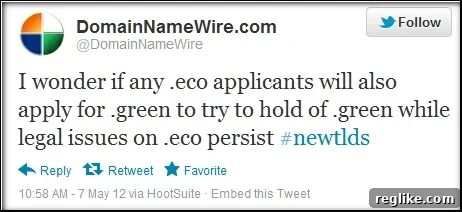
It is precisely against this backdrop of persistent and seemingly intractable challenges with .eco that TLDH made a profoundly notable strategic decision: to apply for the .green domain. This pivotal move, which rapidly became public knowledge through respected industry reports like those on Domain Name Wire, immediately sparked widespread speculation and intense discussion within the domain industry. Was this merely an opportunistic diversification of their domain portfolio, or a far more calculated and sophisticated strategic hedge against the seemingly endless delays and ongoing legal battles surrounding .eco?
The prevailing sentiment among seasoned industry observers and analysts strongly points towards the latter interpretation. TLDH, a well-established and highly experienced player in the competitive domain market, is renowned for its shrewd business acumen, proactive strategies, and forward-thinking approach. Facing the immense potential for a complete hold-up, a significant setback, or even an outright loss in the .eco bid, applying for .green can be seen as a classic and prudent risk mitigation tactic. By successfully securing an application for a similar, highly relevant, and equally appealing gTLD, TLDH strategically positions itself to potentially capture a significant share of the environmentally-conscious digital market, regardless of the ultimate, uncertain outcome for .eco. This intelligent strategy allows them to pursue a potentially less contested alternative while still aligning perfectly with the broader, highly relevant theme of sustainability and environmental responsibility that both domains emphatically represent. This “hedging bets” approach is far from uncommon in highly competitive markets. It effectively minimizes the impact of a single point of failure and ensures that core strategic objectives can still be met through alternative, viable pathways. If the .eco battle continues indefinitely or concludes unfavorably for TLDH, having a strong and well-prepared bid for .green provides a viable, attractive, and immediately accessible fallback, enabling them to capitalize on a closely related market segment without having to start from scratch in their quest for a relevant green domain.
The Contenders for .green: DotGreen Community Inc. and Other Potential Applicants
While TLDH’s strategic application for .green might be a well-timed response to the frustrating .eco deadlock, it does not imply that the path to securing .green will be entirely clear or uncontested. The domain space is inherently competitive, and valuable gTLDs almost invariably attract multiple, often powerful, applicants. One prominent and highly visible contender for .green is DotGreen Community, Inc. This organization has been actively and passionately involved in promoting the concept of a .green domain since as early as 2007, long before the gTLD expansion program reached its critical and application-heavy phase. They have invested a significant amount of time, considerable effort, and substantial financial resources into building a dedicated community around the idea and advocating tirelessly for their specific bid.
DotGreen Community Inc.’s long-standing presence, early investment, and strong community focus might lead some to believe they are the presumptive or natural winner for .green. However, this assumption might prove to be premature. The gTLD application process is meticulously designed to evaluate a multitude of critical factors, which include, but are not limited to, technical capabilities, robust financial stability, and the overall completeness and viability of the proposed business plan. While strong community support is undoubtedly an important consideration and carries weight, it is rarely, if ever, the sole determinant in such high-stakes competitions. Furthermore, the competitive landscape often includes powerful corporate entities with substantial resources, extensive experience, and deep expertise in effectively navigating ICANN’s complex procedures and political nuances. TLDH, for example, boasts a formidable team that includes highly influential figures like former ICANN Chairman Peter Dengate Thrush, whose unparalleled experience and profound insight into the inner workings of internet governance and domain policy are undeniably invaluable. Such a strategic advantage, rooted in institutional knowledge and influence, cannot be underestimated. It is also highly probable that other significant players, beyond just TLDH and DotGreen Community Inc., may have also meticulously prepared and submitted applications for .green, thereby making it a multi-faceted and potentially intense competition.
.green vs. .eco: A Battle of Branding and Market Appeal
Beyond the critical strategic and complex legal considerations, a fundamental and equally important question arises: which domain name inherently holds greater intrinsic value and possesses broader market appeal, .green or .eco? While both terms effectively convey a sense of environmental consciousness and responsibility, their subtle nuances in branding, public perception, and semantic clarity can be profoundly significant in capturing public imagination and market share.
From a purely linguistic and marketing perspective, a compelling argument can be made that .green is a superior name to .eco for a gTLD. The term “green” is almost universally understood and instantly recognized as synonymous with environmental friendliness, sustainability, eco-conscious practices, and a commitment to protecting the planet. It is direct, inherently positive, highly memorable, and immediately recognizable across diverse cultures, languages, and demographics. Phrases such as “green initiatives,” “green energy,” and “green living” have deeply permeated popular culture and everyday language, making the .green domain an intuitive, accessible, and highly appealing choice for businesses, non-profit organizations, and individuals passionately committed to these core values. Its clarity avoids the potential ambiguity or the sometimes academic connotations that “eco” might inadvertently carry, thereby making it significantly more accessible and relatable to a much broader global audience. “Eco,” while also widely understood and a powerful prefix, is often perceived more as a component of other words (e.g., ecology, economy, ecosystem) rather than a standalone, universally recognized descriptor in the same immediate way that “green” functions. While effective in its own right, “eco” might lack the immediate, vibrant, and broadly positive brand resonance that “green” possesses, which taps directly into a common understanding of environmental responsibility.
For a company like TLDH, navigating such a high-stakes and competitive environment, opting for the name with clearer, stronger, and more universal brand appeal makes perfect strategic sense, especially if they are actively seeking a more straightforward and less encumbered alternative to a deeply mired .eco bid. If TLDH were to face an interminable and exhausting battle over .eco, it is entirely logical and economically prudent for them to decisively shift their primary focus, valuable resources, and strategic energy towards securing .green. This strategic pivot would allow them to effectively leverage the clear and growing market demand for environmentally-themed domains with a name that potentially offers significantly better branding opportunities, stronger global recognition, and considerably less linguistic baggage. This kind of strategic flexibility and adaptability is not just an advantage; it is paramount for long-term success in the rapidly evolving and intensely competitive domain name industry.
Broader Implications for the gTLD Ecosystem
The sagas of .eco and .green are not isolated incidents; rather, they reflect and highlight broader, systemic trends and significant challenges within the complex and still-developing gTLD ecosystem. These include several critical aspects that shape the future of internet governance and digital identity:
- The Escalating Cost of Contention: Extended legal battles and prolonged administrative disputes inevitably drain enormous resources, not just from the direct applicants involved but also from ICANN itself, which bears the significant responsibility to mediate, adjudicate, and ultimately resolve these intricate conflicts. This substantial resource drain negatively impacts the efficiency, perceived fairness, and overall momentum of the entire gTLD program, potentially deterring future innovation.
- The Persistent Clash Between Community vs. Corporate Interests: The inherent clash between entities like DotGreen Community Inc., which are often driven by a specific, altruistic vision for a community-based domain, and powerful corporate applicants like TLDH, primarily focused on commercial viability, strategic market positioning, and profit generation, is a recurring and fundamental theme in the gTLD space. ICANN’s regulatory framework is meticulously designed to attempt to balance these often divergent interests, but the underlying tension and competition frequently persist and ignite disputes.
- The Imperative for Strategic Diversification: TLDH’s proactive move to apply for .green strongly underscores the critical importance of strategic diversification in contemporary domain portfolio management. Relying solely on a single, high-value gTLD application, especially one that is deeply fraught with ongoing disputes and uncertainties, is undeniably a high-risk strategy that few can afford.
- The Influence of Expertise and Industry Connections: The notable involvement of high-profile figures, such as former ICANN Chairman Peter Dengate Thrush, emphatically highlights the undeniable role of deep expertise, extensive experience, and strategic influence in effectively navigating the incredibly complex regulatory, political, and technical landscape of domain governance. Such insider knowledge can provide a decisive competitive edge.
- The Continuous Evolution of the Digital Market: As the internet continues its relentless growth and expansion, the demand for clear, specific, and instantly memorable domain extensions will only intensify. Battles over highly evocative terms like “green” and “eco” compellingly demonstrate the inherent and increasing value placed on these digital identifiers in shaping online presences, defining market segments, and ultimately influencing consumer perception and engagement.
Conclusion: A Strategic Bet on the Future of Sustainable Digital Identity
TLDH’s astute application for the .green domain, strategically placed amidst the ongoing, complex, and high-stakes battle for .eco, represents a masterful display of strategic foresight and sophisticated risk management within the fiercely competitive world of gTLDs. It clearly signifies a calculated and deliberate effort to secure a prominent and influential position in the burgeoning and increasingly vital market for environmentally conscious online identities, irrespective of the ultimate outcome of the protracted .eco dispute. While DotGreen Community Inc. has undoubtedly laid significant groundwork and built considerable community support for .green, TLDH’s extensive experience, substantial financial resources, and formidable expert team position them as an exceptionally formidable contender in this high-stakes contest.
Ultimately, the choice between .green and .eco, both for applicants vying for control and for potential registrants seeking an online presence, boils down to critical factors such as branding effectiveness, semantic clarity, and genuine market resonance. The compelling narrative strongly suggests that .green holds a distinct and tangible advantage in these crucial areas, offering a more direct, universally appealing, and instantly recognizable identifier for sustainability efforts and environmental responsibility. As the global digital landscape continues its dynamic evolution, these significant battles over gTLDs like .green and .eco will continue to profoundly shape how various industries, communities, and individuals establish and define their presence online, underscoring the critical, indispensable importance of strategic planning, proactive adaptability, and deep market insight in the face of complex and ever-changing competition.