
In a significant development echoing through the nascent landscape of decentralized web technologies, a key service provider for Handshake domain owners has ceased operations. Gateway.io, a platform known for enabling the sale of second-level domains within the Handshake ecosystem, has abruptly suspended its services, sending ripples of uncertainty across the community. This unexpected shutdown appears to be a direct consequence of escalating legal pressures, specifically a high-stakes lawsuit initiated by Unstoppable Domains, a prominent player in the blockchain domain space.
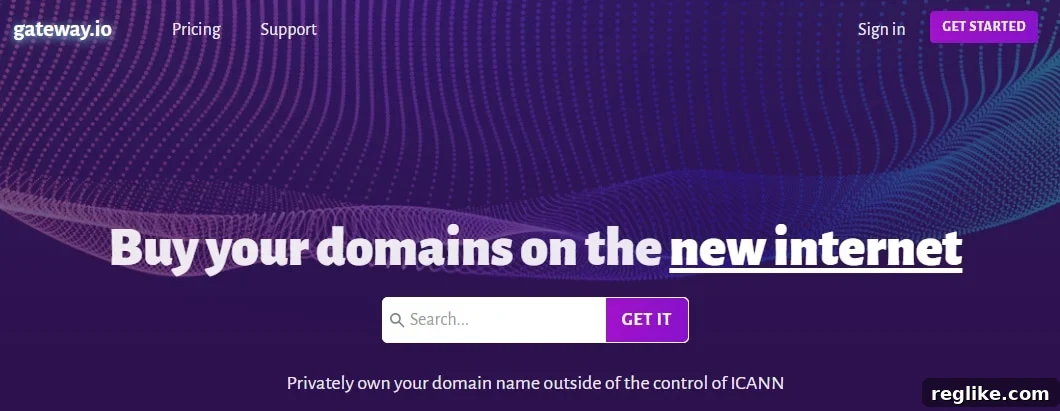
The saga unfolds at a critical juncture for the burgeoning decentralized web, where the ownership and management of digital identities are still being defined. Unstoppable Domains, a company at the forefront of providing blockchain-based domain names like .crypto, .nft, and crucially, .wallet, seems to have identified a unique legal battleground. If their objective was to establish a strong precedent for protecting their chosen top-level domain names and asserting exclusive rights within the decentralized realm, the recent events surrounding Gateway.io could very well serve as a potent test case for the future of digital asset ownership and intellectual property in the Web3 era.
Mere days following the public announcement that Unstoppable Domains had filed a lawsuit against Gateway.io, the latter’s operations ground to a halt. This swift cessation of services strongly suggests that Gateway.io found itself in an untenable position, reportedly unable to shoulder the substantial legal fees and resources required to mount an effective defense against the claims brought forth by Unstoppable Domains. The speed and decisiveness of the shutdown have raised eyebrows across the blockchain domain community, fueling speculation about the immediate and long-term implications for smaller entities operating within the competitive and often legally ambiguous world of decentralized domain registration.
The heart of Unstoppable Domains’ legal action against Gateway.io and its owner, James Stevens, centers on the offering of second-level .wallet domains under a Handshake top-level domain name. Unstoppable Domains itself provides a highly competitive .wallet address service through its proprietary blockchain-based naming system. The core of their argument, as detailed in legal filings, posits that the company which first successfully launches and offers second-level domains on a specific blockchain top-level domain should inherently possess exclusive rights to that particular name. This claim introduces a fascinating, yet potentially contentious, interpretation of intellectual property and digital asset ownership within the decentralized internet framework, challenging the very notion of a permissionless system.
Gateway.io, formerly under the stewardship of James Stevens, a figure known in the industry as the former CTO of the .io registry, has not only ceased new registrations for Handshake second-level domains but has also effectively vanished from its digital presence. A Twitter account previously associated with Stevens, a key figure in the Handshake community, has been deleted, and attempts to reach the [email protected] email address now result in delivery failures. These actions collectively paint a stark picture of a company abruptly closing its doors, seemingly overwhelmed by the legal challenge and unable to continue its operations. For many, this represents a grim illustration of the financial and operational vulnerability faced by smaller startups when confronted by well-funded industry giants wielding powerful legal instruments.
The community response to these developments has been immediate and vocal, highlighting deep concerns about potential monopolistic practices and the erosion of open competition within the decentralized web space. A prominent voice from the Handshake community, “Cosmos Chjango (Interchain.FM🥩)👩🚀,” encapsulated much of this sentiment in a widely shared tweet. This public message served as a rallying cry, framing Unstoppable Domains’ actions as a form of “bullying” against smaller, independent players, specifically targeting Handshake TLD owners. The tweet extrapolated on this concern, suggesting that if Unstoppable Domains successfully “knocks down” .wallet in the Handshake ecosystem, their aggressive pursuit of exclusive rights might extend to other valuable domain names, not only within Handshake ($HNS) but potentially even impacting other major blockchain naming services such as Ethereum Name Service (ENS Domains). This fear of a cascading effect underscores the anxiety among decentralized domain enthusiasts regarding the future landscape of digital identity and naming, prompting calls for greater clarity and fairness.
.@unstoppableweb is throwing its weight to bully the little guys, starting w/ @HNS TLD owners. It’s not unthinkable to extrapolate that once they’ve knocked down .wallet, that they’ll go after every valuable domain name not just in $HNS but @ensdomains as well. pic.twitter.com/6BQ1UWOL13
— Cosmos Chjango (Interchain.FM🥩)👩🚀 (@chjango) August 1, 2022
From a strategic standpoint, the decision by Gateway.io to entirely shut down its services presents a complex legal paradox. While it might seem like an immediate attempt to disengage from the legal battle, such a decisive move could, inadvertently, be perceived as an admission of guilt or an acknowledgement of the validity of Unstoppable Domains’ claims. In a legal context, abandoning a defense can often strengthen the opposing party’s position, especially if the defendant defaults. This could allow Unstoppable Domains to secure a default judgment, potentially setting a powerful legal precedent without the claims ever being fully contested in court. The absence of a robust defense from Gateway.io, therefore, paradoxically strengthens Unstoppable’s hand, allowing them to potentially shape the legal landscape for blockchain-based domains with fewer challenges and critical examination of their core arguments.
The ramifications of this case extend far beyond the immediate parties involved, affecting the broader ecosystem of blockchain domains and the future of digital identity. If Unstoppable Domains succeeds in establishing its claim of exclusive rights to the .wallet top-level domain based on its “first-to-market” principle, it could fundamentally alter the understanding of ownership in the decentralized space. This precedent would undoubtedly cast a long shadow over all owners of blockchain-based domain names, creating uncertainty and potentially opening the door for similar legal challenges across various blockchain naming systems like ENS, Namecoin, and others. Furthermore, this outcome could significantly influence how future top-level domains are handled, particularly when ICANN (Internet Corporation for Assigned Names and Numbers), the global authority for traditional domain names, eventually releases its next round of new TLDs. The interplay between traditional intellectual property law and the novel concepts of decentralized ownership is being rigorously tested, and the result of this particular conflict could provide crucial insights into how these disparate systems will (or won’t) coexist and find common ground.
The Handshake protocol itself, designed as a decentralized, permissionless naming system, aims to challenge the centralized authority of ICANN by empowering users with direct ownership and control over their top-level domains, free from intermediaries and traditional gatekeepers. The Unstoppable Domains lawsuit against a Handshake facilitator, therefore, strikes at the core philosophical underpinnings of the decentralized web movement. It raises fundamental questions about whether established legal frameworks, often designed for centralized systems and entities, can be effectively applied to truly decentralized, community-driven initiatives without stifling innovation or undermining the principles of web3. The outcome will be closely watched by developers, investors, and users alike, as it will likely define the boundaries of what is permissible and what constitutes fair practice in this rapidly evolving digital frontier.
Ultimately, the Gateway.io shutdown and the ongoing legal battle serve as a potent reminder of the complexities and growing pains inherent in building the next iteration of the internet. While the vision of a decentralized web promises greater freedom, censorship resistance, and individual control over digital assets, the path to realizing this vision is fraught with challenges, including significant legal, financial, and regulatory hurdles. The case highlights the urgent need for clearer legal definitions and perhaps even new regulatory frameworks that are specifically tailored to the unique characteristics of blockchain technology and decentralized autonomous organizations. As the dust settles on Gateway.io’s sudden exit, the broader implications for intellectual property in Web3, the competitive landscape of blockchain domains, and the very spirit of decentralization itself remain subjects of intense debate and critical observation across the global tech community.