
Unlock the Power of ExpiredDomains.net: Mastering Common SEO Filters
In the vast landscape of digital marketing and search engine optimization, finding a strong foundation for your online presence is paramount. One of the most potent, yet often underutilized, strategies involves leveraging expired domain names. These aren’t just forgotten web addresses; they are digital assets that can come pre-loaded with valuable SEO equity, including established backlink profiles, domain authority, and historical traffic.
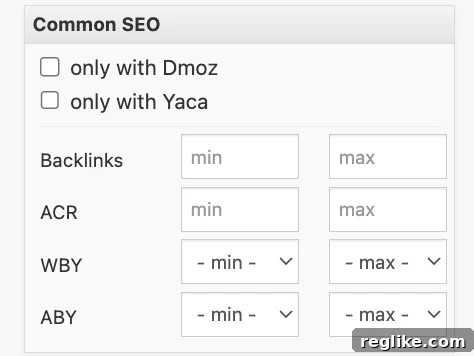
However, the sheer volume of expired domains can be overwhelming. This is where a sophisticated tool like ExpiredDomains.net becomes indispensable. It allows users to filter through millions of dropping and expired domains, narrowing down the choices to only those that align with specific SEO and business objectives. While the platform offers a myriad of filtering options, the “Common SEO” section holds particular significance for anyone serious about acquiring high-value domains.
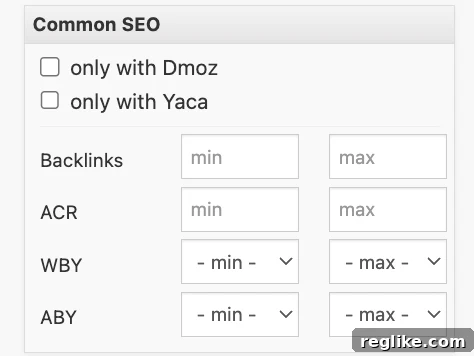
Building on the positive reception from our previous guides on ExpiredDomains.net – particularly the enthusiasm for filtering with multiple keywords – we’re diving deeper into the nuances of this powerful platform. Today, our focus is squarely on demystifying and mastering the “Common SEO” filters, a section that, despite its name, offers much more than meets the eye.
Understanding the “Common SEO” Filter Set
The label “Common SEO” might be a slight misnomer, as this section encompasses a blend of historically relevant directory inclusions and crucial historical dating mechanisms. While some fields directly touch upon traditional SEO metrics like directory listings, others provide vital insights into a domain’s true age and history, which are indirect but powerful SEO signals. Understanding each field’s purpose and how to use them correctly is key to uncovering truly valuable expired domain names.
The Historical Significance: DMOZ and Yandex Catalog
At first glance, seeing filters for DMOZ and Yandex Catalog might seem anachronistic to those familiar with the modern SEO landscape. DMOZ (Open Directory Project) officially closed its doors in 2017, and the Yandex Catalog also ceased operations. So why are these filters still present, and do they hold any value?
- DMOZ (Open Directory Project): In its prime, DMOZ was a human-edited web directory that carried significant authority. A listing in DMOZ was a strong indicator of a website’s legitimacy and quality, often translating into a valuable backlink and a boost in search engine rankings. While DMOZ is no longer active, its legacy persists. Domains that were once listed in DMOZ often possess a strong, clean history and may have attracted high-quality backlinks during their operational period. Filtering for DMOZ inclusion can, therefore, serve as a historical quality signal, pointing towards domains that were considered authoritative by human editors. This historical trust can still indirectly influence current search engine perceptions, especially if the domain maintained a good reputation post-DMOZ.
- Yandex Catalog: Similar to DMOZ but with a stronger focus on Russian-language websites, the Yandex Catalog also represented a seal of approval for quality content. For those targeting audiences in Russia or former Soviet Union countries, a domain with a Yandex Catalog listing can indicate past relevance and authority in that specific geographic and linguistic context. Even after its closure, such a listing suggests a domain that once met stringent quality criteria, making it a potentially valuable asset for specific regional SEO strategies.
While these directories are defunct, their inclusion in ExpiredDomains.net’s filters acts as a historical proxy for quality and authority. It helps identify domains that were recognized as legitimate and valuable by human curators, often correlating with cleaner backlink profiles and less spammy histories.
Deciphering Domain Age: Whois Birth Year vs. Archive Birth Year
One of the most critical aspects of evaluating an expired domain is its age. Search engines generally favor older, established domains, as they tend to be more trustworthy and less prone to spam. However, determining a domain’s true age isn’t always straightforward. This is where the distinction between “Whois Birth Year” and “Archive Birth Year” becomes absolutely crucial.
- Whois Birth Year: This filter refers to the domain’s registration date as recorded in its Whois record. It typically indicates when the domain was most recently registered or renewed. While seemingly simple, relying solely on the Whois Birth Year can be misleading. Domain registration dates can be “reset” for various reasons. For example, if a domain is acquired by a new owner through a drop-catching service or aftermarket purchase, the Whois record might reflect the new registration date, making the domain appear much younger than its actual operational history. This can cause you to overlook incredibly valuable, aged domains that have simply changed ownership.
- Archive Birth Year: This is arguably the more critical filter for assessing a domain’s true historical age. The Archive Birth Year refers to the earliest date a domain was first indexed by the Internet Archive (Wayback Machine). The Wayback Machine is a digital library of the internet’s history, capturing snapshots of websites over time. If a domain was first captured by the Wayback Machine in, say, 1999, it indicates that the domain was actively registered and had content online at least by that year, regardless of its current Whois registration date.
Why Archive Birth Year is a Game-Changer:
Consider a scenario where a domain was initially registered in 1998, built up a strong reputation for years, but then expired and was later re-registered by a new owner in 2020. The Whois Birth Year would show 2020, suggesting a relatively new domain. However, the Archive Birth Year would reveal its true age of 1998, indicating a long and potentially authoritative history. If you only filtered by Whois year (e.g., looking for domains registered only after 2010), you would miss this valuable 1998 domain entirely.
The Archive Birth Year helps you identify domains with a deep historical footprint, which often translates to:
- Established Authority: Older domains have had more time to accumulate backlinks and build trust with search engines.
- Brand Recognition: They might have been associated with a brand or topic for a long time.
- Historical Content: The Wayback Machine allows you to inspect past content, ensuring the domain wasn’t used for spam or illicit activities.
Therefore, when sifting through expired domains, it is highly recommended to prioritize or at least combine the Archive Birth Year filter with other criteria. This approach significantly increases your chances of finding genuinely aged domains with robust historical SEO value, rather than just recently re-registered ones.
Strategic Implementation of Common SEO Filters
Combining these “Common SEO” filters with other search parameters on ExpiredDomains.net can lead to exceptionally powerful results. Here’s how to harness their full potential:
- Start Broad, Then Refine: Don’t apply too many filters initially. Begin with essential keywords in the main search bar and then move to the “Common SEO” section.
- Prioritize Archive Birth Year: If domain age is a key factor for your strategy (and it almost always is for SEO), use a wide range for Archive Birth Year (e.g., 1990-2010) to capture truly old domains. You can then use Whois Birth Year to filter out domains that might have been spammed or frequently re-registered if you want a more “active” history, but remember the caveats.
- Leverage DMOZ/Yandex for Quality Signals: For an additional layer of historical quality assurance, toggle on the DMOZ and/or Yandex Catalog inclusion filters. While these will significantly narrow your results, the domains that pass this filter are more likely to have a clean, reputable past.
-
Combine with Other Powerful Filters:
- No TLDs/Keywords: Exclude irrelevant TLDs (e.g., `.xyz`, `.club` if you’re looking for .com) or keywords.
- Backlinks: After applying age and historical quality filters, move to the “Additional” tab to filter by external backlinks. A domain with an old Archive Birth Year and a significant number of backlinks is a goldmine.
- Domain Authority/Page Authority (External Tools): While ExpiredDomains.net doesn’t have built-in DA/PA filters, the “Common SEO” filters help you pre-select domains that are *likely* to have higher authority when you check them with tools like Ahrefs, Moz, or Majestic after initial filtering.
Remember, the goal is not just to find *any* expired domain, but to find *valuable* expired domains that can accelerate your SEO efforts. The “Common SEO” filters are designed to cut through the noise and highlight domains with a legitimate history and potential for strong performance.
Beyond the Filters: Due Diligence is Key
Once you’ve used the “Common SEO” and other filters to identify a list of promising domains, your work isn’t over. Comprehensive due diligence is absolutely essential before making a purchase. Here are critical steps to take:
- Check Backlink Profile: Use tools like Ahrefs, SEMrush, or Majestic SEO to analyze the domain’s backlink profile. Look for quality, relevance, and diversity of referring domains. Avoid domains with spammy links, PBN links, or links from irrelevant niches.
- Inspect with Wayback Machine (Archive.org): This is paramount, especially after using the Archive Birth Year filter. Visit Archive.org and input the domain to review its historical content. Ensure the domain wasn’t used for spam, adult content, or anything unrelated to your niche. Look for consistent content history.
- Check for Google Penalties: A domain might have a great history but could be penalized by Google. Search the domain name directly in Google to see if it appears, or try searching for old content indexed under that domain.
- Assess Brandability and Relevancy: Does the domain name itself still hold appeal? Is it relevant to your intended use? Even with great SEO metrics, a poor or irrelevant name can hinder branding efforts.
- Consider Traffic History: While harder to ascertain precisely, tools like Similarweb can sometimes offer insights into past traffic levels, which can be an indicator of a domain’s previous popularity.
By meticulously combining the sophisticated filtering capabilities of ExpiredDomains.net, particularly its “Common SEO” section, with thorough post-filtering due diligence, you position yourself to acquire powerful digital assets. These assets can serve as robust foundations for new websites, potent private blog network (PBN) properties (used judiciously), or effective 301 redirects to boost existing projects.
I received positive feedback on my previous video about using ExpiredDomains.net to find domains to buy, highlighting how many users were unaware of the platform’s advanced functionalities. This guide and the accompanying video aim to further empower you in your domain acquisition journey.
In today’s video, I’ll show you how to set the “Common SEO” filters and walk you through practical examples. I explain the critical difference between the Whois Birth Year and Archive Birth Year, illustrating how setting these correctly will prevent you from missing out on potentially invaluable domain names. I provide clear examples of domains that would slip through the cracks if you relied solely on the Whois year, elucidating why a domain’s registration date might be reset and what that means for your search.
Hope this comprehensive breakdown is helpful and equips you with the knowledge to make more informed decisions:
Conclusion: Your Gateway to High-Value Domains
ExpiredDomains.net is more than just a list of available domain names; it’s a treasure trove for SEO professionals and digital entrepreneurs. By mastering the “Common SEO” filters – particularly understanding the nuanced roles of DMOZ, Yandex, Whois Birth Year, and Archive Birth Year – you gain a significant advantage in identifying domains with genuine historical authority and untapped SEO potential. Remember, the journey from finding to acquiring a high-value expired domain requires both smart filtering and diligent post-filter analysis. Embrace these strategies, and unlock a powerful avenue for enhancing your digital footprint and achieving your online objectives.