
ICANN Compliance: A Deep Dive into Complaint Handling and Enforcement
The Internet Corporation for Assigned Names and Numbers (ICANN) plays a crucial role in maintaining the stability and security of the internet’s domain name system (DNS). A significant portion of ICANN’s resources is dedicated to ensuring contractual compliance among registrars and registries. This article delves into the intricacies of ICANN’s compliance mechanisms, examining the types of complaints handled, the impact of industry events, and the effectiveness of the complaint resolution process.
Understanding ICANN’s Contractual Compliance Department
ICANN’s Contractual Compliance and Consumer Safeguards department is responsible for enforcing the contracts ICANN holds with registries and registrars. This department acts as a vital bridge, handling complaints from both domain name registrants and end-users, conducting audits to assess compliance, and proactively monitoring the domain name industry for potential issues.
During ICANN 73 Prep Week, the compliance team provided valuable insights into their activities. The team emphasized the transformative impact of adopting Salesforce, which enables them to meticulously analyze data concerning complaint volumes, compliance actions taken, and a host of other detailed metrics. This improved data management allows for a more nuanced understanding of the challenges facing the domain name industry.
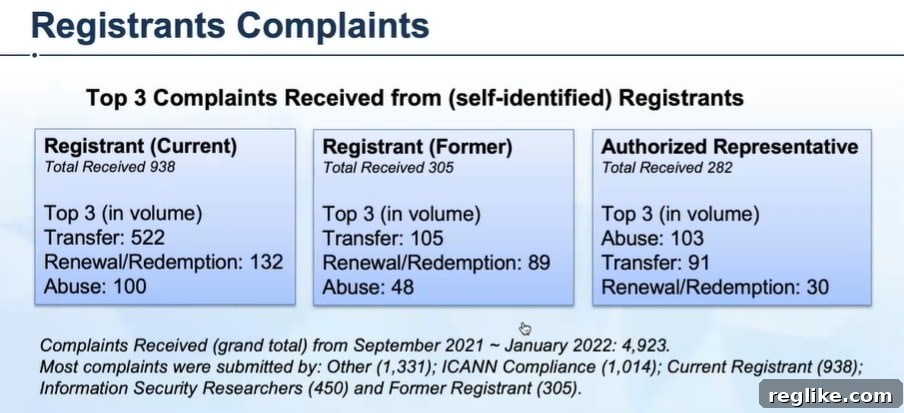
It was noted that transfer and renewal issues remain the most prevalent source of complaints. This highlights the ongoing need for vigilance and effective mechanisms to address these common problems encountered by domain name holders.
The Ripple Effect: How Industry Events Shape Compliance Efforts
The history of the domain name industry is punctuated by significant events that have consistently influenced compliance activity within ICANN. Major upheavals, emerging trends, and escalating community concerns all necessitate adjustments to ICANN’s approach to contractual compliance.
The RegisterFly meltdown in 2007 serves as a prime example. This event triggered comprehensive audits by the Contractual Compliance department and led to substantial revisions in the Registrar Accreditation Agreement (RAA), which came into effect in 2009. These changes strengthened ICANN’s oversight capabilities and improved the overall accountability of registrars.
Similarly, the New gTLD Program, which introduced a wave of new generic top-level domains, prompted the creation of a base Registry Agreement that granted ICANN expanded audit rights. This proactive measure ensured that the new gTLDs adhered to established standards and minimized potential risks.
The escalating concerns surrounding DNS abuse, encompassing both maliciously registered domains and compromised domains, have also prompted ICANN to allocate more resources to demonstrating its commitment to ensuring that registrars and registries establish and maintain robust procedures and policies for abuse reporting. While ICANN doesn’t directly address the abuse itself, they are ensuring registrars and registries take action.
The Impact of GDPR on ICANN’s Compliance Operations
The implementation of the General Data Protection Regulation (GDPR) has had a profound impact on ICANN’s compliance operations, particularly with respect to Whois data. The redaction of personal information from Whois records, mandated by GDPR, has significantly altered the landscape of domain name registration and compliance.
Since 2018, policy changes driven by the need for personal data protection have led to a reduction in the overall number of registration data complaints. Simultaneously, the rejection rate of attempts to obtain information through complaints has increased. This underscores the challenges of balancing the need for transparency with the imperative to protect personal privacy.
Navigating the Complaint Process: A Guide for Registrants
ICANN provides a relatively straightforward complaint process for registrants who encounter issues with their registrars. However, it’s crucial to understand that submitting a complaint does not guarantee a successful outcome. The Contractual Compliance department rejects a substantial portion of complaints, deeming them out of scope, moot, or otherwise invalid. Similar to ICANN’s DIDP (Domain Name Dispute Policy) process, complaints can be rejected for various reasons.
Here are some common pitfalls that registrants should avoid when filing complaints:
- Insufficient Information: The leading cause of complaint rejection across all categories is a lack of sufficient information. It is imperative to provide detailed and accurate information to support your claim.
- Moot Transfers: Complaints related to domain transfers are frequently rendered moot by the time they are reviewed. This highlights the importance of addressing transfer issues promptly.
- Failure to Contact Registrar First: Complaints concerning abuse are automatically rejected if the registrant has not first attempted to resolve the issue directly with the registrar. Maintain records of your communication with the registrar.
- Suspended Domains: Registrars are not obligated to maintain the accuracy of registration data for suspended domains. Consequently, complaints pertaining to suspended domains are unlikely to succeed.
Key Takeaways for Effective Complaint Resolution
Based on the insights shared during the ICANN 73 Prep Week presentation, here are two crucial takeaways for registrants seeking to resolve domain-related issues through ICANN’s complaint process:
- Provide Comprehensive Information: When submitting a complaint, ensure that you include as much relevant information as possible. Respond promptly and thoroughly to any follow-up questions from the Contractual Compliance department.
- Understand the Informal Resolution Process: Contractual Compliance generally prioritizes resolving complaints informally before resorting to formal notices. While ICANN publishes only a limited number of formal compliance actions each month, valid complaints are actively addressed through other means.
Conclusion: Ensuring Accountability and Protecting Users
ICANN’s Contractual Compliance department plays a vital role in maintaining the integrity of the domain name system and protecting the rights of registrants and end-users. By enforcing contracts, handling complaints, and monitoring the industry, ICANN strives to ensure accountability and promote a fair and transparent environment. While the complaint process may not always yield the desired outcome, it serves as an essential mechanism for addressing issues and holding registrars and registries to established standards.
Understanding the nuances of ICANN’s compliance processes, the impact of industry events, and the importance of providing comprehensive information when filing complaints is crucial for navigating the complexities of the domain name ecosystem. By working together, ICANN, registrars, registries, and registrants can contribute to a more secure and reliable internet for all.