
ICANN Satisfaction Soars: A Deep Dive into Shifting Perceptions of Internet Governance
For years, the Internet Corporation for Assigned Names and Numbers (ICANN) has frequently found itself in the crosshairs of criticism, often dubbed the “domain industry’s favorite punching bag.” Its complex policies, slow-moving processes, and perceived bureaucratic inefficiencies have long been subjects of widespread frustration among stakeholders. However, a remarkable shift in sentiment has been observed recently, signaling a significant turning point in how the global internet community views this pivotal organization.
A recent, highly anticipated survey has unveiled a dramatic surge in stakeholder satisfaction with ICANN, marking a significant departure from historical trends. This unprecedented positive outlook prompts crucial questions: What factors have contributed to this sudden change of heart? Is it a reflection of ICANN’s evolving operational efficiency, or are deeper, more fundamental concerns shaping this new perception? This article delves into the nuances of these findings, exploring the potential catalysts behind ICANN’s newfound appreciation and what it signifies for the future of internet governance.
Unpacking the Domain Name Wire Survey: A Historical Reversal
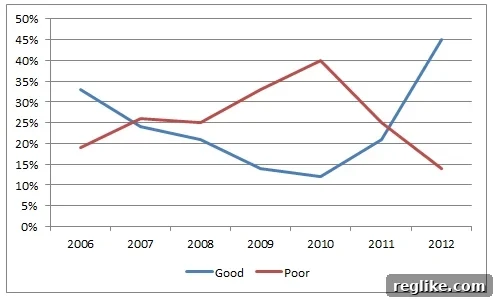
Each year, the comprehensive Domain Name Wire survey serves as a critical barometer for measuring stakeholder sentiment towards ICANN. Participants are asked to rate their satisfaction as “Good,” “Acceptable,” or “Poor.” Historically, the results have painted a consistently challenging picture for ICANN, with “Poor” ratings routinely outnumbering “Good” ones, a trend that has persisted almost without interruption since 2006. This enduring dissatisfaction underscored the persistent friction between ICANN’s mandate and the expectations of the global domain community.
However, the latest iteration of the survey presents a compelling narrative of change. This year, for the first time in over a decade, the tide has turned dramatically. A striking 45% of respondents rated their satisfaction as “Good,” a figure that represents an all-time high. In stark contrast, only 14% categorized their experience as “Poor.” This reversal is not merely a statistical anomaly; it represents a profound shift in the collective consciousness of those most intimately involved with the domain industry and internet policy.
The positive sentiment is even more pronounced when examining specific segments of the stakeholder community. Among individuals managing 500 or more domains – a group often considered the most engaged, informed, and critical users of ICANN’s services – the satisfaction levels skyrocket. A staggering 64% of these high-volume domain holders rated their satisfaction as “Good,” while only 18% expressed dissatisfaction. This data suggests that those with the deepest understanding and most significant investment in the domain ecosystem are increasingly finding value and perhaps even comfort in ICANN’s role.
Key Drivers Behind the Surge in Positive Sentiment
Understanding the root causes of this unprecedented shift requires a multifaceted analysis. While several factors may be at play, two principal drivers appear to stand out: the maturation and impact of ICANN’s New Generic Top-Level Domain (gTLD) Program and, perhaps more significantly, a growing apprehension regarding potential alternative models of internet governance.
The Maturing Influence of the New gTLD Program
One potential contributor to ICANN’s improved standing could be the perceived success and stabilization of its New gTLD Program. Launched amidst considerable controversy and anticipation, the program aimed to significantly expand the internet’s domain name space beyond traditional extensions like .com and .org. Initial reactions were mixed; while some lauded it as an innovation catalyst, others voiced concerns about potential market fragmentation, cybersquatting, and the sheer cost and complexity involved in launching and managing new domain registries.
However, several years into its implementation, the New gTLD Program has demonstrated a remarkable capacity to diversify the online landscape. Thousands of new extensions, ranging from industry-specific (.tech, .app) to geographical (.berlin, .london) and even brand-specific domains, have been introduced. This expansion has offered businesses and individuals unprecedented opportunities for unique branding and online identity. As the initial rollout anxieties have subsided, and the benefits of a more varied domain ecosystem become clearer, many stakeholders might now view the program as a net positive. The sheer scale and complexity of this undertaking, successfully navigated by ICANN, could be contributing to a renewed appreciation for its operational capabilities and vision, even if imperfectly executed at times.
The Looming Threat: Fear of the Alternative
While the New gTLD Program’s role is not insignificant, a more profound and overarching factor likely driving this surge in satisfaction is a collective apprehension about alternative models of internet governance. The existing framework, championed by ICANN, is founded on a unique multi-stakeholder model. This model involves a diverse array of participants – including governments, businesses, civil society organizations, technical experts, and individual users – collaborating to develop policies and manage the internet’s core infrastructure. It is designed to be bottom-up, consensus-driven, and distributed, reflecting the global and decentralized nature of the internet itself.
In recent years, however, there have been escalating calls, particularly from various governmental bodies and international organizations, to shift the stewardship of internet governance towards more traditional, intergovernmental structures, often resembling a United Nations-style body. Proponents of such a model argue for greater state control over internet policy, citing concerns ranging from national security to digital sovereignty. However, this proposition sends shivers down the spines of many within the domain industry and the broader internet community.
The potential ramifications of moving internet governance into the hands of a purely governmental body are widely perceived as detrimental to the internet’s open, innovative, and global character. Such a shift could lead to:
- Increased Censorship and Surveillance: Governments, operating under national laws and political agendas, might impose stricter controls on online content and user activity, limiting freedom of expression and access to information.
- Internet Fragmentation (Splinternet): Different national policies could lead to a ‘splinternet,’ where online experiences vary drastically from country to country, hindering global connectivity and commerce.
- Slower Innovation: Bureaucratic, top-down governance models are typically less agile and responsive than multi-stakeholder approaches, potentially stifling technological advancement and the rapid evolution of internet services.
- Politicization of Technical Standards: Technical decisions, currently guided by engineering principles and consensus, could become subject to political bargaining, compromising the internet’s stability and interoperability.
- Reduced Accountability: Without the diverse checks and balances inherent in the multi-stakeholder model, a UN-style body could become less accountable to the broader internet user base, potentially serving national interests over global public good.
When faced with the stark reality of such an alternative, many stakeholders, even those previously critical of ICANN, are compelled to re-evaluate their stance. The perceived imperfections of ICANN’s multi-stakeholder model, with all its inherent complexities and frustrations, begin to pale in comparison to the existential threats posed by a potentially government-controlled internet. It becomes a choice, not between perfection and imperfection, but between a flawed yet functional system and an alternative fraught with severe risks to the internet’s fundamental principles. The consensus seems to be that while ICANN certainly has its problems – and there are indeed many – it unequivocally represents a far superior framework than the proposed governmental alternatives.
Balancing Act: Acknowledging ICANN’s Ongoing Challenges
While satisfaction levels have dramatically improved, it would be disingenuous to suggest that ICANN has suddenly become a flawless organization. Many long-standing criticisms and challenges persist. Issues such as the pace of policy development, the transparency of certain decision-making processes, the cost structures associated with new gTLDs, and the perennial quest for perfect accountability continue to be points of contention. Stakeholders still grapple with the complexities of engaging with ICANN’s various advisory committees and supporting organizations, and concerns about representation for all global regions remain salient.
The recent survey results should therefore not be interpreted as a blanket endorsement of ICANN’s every action, but rather as a strategic acknowledgment by the community. It suggests a pragmatic acceptance of the current system’s imperfections, primarily because the perceived alternatives are far more problematic. This improved satisfaction might best be understood as a reluctant embrace, a recognition that the known devil is preferable to the unknown, and potentially authoritarian, deep blue sea.
The Future of Internet Governance: A Renewed Mandate?
This significant shift in stakeholder satisfaction could inadvertently provide ICANN with a renewed mandate and a stronger position in ongoing global debates about internet governance. With a more supportive, or at least less overtly hostile, stakeholder base, ICANN may find itself better equipped to advocate for the multi-stakeholder model against calls for governmental intervention. It also places an onus on ICANN to leverage this goodwill by actively addressing its persistent challenges, improving efficiency, and enhancing transparency. Failure to do so could erode this newfound trust and send satisfaction levels plummeting once again.
The global digital landscape is constantly evolving, with new threats and opportunities emerging regularly. ICANN’s role in maintaining a stable, secure, and unified internet remains paramount. The recent survey findings underscore the critical importance of a governance model that prioritizes collaboration, open standards, and diverse input over centralized control. It’s a powerful reminder that while criticism is vital for improvement, understanding the broader context and potential dangers of alternatives is equally crucial for safeguarding the internet’s future.
Conclusion: A Pragmatic Appreciation for the Status Quo
The dramatic increase in satisfaction with the Internet Corporation for Assigned Names and Numbers, as revealed by the latest Domain Name Wire survey, marks a pivotal moment. Far from being a sudden conversion to absolute admiration, this shift appears to be a pragmatic acknowledgement of ICANN’s critical role and, more significantly, a collective recoil from the potential pitfalls of alternative, government-centric internet governance models. While the success of the New gTLD program has certainly played a part, the fear of an internet managed by UN-style bodies has undoubtedly solidified support for the existing multi-stakeholder framework.
ICANN, despite its acknowledged flaws and ongoing areas for improvement, is now viewed by a growing majority as the lesser of evils, or perhaps more accurately, the essential guarantor of a free and open internet. This newfound appreciation, rooted in a sober assessment of geopolitical realities, presents both an opportunity and a challenge for ICANN to strengthen its processes, address lingering criticisms, and continue to champion the multi-stakeholder model as the most viable path forward for global internet governance. The domain industry may still have its grievances, but it seems to have decisively chosen its preferred champion in the ongoing battle for the internet’s soul.