
ICANN’s New TLD Auctions: Navigating Delays and the Future of Domain Contention Resolution
The highly anticipated initial auctions by the Internet Corporation for Assigned Names and Numbers (ICANN) to resolve new Top-Level Domain (TLD) contention sets are now expected to commence in the middle of November. This revised timeline marks a slight adjustment to the schedule for one of the most significant phases in the expansion of the internet’s naming system, a process vital for shaping the digital landscape of tomorrow.
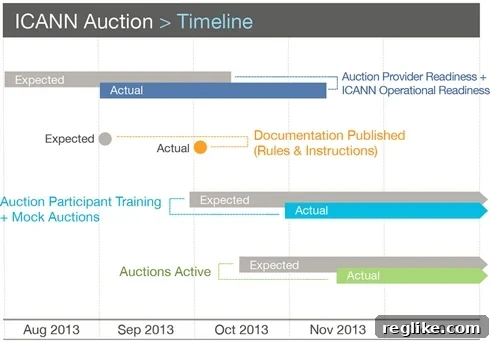
During a recent webinar providing critical updates to new TLD applicants, Christine Willett, ICANN’s distinguished Vice President of gTLD Operations, confirmed that the launch of these crucial auctions would not proceed as initially planned for October. Instead, the start date has been strategically recalibrated to mid-November. While this may seem like a minor shift, the delay underscores the intricate, often complex, and pioneering nature of managing such a groundbreaking global initiative that seeks to expand the digital address space for billions of users worldwide.
For the multitude of applicants deeply invested in the new TLD program, this adjustment might not come as a complete surprise. The sheer magnitude of unresolved issues, coupled with the multi-faceted challenges that must be meticulously addressed before specific contention sets can even be considered for auction, necessitates a careful, deliberate approach. ICANN’s unwavering commitment to ensuring a fair, transparent, and robust process often means prioritizing thoroughness over speed, especially when establishing new regulatory frameworks that will govern a substantial portion of the internet’s future.
Understanding the Rationale Behind the Auction Reschedule
Willett articulated that the primary drivers behind this delay were multifaceted, reflecting the enormous scope and complexity of the new gTLD program. A significant portion of ICANN staff resources has been strategically allocated to address other pressing matters, most notably the intensive process of Community Priority Evaluation (CPE). The CPE is a critical and rigorous component designed to assess applications for new TLDs that claim to serve a specific, well-defined community. It involves detailed evaluation criteria to determine if an applicant truly represents, has the overwhelming support of, and plans to operate the TLD for the benefit of the community it seeks to serve. Granting priority to such community-based applications over purely generic or commercial ones is a cornerstone of ICANN’s policy, but these evaluations are inherently time-consuming, requiring meticulous review of extensive documentation, evidence, and stakeholder feedback.
Beyond the considerable resource demands of CPE, Willett also highlighted that several outstanding questions regarding the precise mechanics and procedural aspects of how the auctions will be conducted still require definitive answers. These questions can range from technical details of the bidding platform, specific rules for different types of contention, to mechanisms for dispute resolution within the auction framework itself. ICANN is committed to engaging extensively with the community – including applicants, legal experts, industry bodies, and other relevant stakeholders – to resolve these queries comprehensively. This community engagement process, while absolutely vital for fostering consensus, ensuring the integrity of the auction framework, and building trust, is by its very nature a time-intensive endeavor. It reflects ICANN’s dedication to collaborative governance and its foundational mandate to operate in the public interest, ensuring that all voices are heard and concerns are addressed before moving forward with such pivotal decisions that impact the global internet ecosystem.
Deciphering Contention Sets and the Critical Role of ICANN Auctions
At its core, the ICANN auction mechanism is meticulously designed to serve as a last-resort method for resolving contention sets. A contention set arises in the new TLD program when multiple, distinct applicants submit applications for the exact same Top-Level Domain string. For example, if several different entities independently apply for the rights to operate ‘.shop’, ‘.web’, or ‘.cloud’, they collectively form a contention set. Ideally, ICANN actively encourages these competing applicants to reach a private agreement amongst themselves. This could manifest through various forms, such as a joint venture to operate the TLD, a mutual withdrawal by one party in exchange for financial compensation from another, or other mutually beneficial arrangements designed to avoid a public auction. This applicant-driven resolution is always the preferred outcome, as it fosters cooperation, potentially reduces costs, and demonstrates maturity within the domain name industry.
However, when these private negotiations fail, or when applicants cannot arrive at a mutually agreeable consensus despite good-faith efforts, ICANN’s official auctions step in as the ultimate arbiter. These auctions are not merely about financial bids; they represent a structured, transparent process to fairly determine which applicant will ultimately be awarded the exclusive right to operate and manage the contested TLD. The introduction of hundreds of new TLDs, a massive expansion of the internet’s namespace, has inevitably led to the formation of numerous contention sets across various desirable strings, making these auctions a crucial and unavoidable bottleneck in the overall TLD rollout process.
A particularly notable and often discussed aspect of these ICANN-managed auctions is the ultimate destination of the proceeds generated. Unlike traditional commercial auctions where funds typically go directly to a seller for profit, the significant revenues generated from ICANN’s TLD auctions are earmarked for as-yet-unnamed causes. While the specific beneficiaries or initiatives have not been formally disclosed in their entirety, past discussions and ICANN’s foundational mission strongly suggest these funds will be directed towards initiatives that broadly benefit the global internet community. Potential avenues for these funds include, but are not limited to, funding for critical internet infrastructure development in underserved regions, supporting global internet governance research and policy development, bolstering the security and stability of the Domain Name System (DNS), or even contributing to charitable endeavors that align with ICANN’s overarching public interest mandate. This unique approach underscores ICANN’s non-profit structure and its unwavering commitment to using all resources to further the global public good and advance the internet’s growth and accessibility.
The Strategic Advantage of Private TLD Auctions
Amidst the official ICANN auction timeline and the inherent delays often associated with such large-scale regulatory processes, a parallel and increasingly influential trend has emerged: many applicants are proactively engaging in private auctions. These privately organized bidding processes serve as an alternative, faster means to resolve competing applications, allowing parties to circumvent the potentially protracted waiting period associated with ICANN’s official auctions. This strategic approach has gained considerable traction within the domain industry, offering several compelling advantages for those looking to secure their desired TLDs more swiftly and with a greater perceived degree of control over the process.
One of the primary and most significant motivations for opting for private auctions is speed. The ICANN process, by its very nature and necessity, is meticulous and often prolonged, involving multiple stages of evaluation, extensive public comment periods, and complex dispute resolution mechanisms. Private auctions, conversely, can be orchestrated, negotiated, and concluded far more rapidly, allowing successful bidders to significantly accelerate their TLD launch plans. This expedited process can translate into a substantial market advantage, enabling them to establish their brand, develop their TLD, and attract registrants well before competitors who are still navigating the public ICANN auction queue. In a rapidly evolving digital marketplace, time to market can be a crucial differentiator.
Furthermore, private auctions often afford greater flexibility and control over the specific terms and conditions of the bidding process. Applicants can tailor the rules to their specific needs, establish unique negotiation parameters, and potentially involve fewer external stakeholders compared to ICANN’s highly standardized and publicly transparent framework. The economic incentives are also clear; successful participation in a private auction can secure a highly coveted TLD without the uncertainty of a potentially protracted and intensely competitive public ICANN auction, where bid amounts can escalate dramatically due to open competition. The domain industry has already witnessed the tangible benefits of this approach, with numerous reports indicating substantial sums being exchanged in such private agreements. For instance, early private auctions have been documented to generate significant financial outcomes, illustrating their effectiveness as a viable pathway to resolve complex domain ownership disputes and highlighting the immense and growing value placed on these new digital assets within the global economy. As previously reported, the strategic use of private agreements has already shown robust engagement and a willingness to invest in securing strategic domain acquisitions.
The Evolving Landscape of New TLDs: Implications for the Internet Community
The entire new TLD program, including its complex auction phase, represents a monumental and transformative shift in the fundamental architecture of the internet’s domain name system. It marks a significant departure from the traditional handful of well-known generic TLDs such as .com, .org, and .net, moving towards a vastly expanded, more diverse, and highly specialized namespace. This profound expansion opens up unprecedented opportunities for businesses, global brands, specific communities, and individuals to create more relevant, memorable, and geographically precise online identities. From .brand TLDs, which allow major corporations like .google or .apple to control their own dedicated digital real estate and reinforce brand trust, to geographically specific TLDs like .london or .paris, and even highly niche or specific terms like .app or .blog, the potential for innovation, market specialization, and enhanced user experience is immense and far-reaching.
However, this significant evolution also brings with it a unique set of challenges that require careful consideration and robust solutions. Brand protection, for instance, becomes considerably more complex as companies must now monitor and potentially defend their trademarks across hundreds of new extensions, a task far more daunting than in the traditional namespace. User education is crucial to ensure that the global public understands, trusts, and effectively navigates these new domains, preventing confusion or potential security risks. Moreover, the governance model of ICANN and its inherent ability to efficiently and equitably manage this vastly expanded ecosystem remain under constant scrutiny and require continuous adaptation. The smooth, transparent, and fair resolution of contention sets through mechanisms like the upcoming auctions is therefore paramount to maintaining confidence in the entire system and ensuring its long-term stability and credibility.
As mid-November steadily approaches, all eyes across the global internet community will be firmly fixed on ICANN as it prepares to initiate these crucial and precedent-setting auctions. The outcomes of these events will not only determine the fate of specific TLDs but will also establish critical precedents and best practices for future rounds of domain expansion and internet governance. For applicants, a thorough understanding of the intricate process, meticulous preparation for various potential scenarios, and a strategic evaluation of both public ICANN auction and private auction opportunities will be absolutely key to achieving success in this dynamic, complex, and rapidly evolving digital frontier. The successful and equitable execution of these auctions is not merely a procedural step; it is essential for the continued orderly growth, diversification, and accessibility of the global internet, paving the way for a more diverse, innovative, and user-friendly online experience for billions of users worldwide.