
UDRP Cases on the Rise: Navigating the Evolving Landscape of Domain Name Disputes
The digital frontier continues to expand at an unprecedented rate, with new domain registrations adding to the vast expanse of the internet daily. This growth, while indicative of global digital adoption and innovation, inevitably brings challenges, particularly in the realm of intellectual property and brand identity. A recent report from ICANN, the Internet Corporation for Assigned Names and Numbers, sheds critical light on these dynamics, revealing a significant increase in cases filed under the Uniform Domain Name Dispute Resolution Policy (UDRP).
ICANN has recently published comprehensive data regarding the Uniform Domain Name Dispute Resolution Policy (UDRP). This vital document isn’t just a collection of statistics; it’s a foundational resource for understanding the current state of domain name disputes and has prompted ICANN to actively solicit community feedback. The goal is to ensure the UDRP remains an effective and fair mechanism for resolving conflicts in the ever-evolving domain name system, balancing the rights of trademark holders with those of legitimate domain registrants.
Understanding the Uniform Domain Name Dispute Resolution Policy (UDRP)
The UDRP was established in 1999 as a streamlined, administrative procedure designed to resolve disputes concerning abusive registrations of domain names, often referred to as “cybersquatting.” Unlike traditional litigation, UDRP cases are handled by independent dispute resolution providers approved by ICANN, offering a quicker and often more cost-effective alternative for intellectual property (IP) rights holders. Its primary objective is to provide a mechanism for brand owners to reclaim domain names that have been registered in bad faith and are identical or confusingly similar to their trademarks. This policy serves as a critical pillar in global brand protection within the digital sphere.
The report from ICANN meticulously examines the rich history of the UDRP, tracing its evolution and effectiveness over more than two decades. It delves into prevailing trends, identifying shifts in dispute patterns, types of industries most affected, and the geographical spread of cases. Crucially, the report also incorporates a diverse range of opinions from both intellectual property interests, such as brand owners and legal firms specializing in trademark law, and domain owners, including individual registrants, domain investors, and registrars. This multi-faceted perspective is essential for evaluating the UDRP’s impartiality and its impact on the broader internet community, aiming to foster an equitable dispute resolution environment.
The Growing Trend: UDRP Cases Amidst Surging Domain Registrations
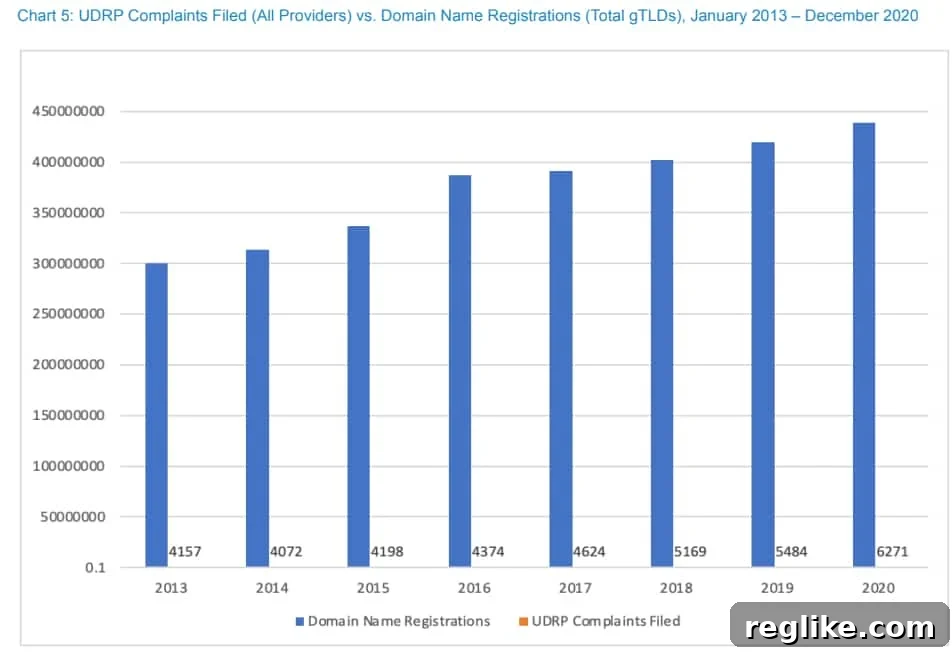
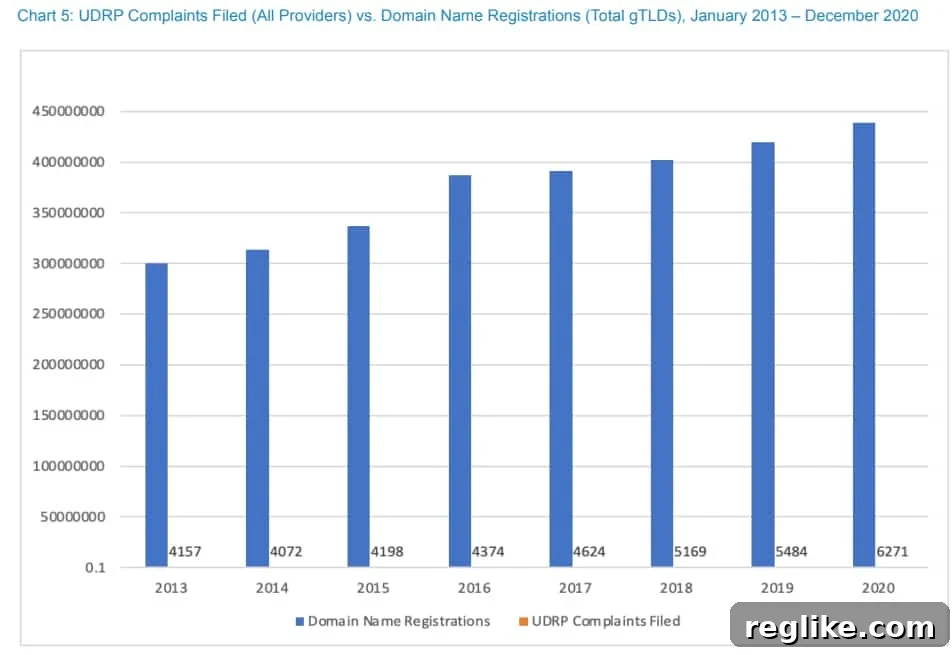
One of the most striking findings in ICANN’s report is the consistent upward trajectory of UDRP cases. Data indicates that the number of UDRP complaints has been growing by an average of 6% per year since 2013. This steady increase reflects the expanding digital economy, where trademarks are increasingly vulnerable to misuse in the domain name space. As businesses worldwide establish or expand their online presence, the value of their brand identity embodied in domain names escalates, leading to more vigilance and, consequently, more disputes. This trend is a clear indicator of the internet’s maturation and the ongoing challenge of protecting digital assets.
However, it’s imperative to put this growth into a broader perspective. While a 6% annual increase in cases might sound substantial in isolation, ICANN’s analysis also highlights that UDRP cases are filed against an infinitesimally small percentage of the total registered domains globally. With hundreds of millions of domain names active across various Top-Level Domains (TLDs) – from generic TLDs like .com, .net, and .org, to country-code TLDs, and the multitude of new gTLDs – even a significant rise in disputes represents a minuscule fraction of the overall domain ecosystem. This insight suggests that while cybersquatting remains a persistent issue necessitating the UDRP, the vast majority of domain registrations are legitimate and do not lead to disputes, underpinning the general health and stability of the domain name system.
Complainant Success Rates: A Closer Look at the Nuances of Outcomes
The report delves into the outcomes of UDRP cases, revealing statistics that are often subject to misinterpretation if not viewed with careful consideration. ICANN initially calculated that Complainants won approximately 78% of all cases. However, this figure, while indicating a strong leaning towards trademark holders, doesn’t fully reflect the true success rate when considering the broader context of dispute resolution and the various ways cases can conclude. The 78% figure primarily accounts for cases that proceed to a full panel decision and result in a transfer or cancellation of the disputed domain name.
A more nuanced understanding emerges when one considers “settled and withdrawn cases.” Many disputes are resolved through direct negotiation between the parties outside of the formal UDRP process, or the complainant may withdraw the case for various strategic reasons (e.g., reaching a private agreement, realizing a weakness in their claim) before a formal decision is rendered by a UDRP panel. When these cases are factored out, and only those cases that actually reach a decision by a UDRP panel are considered, the success rate for Complainants soars to around 92%. This significantly higher percentage indicates that when a UDRP case is formally adjudicated, the odds are overwhelmingly in favor of the trademark holder, suggesting either that only strong cases typically proceed to a full decision, or that the policy is highly effective in identifying and rectifying clear instances of cybersquatting and bad-faith registration.
This high success rate for complainants has long been a point of contention and discussion within the internet governance community. For brand owners, it signifies the UDRP’s effectiveness as a vital tool for protecting their intellectual property in the digital realm, validating the policy’s intent to deter and remedy bad-faith domain registrations. However, some domain owners and advocates for registrants’ rights view this high success rate with caution, raising concerns about potential imbalances and whether the policy might, in certain instances, disproportionately favor powerful brand interests, potentially discouraging legitimate domain owners from defending their rights in the face of perceived pressure.
The Growing Shadow of Reverse Domain Name Hijacking (RDNH)
While the UDRP is designed to protect trademark holders from cybersquatting, it also includes crucial provisions to deter abuse of the system. One such deterrent is the finding of Reverse Domain Name Hijacking (RDNH). RDNH occurs when a complainant uses the UDRP in bad faith to attempt to unfairly wrestle a domain name away from a legitimate registrant. This typically involves cases where the complainant knows or should have known, given reasonable diligence, that they do not have a plausible claim under the UDRP, yet still proceeds with a complaint, often with the intent to harass or gain an unfair advantage.
Alarmingly, the ICANN report notes a rising trend in reverse domain name hijacking cases. Findings of RDNH were reported in 2% of all cases. While 2% might seem a small figure in absolute terms, its increase is a significant indicator that some parties are attempting to leverage the UDRP not solely as a tool against clear instances of cybersquatting, but potentially as a mechanism for brand expansion or to acquire desirable domain names without legitimate grounds. RDNH findings serve as a crucial check and balance within the UDRP system, penalizing complainants who engage in abusive practices and safeguarding the rights of legitimate domain registrants, thus preserving the integrity of the dispute resolution process.
The rise in RDNH findings underscores the ongoing tension between robust brand protection and the fundamental rights of domain registrants. It highlights the importance of thorough legal due diligence and ethical considerations before filing a UDRP complaint. An RDNH finding serves as a stark reminder that the UDRP is not a shortcut for acquiring domain names that are genuinely owned by others, nor is it a tool for tactical advantage in broader commercial disputes. Protecting legitimate domain owners from aggressive or unfounded complaints is as crucial to the internet’s fairness and integrity as protecting trademark holders from cybersquatting. The increasing prevalence of RDNH findings is a call for greater scrutiny and responsible use of the UDRP by all parties involved, ensuring the system’s continued credibility and fairness.
Community Feedback and the Future of UDRP
ICANN’s decision to publish this comprehensive data and proactively solicit community feedback is a testament to its commitment to the ongoing evolution and refinement of internet governance policies. The UDRP, despite its significant success and widespread use, is not a static policy; it must continually adapt to the ever-changing landscape of the internet, new Top-Level Domains (TLDs), emerging business models, and evolving legal interpretations of intellectual property rights. This adaptive capacity is vital for its long-term relevance and effectiveness.
Engaging with the global internet community through public comment periods allows ICANN to gather diverse perspectives, identify potential areas for improvement, and address foreseen and unforeseen challenges. This consultative approach ensures that the UDRP remains relevant, fair, and effective for all stakeholders – from individual domain registrants and small businesses to multinational corporations and the accredited dispute resolution providers themselves. The insights gained from this feedback will be instrumental in shaping any potential future adjustments, enhancements, or even reforms to the policy, ensuring it continues to serve its critical role in maintaining order, promoting trust, and protecting legitimate rights in the vast and dynamic domain name space.
Conclusion: Balancing Rights in the Digital Age
The latest ICANN report offers a crucial snapshot of the state of domain name disputes, revealing a complex interplay of rapid growth in domain registrations, the persistent need for brand protection, and emerging challenges. While the consistent rise in UDRP cases reflects the increasing value of online brand identity and the continuous threat of cybersquatting, it’s essential to recognize that these disputes constitute a minuscule fraction of the overall domain registration landscape, affirming the overall health of the system. The overwhelmingly high success rate for complainants in adjudicated cases underscores the policy’s efficacy against clear instances of bad-faith registration, reinforcing its intended purpose.
However, the worrying trend of increasing Reverse Domain Name Hijacking findings serves as a potent reminder of the critical need for balance within the UDRP framework. The policy must remain a powerful and accessible tool for legitimate trademark protection without becoming a vehicle for unwarranted domain acquisition or an instrument of harassment. As ICANN gathers community feedback and deliberates on the future direction, the focus for the UDRP’s evolution will undoubtedly center on striking this delicate equilibrium. This ongoing dialogue and adaptation are vital for fostering a secure, stable, and trusted internet environment for everyone, ensuring that intellectual property rights are upheld fairly while simultaneously protecting the legitimate interests of domain owners in this dynamic digital age.