
The Evolving Landscape of Zero-Click Domain Monetization: ICANN’s Critical Examination
The digital frontier is constantly expanding, bringing with it both innovation and unforeseen challenges. In this dynamic environment, the ICANN Security, Stability, and Resiliency (SSR) research team has embarked on a crucial investigation into zero-click domain monetization. This in-depth inquiry is a direct response to significant shifts and evolving business practices within the domain monetization industry, particularly recent developments that have altered how domain names, especially parked ones, generate revenue.
ICANN, as the steward of the internet’s naming system, plays a vital role in ensuring a secure, stable, and resilient online ecosystem for billions of users worldwide. The SSR team is specifically tasked with proactively identifying and addressing potential threats to this fundamental infrastructure. Their current focus on zero-click monetization highlights growing concerns over certain practices that could erode user trust, expose individuals to various online risks, and ultimately undermine the integrity of the domain name system itself. The methods of domain parking and monetization are undergoing rapid transformation, necessitating a thorough re-evaluation by leading research and governance bodies like ICANN to safeguard the internet’s future.
The End of an Era: Google AdSense for Domains and the Rise of Zero-Click Strategies
A pivotal event that precipitated ICANN’s intensified scrutiny of zero-click monetization was Google’s decision to discontinue its highly influential AdSense for Domains program. After a phased withdrawal of advertisers throughout the preceding year, Google formally ceased the program last month. For over a decade, AdSense for Domains stood as a cornerstone revenue stream for domainers – individuals and companies managing extensive portfolios of parked domains. These were domain names registered with the intent of future development but, in the interim, were used to display pages populated with contextually relevant advertisements. Income was generated whenever a user clicked on one of these embedded ad links.
The abrupt closure of this long-established and widely utilized program created a substantial vacuum within the domain parking sector, forcing domain owners to urgently seek alternative monetization strategies. This systemic shift has inadvertently led to a significant increase in domains adopting zero-click advertisements as their primary revenue model. This transition represents a fundamental departure from the traditional “click-to-monetize” paradigm, moving towards a more aggressive and immediate redirection approach. This new model, while potentially offering higher immediate conversion rates for some, introduces a unique array of challenges and potential vulnerabilities for internet users navigating the web.
Defining Zero-Click: An Immediate, Uninterrupted Redirection
At its essence, zero-click monetization fundamentally redefines the user’s interaction with a parked domain. In the traditional AdSense for Domains model, a user arriving at a parked domain would encounter a page displaying a curated selection of ad links, often categorized by keywords relevant to the domain name. The user would then exercise choice, clicking on a link that aligned with their interest, thereby triggering the monetization event for the domain owner. With zero-click, this crucial intermediary step, involving user choice and evaluation, is entirely bypassed.
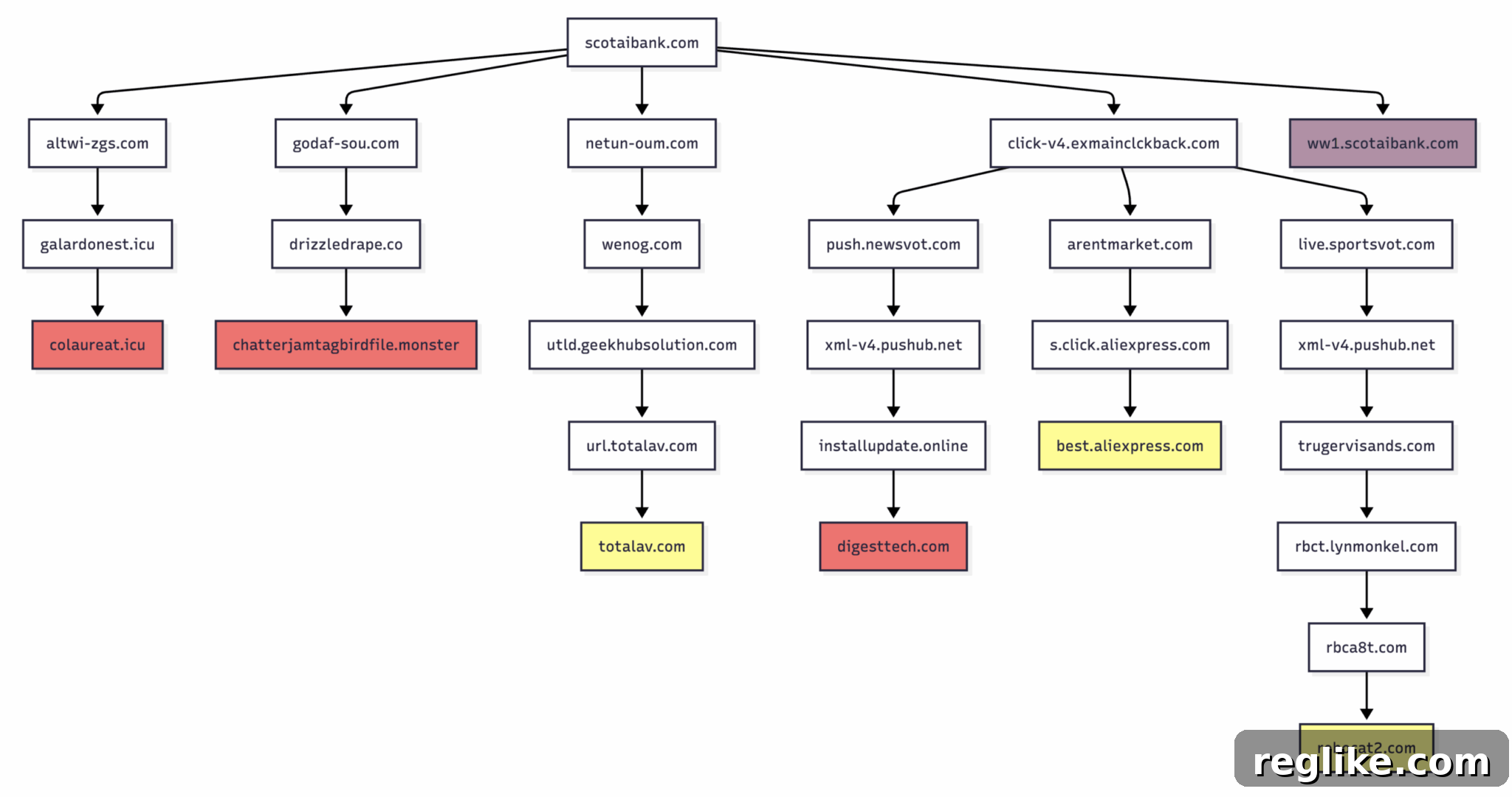
Instead, the moment a user lands on a domain configured for zero-click monetization, they are instantly and automatically redirected. This redirection can send them directly to an advertiser’s website, a specific product landing page, or even through a complex chain of intermediary redirection services, all without any explicit user interaction or prior consent. For example, a user attempting to visit a popular website but inadvertently typing a common misspelling (a practice known as typosquatting) might find themselves immediately transported to a competitor’s site, a related service, or an entirely unrelated commercial venture, moments after hitting enter.
While this method can be highly efficient for advertisers focused on driving direct traffic, it raises significant ethical and practical concerns regarding transparency, user autonomy, and the considerable potential for abuse. The absence of an intermediate landing page means users are deprived of any opportunity to assess the destination or content before being directed there, leaving them highly susceptible to unintended or malicious redirects.
The Perilous Path: Scams, Malware, and the Erosion of User Trust
Disturbingly, the proliferation of zero-click redirects has become inextricably linked with a troubling increase in users being funneled toward hazardous online destinations. A substantial proportion of these automatic redirections unfortunately lead to scam websites, malware distribution pages, sophisticated phishing attempts, or other forms of deceptive and harmful content. This poses a severe and multifaceted threat to internet users, encompassing risks from financial fraud and identity theft to the involuntary download of malicious software that compromises device security and personal data.
Late last year, the highly respected security firm Infoblox underscored these critical dangers in a widely publicized and comprehensive report. Their groundbreaking research indicated an alarming trend: an overwhelming majority – almost all, in fact – of the redirects originating from parked domains were ultimately resolving to malicious, undesirable, or potentially dangerous pages. Such findings paint a stark and concerning picture, suggesting that while zero-click monetization can theoretically be employed for legitimate purposes, it has become an increasingly prevalent conduit for cybercriminals and unscrupulous actors to exploit unsuspecting users, thereby severely eroding the fundamental trust users place in the internet’s navigation and domain name systems.
The ramifications for user security and the overall health of the digital ecosystem are profound and far-reaching. When users can no longer trust that typing a domain name will lead them to a safe, predictable, or intended destination, their confidence in the entire domain name system (DNS) diminishes significantly. This erosion of trust not only inflicts harm upon individual users through direct exposure to threats but also poses a systemic risk to the stability, reliability, and ultimate utility of the internet as a whole, rendering ICANN’s ongoing research and proactive measures more critical than ever.
Categorization Challenges: Reconciling Disparate Research Findings
Despite Infoblox’s compelling report highlighting the pervasive nature of harmful zero-click redirects, ICANN’s initial research, as detailed in findings published by Sion Lloyd, presented a somewhat nuanced and distinct perspective. ICANN’s team concluded that while the issue of malicious redirects was undeniably present and a serious concern, its overall prevalence was not as universally pervasive as Infoblox had initially indicated. Such discrepancies are not uncommon in complex research domains and frequently stem from variations in methodologies, differing data sets, and, perhaps most critically, divergent definitions of what precisely constitutes “zero-click” behavior and which pages qualify as “bad” or malicious.
One of the primary challenges identified by ICANN’s SSR team revolves around the inherent broadness of its existing definition of zero-click monetization. The landscape of domain redirection is far from homogenous; various forms of automatic redirection exist, each driven by distinct intentions and yielding different impacts on users. For example, in the wake of the AdSense for Domains program’s cessation, major domain registrars, including industry giants like GoDaddy, have proactively adapted their parked domain monetization strategies. Rather than allowing domains to remain entirely idle, these registrars have begun to forward them to proprietary parking pages hosted on other, controlled domains, such as the widely observed searchounds.com. These dedicated pages typically feature a search bar, possibly some sponsored links, and other elements, essentially functioning as a custom search portal designed to capture and monetize parked domain traffic.
ICANN’s research team meticulously observed that a substantial majority—specifically, 79% of the redirects they monitored—remained entirely under the direct control and purview of the originating registrar. This distinction is of paramount importance. When a redirect remains within a registrar’s own ecosystem, it strongly implies a greater degree of control, oversight, and accountability that might be absent when traffic is indiscriminately routed to completely independent, and potentially less scrupulous, third-party advertisers. This “internal” redirection mechanism is often a strategic attempt by registrars to retain traffic, provide a controlled user experience, and monetize it through proprietary search or advertising partnerships, as opposed to simply sending users blindly to external, potentially hazardous, sites orchestrated by unknown and unregulated actors.
Distinguishing RSOC Monetization from Classic Zero-Click Practices
The subtle yet significant nuances emerging in these contemporary monetization strategies necessitate the development of a more refined and granular classification system. The observed redirects from major registrars like GoDaddy, which direct users to controlled search portals, do not align with the “classic” or traditional definition of zero-click monetization. The established understanding of classic zero-click implies an immediate, direct transfer to an advertiser’s specific product or service page, entirely devoid of any intermediate content or explicit user choice. What registrars are now implementing often bears a closer resemblance to RSOC (Related Search on Content) monetization.
RSOC is a specialized program, historically associated with Google AdSense, that was specifically designed for monetizing web pages that contain actual content, even if minimal. Unlike the legacy AdSense for Domains, which targeted genuinely empty or undeveloped parked pages, RSOC facilitates contextual advertising or related search suggestions on pages that present some form of user interface or informational value. In the context of GoDaddy and similar registrars, the practice of redirecting traffic to a custom search portal like searchounds.com can be interpreted as an effort to furnish a “content-rich” (or at least functionally interactive) experience, thereby categorizing it differently from a simple, blind, direct redirect to an external commercial site. This distinction means the intent is to offer a basic utility (search) alongside monetization, rather than merely shuttling users to an ad.
The difference between these emerging categories and traditional zero-click is far from merely academic; it carries profound implications for how regulatory bodies, cybersecurity researchers, and even domain investors understand, analyze, and ultimately address the associated risks. What might appear on the surface as a straightforward zero-click redirect could, in reality, be a sophisticated form of content-driven monetization operating within a registrar’s carefully managed environment. This inherent complexity underscores the formidable challenge confronting ICANN’s SSR research team: the urgent need to develop clear, unambiguous, and technically robust categories that can accurately differentiate these diverse and evolving redirect behaviors.
The Imperative for Granular Redirect Categories in a Complex Ecosystem
The ever-evolving nature of domain monetization demands that ICANN’s SSR team move beyond a singular, broad definition of zero-click. To effectively understand, meticulously monitor, and strategically mitigate the myriad risks associated with these varied redirects, the creation of multiple, granular redirect categories is absolutely essential. This intricate task, as the well-known adage suggests, is “easier said than done,” requiring substantial intellectual and technical effort.
Developing such a sophisticated categorization framework necessitates an exhaustive deep dive into the technical intricacies of redirection mechanisms, a nuanced understanding of the commercial and operational intent behind them, and a comprehensive analysis of the ultimate destination and content served to the end-user. Key factors that must be meticulously considered include the number of “hops” or intermediate stages in a redirect chain, the reputation and trustworthiness of any intermediary domains involved, the actual content and functionality of the final landing page, and crucially, whether the redirect occurs entirely within a registrar’s controlled network or directs traffic to an entirely independent, third-party domain. This detailed and precise categorization is indispensable not only for conducting accurate and actionable research but also for formulating targeted policy recommendations and developing effective enforcement strategies. Without these clear distinctions, legitimate and innovative monetization practices could be inadvertently and unfairly penalized, while truly malicious and exploitative activities might cunningly evade detection and remediation due to ambiguous or overly broad definitions.
The Enduring Challenge and the Indelible Stain on the Domain Industry
Irrespective of the definitional complexities, the technical nuances, and the distinctions between various forms of redirection, one undeniable and troubling fact persists: the zero-click phenomenon, in its most insidious forms, continues to be exploited for nefarious and malicious purposes. The alarming prevalence of redirects that steer unsuspecting users toward scam websites, sophisticated phishing attempts, and active malware distribution sites remains a significant and pressing concern for internet security professionals and ordinary users alike. This persistent abuse casts a long and dark shadow over the entire domain industry, serving as an indelible “stain” on its collective reputation. It systematically erodes user trust, actively discourages legitimate online activity, and fosters a pervasive perception that the fundamental naming system upon which the internet relies is inherently vulnerable to widespread exploitation by malicious actors.
The negative publicity generated by numerous reports of widespread malicious redirects impacts not only the individual registrars and domain parking providers directly involved but also reverberates throughout the broader ecosystem of domain name registrars, registries, and even ICANN itself. Restoring and rigorously maintaining user confidence in the integrity, security, and predictability of domain name resolution is paramount for the sustained growth, stability, and overall health of the global internet. This critical objective necessitates a concerted and collaborative effort from all key stakeholders – including ICANN, leading cybersecurity researchers, domain registrars, internet service providers, and governmental policymakers – to work synergistically on developing robust technical solutions, launching widespread educational initiatives, and implementing stronger, more adaptable enforcement mechanisms.
ICANN’s ongoing and meticulous research represents a vital and foundational step in this essential direction. By accurately categorizing, dissecting, and comprehensively understanding the various facets and manifestations of zero-click monetization, the SSR team can effectively lay the groundwork for the development of highly effective policies and targeted interventions. The overarching goal is not to stifle legitimate innovation or curb economic activity within domain monetization but rather to ensure that such innovation occurs strictly within a robust framework that unequivocally prioritizes user safety, transparency, ethical conduct, and the overarching security and stability of the global internet. The continuous battle against malicious zero-click redirects is an active and critical front in the larger, ongoing war against cybercrime, and its successful resolution is absolutely pivotal for fostering a safer, more trustworthy, and resilient online future for everyone.