
Bridging the Generational Divide: Understanding Ageism in the ICANN Community
While commonly associated with bias against older individuals, a recent internal assessment within the Internet Corporation for Assigned Names and Numbers (ICANN) community reveals a nuanced picture: younger participants are, in some aspects, slightly more likely to perceive and experience ageism. This finding prompts a deeper look into the dynamics of age diversity and inclusion within crucial internet governance bodies.
When the term “ageism” is mentioned, the mind typically conjures images of stereotypes, prejudice, and discrimination directed toward older people. Organizations like the World Health Organization have extensively documented the pervasive nature of such biases in various societal contexts, from employment to healthcare. However, within the unique ecosystem of ICANN, an intriguing reversal of this common perception has been observed. The very community responsible for coordinating the global internet’s unique identifiers appears to be grappling with subtle forms of age-related bias that disproportionately affect its younger cohort.
Unpacking the Findings: A Glimpse into ICANN’s Age Diversity Survey
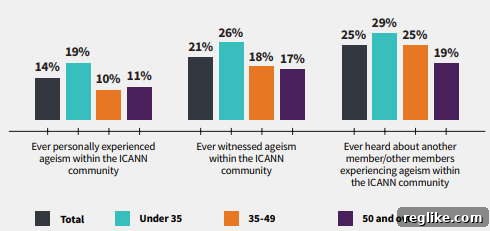
These insights stem from a non-scientific survey conducted by ICANN, designed to shed light on perceptions of ageism and the broader landscape of age diversity among its diverse stakeholders. While not a formal academic study, the survey served as a vital internal diagnostic tool, offering valuable qualitative and quantitative data for reflection and future strategic planning. The core revelation was unmistakable: participants under the age of 35 reported a higher incidence of experiencing ageism compared to their older counterparts.
The margins, it must be noted, are presented as relatively slim, yet significant enough to warrant attention. For instance, the survey indicated that 10% of individuals under 35 years old expressed feeling “more often excluded than included” due to their age. This contrasts with 5% of those aged 50 and above who reported similar sentiments. Delving further into the direct experience of ageism, 19% of the younger demographic (under 35) stated that they had personally encountered ageism within the ICANN community, while 11% of the older demographic (over 50) echoed this experience.
These figures, though numerically close, highlight a differential perception and experience of age-based discrimination. It’s plausible that younger generations possess a heightened awareness of ageism, perhaps influenced by evolving societal dialogues around diversity, equity, and inclusion, or through more frequent personal encounters with dismissiveness based on age. Regardless of the exact interpretation, the data points to a subtle, yet present, challenge that ICANN must address to foster a truly inclusive environment for all its participants.
The Critical Importance of Age Diversity in Internet Governance
ICANN’s role in maintaining the security, stability, and interoperability of the internet’s core systems is monumental. Its multi-stakeholder model, drawing expertise and perspectives from governments, businesses, civil society, and technical communities worldwide, is its foundational strength. For such a globally impactful organization, diversity in all its forms – including age – is not merely a desirable trait; it is an operational imperative.
Ensuring Future Leadership and Sustainability
The internet is a dynamic, ever-evolving entity. Decisions made today will have long-lasting implications for future generations of internet users. Without the active participation and leadership of younger individuals, there’s a significant risk of ICANN’s governance frameworks becoming stagnant or failing to anticipate emerging challenges and technological shifts. Engaging young talent is crucial for developing a robust pipeline of future leaders who possess fresh perspectives, digital native insights, and a keen understanding of the internet’s trajectory. A community that does not actively nurture its younger members risks an inevitable decline in engagement and expertise as its established leaders eventually transition out.
Infusing Innovation and Adaptability
Younger professionals often bring an inherent affinity for new technologies, innovative problem-solving approaches, and a willingness to challenge conventional wisdom. Their perspectives are vital for ensuring that ICANN’s policies and processes remain agile and adaptable in the face of rapid technological advancements and evolving user behaviors. Dismissing or marginalizing these voices due to age can lead to missed opportunities for innovation and a slower response to critical issues affecting the global internet. An inclusive environment where diverse viewpoints, regardless of age, are valued and integrated ensures that ICANN remains at the forefront of internet governance.
Reflecting the Global User Base
The internet’s user base spans all ages, demographics, and geographies. To effectively govern this global resource, ICANN’s community must reflect this diversity. If younger users and professionals feel excluded or unheard, the policies formulated might not adequately represent their needs or address the specific challenges they face online. Broad age representation ensures a more holistic understanding of internet issues and leads to more equitable and universally beneficial outcomes.
Addressing Ageism: Beyond Recruitment
While the survey didn’t reveal “earth-shattering information,” it underscored a crucial ongoing necessity: the continuous, proactive recruitment of younger individuals into the ICANN ranks. However, recruitment is merely the first step. True inclusion requires a more comprehensive approach.
Cultivating an Inclusive Environment
It is not enough to simply attract young talent; ICANN must actively cultivate an environment where these individuals feel genuinely valued, heard, and empowered to contribute. This means examining internal cultures, meeting formats, and decision-making processes. Are there unconscious biases at play that inadvertently sideline younger voices? Do mentorship programs exist that genuinely connect experienced members with new entrants, fostering knowledge transfer and integration?
For instance, traditional meeting structures, often characterized by long, formal discussions, might inadvertently create barriers for younger participants who may feel intimidated or less inclined to speak up amongst seasoned veterans. Exploring alternative engagement methods, such as online collaborative tools, shorter discussion formats, or dedicated youth forums, could significantly enhance participation. Furthermore, leadership within ICANN has a vital role to play in championing age diversity, actively soliciting input from younger members, and ensuring their contributions are acknowledged and respected.
Raising Awareness and Education
The fact that younger people might be more aware of ageism suggests that there’s a need for broader awareness and education across all age groups within the community. Workshops and training sessions could help members understand what ageism looks like, both against older and younger individuals, and how it can manifest in subtle ways, from dismissive attitudes to a lack of opportunities. Fostering intergenerational dialogue and collaboration can break down stereotypes and build mutual respect. When older and younger generations work side-by-side, sharing knowledge and challenging assumptions, the entire community benefits.
Strategic Mentorship and Pathways to Leadership
Effective mentorship programs are critical for integrating younger members into a complex community like ICANN. These programs can provide guidance, open doors, and help navigate the intricacies of internet governance. Creating clear pathways for younger individuals to take on leadership roles – whether in working groups, committees, or advisory bodies – is also essential. This means identifying potential leaders early, providing them with training and support, and intentionally creating opportunities for them to step up and make an impact. Without such strategic development, the community risks losing promising young talent to organizations where their contributions are more readily recognized and utilized.
Conclusion: Sustaining a Vibrant and Representative ICANN
The survey findings, while highlighting narrow margins, serve as a pertinent reminder that ageism, even in its subtler forms against younger participants, is a real issue within the ICANN community. It underscores the ongoing imperative for ICANN and similar multi-stakeholder organizations to move beyond passive acceptance of diversity to active cultivation and maintenance of an inclusive environment. Ensuring robust and meaningful participation from all age groups, particularly younger individuals, is not just about fairness; it is about securing the long-term health, innovation, and legitimacy of internet governance itself. By proactively addressing perceptions of ageism, fostering intergenerational collaboration, and creating clear pathways for young professionals, ICANN can strengthen its community, enrich its decision-making processes, and truly reflect the global internet it serves. The future of the internet demands a governance body that is as diverse and dynamic as the technology it oversees.