
ICANN’s Evolving Workforce: A Deep Dive into Headcount and Compensation Trends
The Internet Corporation for Assigned Names and Numbers (ICANN) is a critical non-profit organization that coordinates the global Internet’s domain name system (DNS) to ensure a stable, secure, and unified global Internet. Given its pivotal role, the operational efficiency and financial stewardship of ICANN are subjects of continuous scrutiny. Just yesterday, we examined the significant growth in ICANN’s expenses over the past nine years. Today, we turn our attention to another equally important aspect of its organizational growth: the substantial increase in its workforce, encompassing both direct employees and high-value contractors, alongside the escalating compensation structures.
The expansion of ICANN’s employment figures is a direct indicator of its evolving operational landscape and the increasing complexity of internet governance. As the digital world expands, so too do the demands on the organization responsible for maintaining its foundational systems. This in-depth analysis will meticulously break down the trends in ICANN’s headcount, the rise in six-figure salaries, the notable figures in executive compensation, and the significant reliance on external contractors, all while emphasizing the importance of transparency and accountability in a global public-interest entity.
Understanding ICANN: Mission, Mandate, and Operational Imperatives
To fully appreciate the implications of ICANN’s workforce growth, it’s essential to understand its unique position. As a multi-stakeholder organization, ICANN operates with a global mandate, bringing together governments, businesses, technical experts, and civil society to shape policies for the internet’s naming and numbering systems. Its work is not only highly technical but also deeply intertwined with international policy, legal frameworks, and community consensus-building. This intricate operational environment necessitates a highly skilled and diverse workforce, capable of navigating complex technical challenges, fostering international collaboration, and managing a continuously evolving global digital infrastructure.
However, as a non-profit funded primarily by fees from domain name registrations, ICANN has a fundamental responsibility to manage its resources prudently. Every increase in operational costs, including salaries and contractor fees, ultimately impacts the broader internet ecosystem. Therefore, examining its employment growth is not merely an exercise in data analysis; it is a critical assessment of how well ICANN balances its expanding operational needs with its commitment to financial prudence and accountability to its global stakeholders.
The Remarkable Ascent of ICANN’s Headcount
The trajectory of ICANN’s employee headcount reveals a significant organizational expansion. Tracking these figures requires careful attention to the data sources and reporting periods. ICANN’s official tax returns typically report the total number of W-2 employees based on a calendar year, whereas its internal budget documents provide a headcount number aligned with its financial year, which concludes in June. While these temporal differences can create slight discrepancies, the overall trend is unequivocally upwards.
Our review of ICANN’s budget documents, which have progressively offered more detailed information over time, allows us to track the growth in full-time employees from Fiscal Year (FY) 2010 to FY 2017. These numbers generally reflect the headcount at the end of June for each financial year, with the exception of FY 2010 and FY 2011, where the data corresponds to the end of May. The visual representation below clearly illustrates this substantial increase in personnel, reflecting a period of intense activity and expanding responsibilities for the organization.
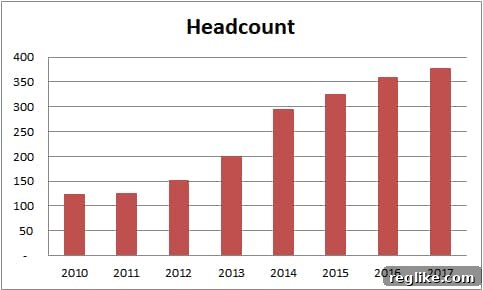
This growth is not without reason. The period covered saw the momentous rollout of the New Generic Top-Level Domain (gTLD) Program, a massive undertaking that significantly expanded the internet’s naming landscape. This initiative alone demanded extensive resources for policy development, application processing, technical implementation, and ongoing oversight. Additionally, ICANN’s increasing global footprint, with offices established in various regions, and its deepening involvement in critical areas like security, stability, and resiliency of the DNS, all contributed to the need for a larger, more specialized workforce. However, the scale and speed of this expansion invite questions about efficiency, optimal organizational structure, and the ongoing justification for such a significant increase in personnel, especially for a non-profit entity.
Decoding the Rise of Six-Figure Earners at ICANN
Beyond the sheer number of employees, an even more telling indicator of ICANN’s financial trajectory is the dramatic increase in the number of employees earning six-figure salaries. As a non-profit, ICANN faces particular scrutiny regarding compensation levels, especially for its higher-paid staff. The data reported on ICANN’s tax returns reveals the number of employees earning $100,000 or more in reportable income. It’s important to note that these figures are typically based on the end of the calendar year, meaning, for instance, data attributed to FY 2016 would actually reflect figures from December 2015.
This data, while informative, represents only a portion of an employee’s total compensation package. It primarily includes taxable income and often does not fully account for non-reportable benefits, such as generous contributions ICANN makes to employee 401(k) retirement plans. When considering the comprehensive value of employment at ICANN, these additional benefits significantly enhance the overall compensation, placing a considerable financial burden on the organization. The chart below provides a visual overview of this growing trend.
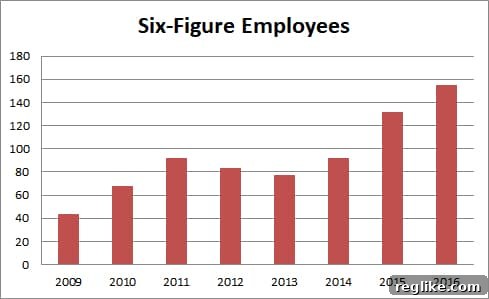
The consistent rise in employees commanding high salaries raises pertinent questions about salary benchmarking for a non-profit, the specific skill sets being sought, and the competitive landscape for talent in the internet governance sector. While attracting top talent is crucial for ICANN’s mission-critical work, the magnitude of this growth in high earners necessitates transparent justification and clear demonstration of value to its global stakeholders. This trend is a significant component of the overall increase in ICANN’s operational expenses and warrants careful consideration within the broader context of its public interest mandate.
Executive Compensation: Scrutiny at the Top Tier
Further narrowing our focus to the highest echelons of ICANN’s compensation structure, the FY 2016 tax return painted a particularly striking picture. It explicitly listed 14 employees who received total compensation of $400,000 or more. This “total compensation” figure is crucial as it offers a more complete view, including salary, bonuses, and other taxable and non-taxable benefits, such as those significant 401(k) contributions mentioned earlier. Such figures are typically associated with executive-level positions or highly specialized roles within large, complex organizations.
For a non-profit entity like ICANN, the presence of multiple employees earning compensation packages exceeding $400,000 often triggers intensified scrutiny from the public, media, and its own stakeholder community. The debate surrounding executive compensation in non-profits typically revolves around striking a balance between attracting and retaining top-tier leadership essential for achieving organizational goals, and maintaining the public trust that comes with a non-profit designation. Transparency around how these compensation levels are determined, including the use of independent compensation consultants and clear benchmarking against relevant peer organizations (both non-profit and for-profit in the tech sector), becomes paramount. Stakeholders invariably seek reassurance that these substantial salaries are commensurate with the responsibilities, performance, and overall value delivered to the global internet community, aligning with ICANN’s public service mission rather than purely commercial objectives.
The Strategic (and Costly) Reliance on Contractors
In addition to its growing cadre of direct employees, ICANN also heavily utilizes the services of independent contractors, particularly those commanding significant fees. The organization’s tax returns provide valuable insights into this aspect of its workforce, reporting the number of contractors paid $100,000 or more each year. This data, available from FY 2009 through FY 2016 (with a notable exception), sheds light on another dimension of ICANN’s expanding operational costs and resource allocation strategies.
The information regarding high-value contractors was conspicuously missing from the FY 2013 tax return. While the exact reason for this omission is not officially stated, it’s highly plausible that contractor numbers, particularly high-paid ones, were substantial during that period. This hypothesis is strongly supported by the timing: FY 2013 was a critical phase in the implementation of the New gTLD Program, a period characterized by immense policy development, technical reviews, legal work, and extensive outreach. Such a massive undertaking would naturally require significant external expertise on a project basis, making the engagement of numerous highly compensated contractors a logical, albeit costly, operational decision. The graph below illustrates the reported trends in high-paid contractors:
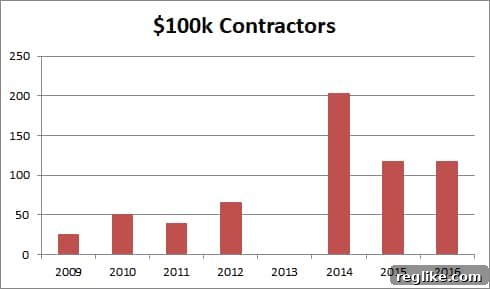
The strategic use of contractors offers flexibility, allowing organizations to scale up or down based on project demands without the long-term commitments of full-time employment. It also provides access to specialized skills that may not be available in-house. However, relying on a significant number of contractors earning six-figure sums carries its own set of financial implications. While often perceived as a cost-saving measure in some contexts, high-paid contractors can contribute significantly to overall operational expenditures, particularly if their engagement is prolonged or if many are employed simultaneously. For a non-profit, this reliance underscores the importance of a clear strategy for talent acquisition and resource management, balancing the need for agility and specialized expertise with cost-effectiveness and accountability to its funding sources.
Broader Implications: Cost, Transparency, and ICANN’s Future
The combined trends of increasing headcount, a growing number of six-figure employees, high executive compensation, and substantial expenditure on high-paid contractors paint a comprehensive picture of ICANN’s significant operational expansion. This growth has direct financial consequences, contributing substantially to the overall increase in ICANN’s budget, which we explored in our previous discussion on expenses. Ultimately, these costs are primarily borne by the domain name registrants and registrars through various fees, linking ICANN’s internal financial decisions directly to the broader internet community.
The implications extend beyond mere financial figures. They touch upon issues of governance, organizational culture, public perception, and the very trust placed in ICANN as the steward of a vital global public resource. For an organization operating with a global public interest mandate, transparency in financial reporting and a clear justification for staffing and compensation decisions are not just best practices; they are fundamental requirements. Stakeholders from around the world – including governments, businesses, and individual internet users – have a vested interest in ensuring that ICANN operates efficiently, effectively, and responsibly, demonstrating that every dollar spent contributes meaningfully to its core mission of maintaining a secure and stable internet.
Continued scrutiny of these trends is essential. It encourages ICANN to regularly evaluate its staffing needs against its strategic objectives, to implement robust compensation policies that are both competitive and publicly justifiable, and to foster a culture of financial accountability. The dialogue around these figures is not intended to undermine ICANN’s crucial work but rather to strengthen its foundations, ensuring it remains a trusted and effective institution for the benefit of all internet users.
Conclusion: Navigating Growth with Responsibility
The journey of ICANN’s employment growth, from a modest team to a substantial global workforce complemented by high-value contractors, mirrors the exponential growth and increasing complexity of the internet itself. While some expansion is undoubtedly necessary to meet evolving challenges and deliver on its critical mission, the significant rise in overall headcount, the proliferation of six-figure salaries, and the considerable investment in external expertise demand continuous oversight and transparent justification. These trends underscore the importance of robust governance and financial prudence for any organization, but especially for a non-profit like ICANN, which operates in the public interest and is funded by a global community.
As ICANN continues to evolve, it must proactively address stakeholder concerns regarding its operational costs and compensation structures. By fostering greater transparency, demonstrating clear value for its expenditures, and regularly re-evaluating its organizational efficiency, ICANN can reinforce trust and ensure its long-term viability as a cornerstone of global internet governance. The objective is not to stifle growth or undervalue talent, but to ensure that every decision about its workforce aligns seamlessly with its core mission and its unwavering commitment to the stability, security, and resiliency of the internet for generations to come.