
The .Online Domain: A Phenomenal Debut and What It Means for the Digital Landscape
In the ever-evolving world of digital identity, the launch of a new generic Top-Level Domain (gTLD) is always met with anticipation. However, few have made as strong a first impression as the .Online domain. Its recent debut has been nothing short of spectacular, captivating the attention of businesses, investors, and registrars alike. Surpassing expectations, the .Online TLD achieved an impressive milestone of over 30,000 registrations on its very first day. The subsequent overnight zone file quickly swelled to approximately 35,000 names, signaling a robust and enthusiastic reception from the global internet community. This remarkable initial performance firmly establishes .Online as a significant contender in the crowded gTLD market, promising a vibrant future for this versatile and intuitive web address.
To truly grasp the dynamics behind this successful launch, a deeper dive into the registration patterns and key players is essential. Analyzing the intricate details within the zone file reveals compelling insights into who is adopting .Online and why. From global corporate giants to savvy domain investors and leading registrars, the early adopters paint a clear picture of the domain’s immediate perceived value and broad appeal. This article will unravel these patterns, shedding light on the strategic decisions that propelled .Online into the spotlight and exploring the implications for its long-term growth and impact on the digital realm.
Corporate Titans Embrace .Online for Brand Protection and Strategic Advantage
One of the most compelling indicators of the .Online domain’s strategic importance is the proactive engagement of major corporations. In today’s interconnected world, safeguarding digital brand assets is paramount, and these leading companies understand the imperative of securing relevant domains across new gTLDs. Their early registrations are not merely speculative; they represent a calculated move to protect their intellectual property, maintain brand consistency, and potentially explore new digital initiatives.
Our analysis of the initial zone file highlighted several influential entities that made substantial investments in .Online domains, strategically pointing these new acquisitions to their established corporate nameservers. This move signifies a clear intent to integrate these domains into their broader digital ecosystems, whether for defensive purposes, future product launches, or dedicated marketing campaigns. The presence of such prominent names underscores the credibility and inherent value perceived in the .Online extension.
- Microsoft: A global technology leader, Microsoft swiftly secured 40 .Online domains. This extensive portfolio includes highly recognizable brand assets such as
msn.online,skype.online, andwindows10.online. These registrations ensure that key brand identifiers are protected from cybersquatting and are ready for potential future deployment, perhaps for dedicated online services, promotional microsites, or brand-specific content portals. - Bank of America: As a titan in the financial sector, Bank of America demonstrated similar foresight, registering 39 critical domains. Their acquisitions, including
bac.online,bofa.online, andinstinct.online, highlight the banking industry’s increasing focus on digital presence and security. Such domains could be utilized for internal platforms, specific financial services, or innovative customer engagement initiatives, reinforcing their digital footprint in a rapidly evolving market. - Home Depot: The prominent home improvement retailer, Home Depot, secured 30 domains, including valuable names like
hdx.online,thehomedepot.online, andworkforce.online. These registrations are crucial for a brand with a vast online and physical presence, allowing them to protect brand variations, support employee-focused initiatives, or launch new online retail experiences under a modern and accessible domain.
The swift action by these industry giants underscores a broader trend: the recognition that a versatile gTLD like .Online offers new avenues for digital branding. It allows companies to create memorable, purpose-driven online presences that resonate with specific audiences or campaigns, ensuring their brands remain relevant and secure in the digital age. This corporate embrace provides a strong foundation for the .Online TLD’s long-term viability and growth.
1&1 Leads the Charge: How Registrars Fuel New gTLD Success
The success of any new gTLD launch hinges significantly on the performance and strategies of domain registrars, the gatekeepers between the domain registry and the end-user. In the inaugural days of the .Online domain, one registrar truly stood out: 1&1. According to nTLD Stats, 1&1 registered an astonishing close to 15,000 .Online domains, cementing its position as a dominant force in the initial wave of registrations. This exceptional performance is a testament to their strategic approach and effective market penetration.
Several factors likely contributed to 1&1’s remarkable achievement, illustrating key lessons for new gTLD adoption:
- Harvesting Its Pre-Order List: Long before the official launch, registrars like 1&1 actively build pre-order lists, allowing interested individuals and businesses to express their intent to register specific domains. A robust pre-order system, coupled with efficient processing upon launch, enables registrars to convert pent-up demand into immediate registrations. 1&1’s success suggests a highly effective pre-order campaign and a seamless execution process, capturing a significant portion of early adopters.
- Aggressive Introductory Pricing: Price is often a critical determinant in the early adoption of new products, and domains are no exception. 1&1’s offering of an enticing $9.99 introductory price for .Online domains was undoubtedly a major draw. Such competitive pricing lowers the barrier to entry, encouraging both individual users and bulk registrants (including domain investors) to explore and acquire domains under the new extension. This strategy not only boosts initial registration numbers but also creates buzz and encourages widespread adoption, vital for establishing a new gTLD’s presence.
1&1’s strategic prowess in marketing and sales played a pivotal role in the .Online debut. Their ability to activate a large customer base and offer an attractive proposition demonstrates the power of a well-executed registrar strategy. This success story for 1&1 also serves as a positive indicator for the .Online registry, highlighting the strong market demand for a gTLD that offers a clear, universally understood, and digitally relevant identity. The strong performance of key registrars like 1&1 is indispensable for translating registry efforts into tangible market presence and user adoption, setting the stage for sustained growth.
The Aftermarket Awakens: Domain Parking and Investor Interest
Beyond corporate brand protection and individual user adoption, the debut of the .Online domain also ignited significant activity within the domain aftermarket, particularly among domain parking companies and dedicated investors. These entities play a crucial role in evaluating and capitalizing on the perceived value of new gTLDs, often serving as early indicators of a domain’s potential for future appreciation and resale.
Domain parking is a common strategy employed by domain owners, particularly investors, to monetize undeveloped domains. Instead of hosting a full website, a parked domain typically displays advertisements, generating revenue from clicks or impressions. The presence of a significant number of new .Online domains on parking nameservers suggests that many registrations were made with an investment mindset, anticipating future sales or development opportunities. The prominent parking companies observing the most activity included:
- Sedo: As a global leader in domain parking and sales, Sedo hosted 678 new .Online names on its nameservers. This high number underscores its role as a preferred platform for domain investors looking to park and potentially sell their new acquisitions. Sedo’s extensive network and brokerage services make it an attractive choice for maximizing the value of undeveloped domains.
- Domain Name Sales (DNS): With 338 .Online domains on its nameservers, DNS also demonstrated strong engagement. This platform is another key player in the domain aftermarket, facilitating transactions and offering parking solutions for investors seeking to monetize their portfolios.
- GoDaddy Cash Parking: GoDaddy, the world’s largest domain registrar, also operates a robust parking service. Its Cash Parking platform saw 235 new .Online domains, indicating that even direct registrants through GoDaddy were leveraging parking options, signaling a clear investment intent among a significant portion of early adopters.
The robust activity among these parking providers is a clear signal that domain investors were quick to recognize the potential of the .Online extension. Unlike end-users who register a domain for immediate use, investors acquire domains with the intent to hold, develop, or resell them for a profit. The “generic” and highly versatile nature of “online” makes it an attractive proposition for speculative investment, as it resonates broadly across industries and use cases.
Prominent figures within the domain investment community actively participated in the launch. Individuals like Chad Wright, known for his strategic domain acquisitions, made significant registrations, demonstrating confidence in the gTLD’s long-term prospects. Similarly, Ben Inc (Ben Van Dyk), another respected name in domain investing, acquired an impressive 299 .Online domains. These large-scale acquisitions by seasoned investors are not accidental; they reflect a careful analysis of market demand, keyword relevance, and the overarching potential of the .Online brand to become a widely accepted and valuable online identifier. The aftermarket’s quick embrace underscores the inherent commercial appeal and versatility of this new gTLD.
Decoding Domain Preferences: SLD Length and Numeric Appeal
Further analysis of the initial registrations for the .Online domain provides fascinating insights into user preferences regarding domain structure, particularly concerning the length of the Second-Level Domain (SLD) and the appeal of numerical combinations. Understanding these patterns is crucial for registries, registrars, and investors alike, as they shed light on perceived value and future demand.
The chart below, representing domain registrations by SLD length (up to 20 characters), offers a visual representation of these preferences:
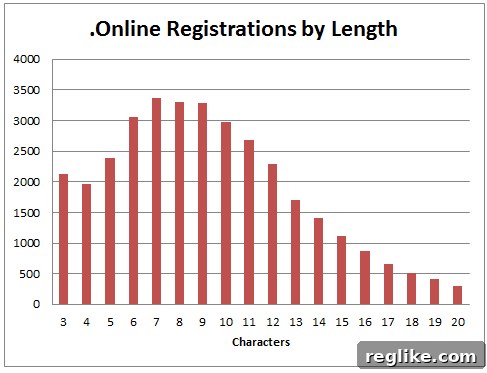
While the exact distribution is visualized in the chart, typical trends in new gTLD launches often show a strong preference for shorter, more concise domains. These are generally easier to remember, type, and market. Shorter domains are perceived as premium assets due to their scarcity and brand potential. This pattern usually translates into higher registration rates for domains with fewer characters, especially in the 3 to 6-character range, as these are often generic keywords, abbreviations, or numerical combinations.
A particularly noteworthy trend within the .Online debut was the strong interest in three-character domains, many of which were purely three digits. This observation is significant because three-digit domains are highly sought after in the domain aftermarket due to their rarity and universality. They are memorable, often used for short codes, sequential identifiers, or even as numeric brand elements. The total count of 865 domains registered that commenced with a number further emphasizes this preference for numerical domains, whether they are purely digits or alphanumeric combinations starting with a number. This phenomenon is driven by several factors:
- Memorability: Numeric sequences can be highly memorable, especially for tech-savvy audiences or for use in applications where short identifiers are beneficial.
- Scarcity: The number of available short, especially three-character or purely numeric, domains is inherently limited. This scarcity drives up their perceived value and desirability.
- International Appeal: Numeric domains transcend language barriers, making them globally appealing and versatile for businesses targeting international audiences.
- Investment Potential: Investors often target short, generic, and numeric domains due to their strong aftermarket potential and ability to command premium prices upon resale.
The strong performance of these types of domains in the initial phase of the .Online launch confirms its broad appeal across various user segments, from those seeking highly brandable short names to investors looking for liquid assets in the domain aftermarket. This indicates a healthy and diverse demand for the .Online TLD, positioning it well for sustained growth and value appreciation.
The Future is .Online: A Promising Horizon for Digital Identity
The initial performance of the .Online domain unequivocally marks it as one of the most successful new gTLD launches in recent memory. Its impressive registration numbers, coupled with the active participation of major corporations, leading registrars, and shrewd domain investors, paint a vibrant picture of its immediate impact and long-term potential. From brand protection to strategic investments and accessible digital identities, .Online has quickly established itself as a versatile and highly sought-after extension.
The patterns observed—the strategic brand acquisitions by enterprises like Microsoft and Bank of America, the aggressive and successful market penetration by registrars such as 1&1, and the robust engagement from the domain investment community—all converge to highlight the intrinsic value and broad utility of a domain that speaks directly to the essence of the internet: being “online.” As the digital landscape continues to expand and evolve, the .Online TLD is well-positioned to become a fundamental component of online presence, offering a clear, concise, and globally understood identity for businesses, individuals, and innovative ventures across the globe. Its debut signals not just a strong start, but the dawn of a new era for accessible and intuitive digital branding.