
The IMI.com Domain Dispute: A Landmark Case Unraveling Cybersquatting Claims
In a digital landscape where domain names are prized assets, the saga surrounding IMI.com stands as a compelling testament to the complexities of online ownership. What began as a routine domain dispute escalated into a full-fledged jury trial, culminating in a verdict that many legal experts and domain enthusiasts considered both logical and overdue. This case delves deep into the nuances of legitimate domain usage, intellectual property, and the often-misunderstood concept of cybersquatting, offering crucial insights for businesses and individuals navigating the internet’s legal framework.
The Initial Challenge: A Controversial UDRP Ruling
The dispute over IMI.com took a significant turn in 2017 when Irving Materials, Inc., a prominent concrete company, initiated a cybersquatting claim under the Uniform Domain Name Dispute Resolution Policy (UDRP). The UDRP is an administrative procedure established by ICANN (Internet Corporation for Assigned Names and Numbers) to resolve domain name disputes quickly and efficiently, primarily those involving alleged trademark infringement and bad-faith registration. To succeed in a UDRP complaint, a complainant must prove three elements:
- The domain name is identical or confusingly similar to a trademark or service mark in which the complainant has rights.
- The domain name holder has no rights or legitimate interests in respect of the domain name.
- The domain name has been registered and is being used in bad faith.
In this particular instance, Jeffery Black, the longstanding owner of IMI.com, did not respond to the UDRP complaint. This lack of response often leads to an automatic victory for the complainant, as the panel has no counter-arguments or evidence from the respondent to consider. Consequently, Irving Materials won the UDRP case, a decision that surprised many observers within the domain name community. The common consensus was that Black’s long history with the domain and his established business operations under the “IMI” acronym clearly demonstrated legitimate rights and interests, making Irving’s victory seem incongruous with typical UDRP outcomes, especially considering Black’s demonstrable use of “IMI” long before Irving Materials expressed interest.
This controversial UDRP decision underscored a critical point: while UDRP offers an expedited process, a non-response from a legitimate domain owner can inadvertently lead to an unfair loss. This outcome compelled Black to pursue a more robust legal avenue to protect his digital property.
From UDRP to Federal Court: The ACPA Showdown
Following the unfavorable UDRP ruling, Jeffery Black was left with limited options. To prevent the transfer of his valuable domain name, he filed a lawsuit against Irving Materials, Inc. in federal court. This move initiated a legal battle under the AntiCybersquatting Consumer Protection Act (ACPA). The ACPA is a U.S. federal law enacted in 1999 specifically to combat cybersquatting – the act of registering, trafficking in, or using a domain name with the bad-faith intent to profit from the goodwill of someone else’s trademark.
Unlike UDRP, which is an administrative process, an ACPA lawsuit involves the full weight of the federal judiciary, including discovery, depositions, and potentially a jury trial. For Black, this was an opportunity to present his comprehensive history with IMI.com, detailing his legitimate use and the substantial business he had built around the acronym. The case went all the way to a jury trial, a relatively rare occurrence for domain disputes, which often settle out of court. The jury ultimately sided with Black, determining that he did not violate the ACPA. This verdict definitively overturned the earlier UDRP decision, affirming Black’s rightful ownership of IMI.com.
A detailed report later issued by the presiding judge further solidified the jury’s verdict, providing an exhaustive account of the events that transpired, from Black’s initial registration of the domain in 1994 to Irving Materials’ persistent attempts to acquire it. This report serves as a valuable resource for understanding the complexities and precedents set by this landmark case.
Early Pioneers: The Genesis of IMI.com and Digital Entrepreneurship
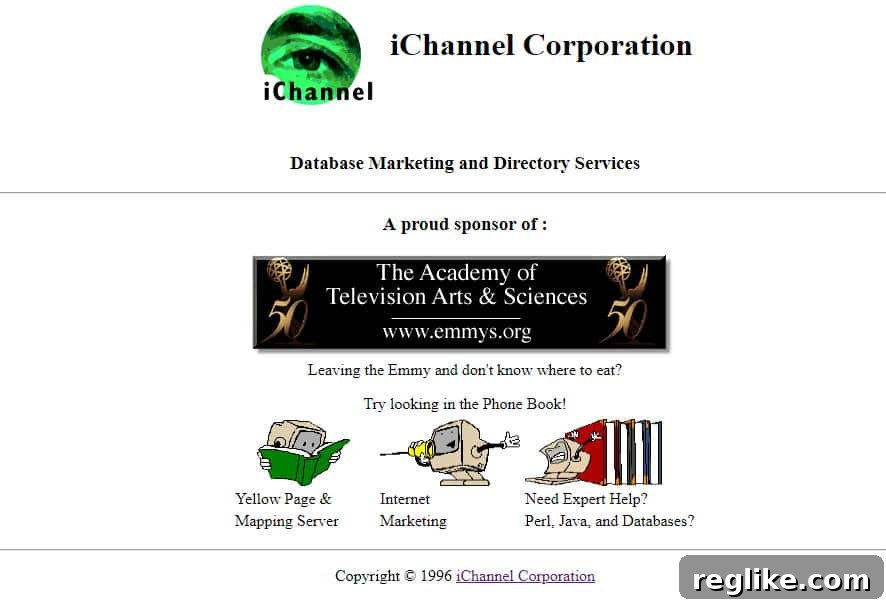
Jeffery Black’s journey with IMI.com began in the nascent days of the commercial internet. In March 1994, a period when the internet was still largely uncharted territory for businesses, Black strategically registered the domain name IMI.com. Just one month later, he formalized his vision by incorporating an entity named Internet Marketing Inc., proudly utilizing the “IMI” acronym that would become central to his digital identity.
Under the banner of Internet Marketing Inc., Black cultivated a remarkably successful venture. His early endeavors in online marketing and data aggregation positioned him as a pioneer in the burgeoning digital economy. His innovative spirit and the growing reputation of IMI caught the attention of significant figures in the tech world. Notably, he pursued a collaboration with Jerry Yang, one of the co-founders of Yahoo!, a dominant force in the early internet landscape. Yang’s email to Black revealed the depth of interest from industry giants:
To summarize, we are impressed by the resource and talent pool that IMI has pulled together. We share much of the vision that IMI does, and see a good potential fit. Of concern to us is the relative worth of Yahoo, the amount of resources Yahoo will receive from IMI in the short run and long run, the autonomy of Yahoo (both short and long term), and the pace at which things will be accomplished.
This early validation from a titan like Yahoo underscored the legitimacy and value of Black’s IMI enterprise. Black continued to innovate, eventually securing venture capital funding for IMI, which he subsequently rolled into another entity. This strategic move culminated in the sale of that company to AltaVista, a leading search engine of its time, for a staggering $25 million. Crucially, as part of the acquisition agreement, Black retained ownership of the IMI.com domain, a testament to its intrinsic value and his clear rights.
IMI.com was not an isolated success. Black’s foresight extended to registering other “category killer” domain names that would later become household names. According to court transcripts, his portfolio included domains such as “hiking, biking, scuba, tennis, recreation, hotels.com, [and] resorts.com.” For Hotels.com, Black showcased remarkable ingenuity, building a sophisticated booking reservation system from the ground up, painstakingly hand-coding over 40,000 hotels into its database. This demonstrated not only his technical prowess but also his genuine intent to develop and utilize these domains for commercial purposes, far removed from any “bad faith” intent to exploit others’ trademarks.
His shrewd early investments paid off handsomely. Black sold Resorts.com in 1999 for $950,000 and Hotels.com in 2001 for an impressive $11 million, cementing his reputation as a visionary in the nascent domain name industry. Many of his other early registrations were generously given away, highlighting a focus on legitimate business development rather than speculative hoarding.
The First Encounter: Irving Materials’ Initial Overture (1998)
The path of IMI.com first intersected with Irving Materials, Inc. in 1998, when the concrete company made its initial attempt to acquire the domain name. This early interaction established a contentious backdrop for the later legal battles, with both parties offering conflicting accounts of the discussions.
According to Jeffery Black, Irving Materials initially offered a paltry $500 for the domain. Black’s response clearly articulated the domain’s value and his established business use:
I said, I’m sorry. Hold on. Let me explain something here. My business is called Internet Marketing, Inc. It’s still running. I’m the biggest spider in the world for what I do. I track more data than anybody else in the world as a data aggregator. $500 isn’t going to cut it.
Black further testified that he calculated the substantial cost of rebranding and transitioning his entire online presence away from IMI.com, estimating it at $126,800. Consequently, he stated he would not consider any offer less than $135,000 for the domain, reflecting its integral role in his business operations and brand identity.
In contrast, Jerry Howard, Irving Materials’ VP of IT at the time, presented a different version of events. He testified that he never offered $500, but rather began with an offer of $5,000, which he then increased to $10,000. Howard claimed that Black informed him he had previously declined offers as high as $100,000. These differing accounts illustrate the significant disparity in perceived value and the early friction between the two parties.
Black’s account further detailed that Irving Materials refused his $135,000 counter-offer, reiterated their $500 offer, and then escalated the situation by threatening to sue him for trademark infringement. They even went so far as to send him a draft complaint outlining their intended lawsuit. Faced with this legal threat, Black prudently engaged legal counsel. However, despite the threats, Irving Materials never actually filed the lawsuit, perhaps recognizing the weakness of their claim against Black’s demonstrably prior and legitimate use of the IMI.com domain.
This early interaction established Black’s strong position regarding IMI.com. He continued to receive significant interest in the domain, even after selling his company to AltaVista. He testified that between 2000 and 2002, he received unsolicited offers ranging from $2 million to $4 million for IMI.com, further cementing its considerable market value and desirability as a premium digital asset, entirely independent of Irving Materials’ interests.
A Renewed Pursuit: Irving Materials’ Modern Strategy (2014-2017)
For nearly two decades following their initial, abortive attempt to acquire IMI.com, Jeffery Black heard nothing further from Irving Materials. This long period of inaction would become a crucial point in the subsequent legal proceedings. However, in 2014, Irving Materials underwent a significant strategic shift, spearheaded by their new VP of Sales and Marketing, Jeffrey McPherson. The company sought to modernize its marketing and branding, engaging an advertising firm named Heavyweights to assist in this overhaul.
Recognizing how much the digital landscape had evolved since the late 1990s, Irving Materials once again set its sights on IMI.com, believing it to be a key component of their revamped online presence. The company expressed a renewed desire to upgrade its corporate domain name to the concise and impactful IMI.com. The judge’s report illuminated a critical line of questioning during the trial, focusing on Irving Materials’ nineteen-year delay:
When asked directly, “between 1998 and 2017, why did Irving not say a word to Black about his registration and use of the [imi.com] domain name?,” McPherson provided an explanation centered on evolving marketing strategies and the interconnectedness of modern digital platforms:
…different strategy we have right now after going through the research and things of that nature that we’ve gone through. And also the way the website, social media apps and everything interact[s] with one another, it’s my job to make sure our brand is consistent throughout our footprint, consistent throughout the country, consistent everywhere we operate.
The dialogue continued, pressing McPherson on the rationale behind the extended delay:
Q. So you’re saying because the internet got bigger, it made it more important for you to have Mr. Black’s property as your own?
A. I’m not saying the internet. I’m saying marketing and branding in general to begin with. Branding is what people remember when the marketing stops.
Q. I’m asking you to explain all reasons that Irving Materials did not reassert its cybersquatting claim from 1998 for 19 years.
A. I would say the biggest reason would be the research that I did when I first got the Vice-President of Sales and Marketing role. And also the other thing is, when did the UDRP start? We didn’t have any way of doing anything.
Q. Are you aware the UDRP went into effect in the year 2000, Mr. McPherson?
A. I am now.
This exchange highlighted a significant knowledge gap within Irving Materials regarding domain dispute mechanisms. McPherson’s admission that he was unaware of the UDRP’s existence until 2000, despite it being available for seventeen years by the time of their 2017 complaint, significantly weakened Irving’s claim of long-standing interest and underscored their tactical shift based on newfound awareness rather than consistent historical pursuit. It was only after their advertising firm, Heavyweights, informed McPherson about the UDRP process that Irving Materials decided to file the complaint against IMI.com.
As previously noted, Black’s failure to respond to the UDRP complaint led to a ruling in Irving Materials’ favor. This outcome was particularly surprising given the UDRP panelist, Neil Anthony Brown, is known for frequently finding reverse domain name hijacking (RDNH) in cases where complainants attempt to acquire legitimate domain names without proper grounds. The unexpected UDRP decision directly precipitated Black’s federal lawsuit under the ACPA, setting the stage for the definitive jury verdict.
Lessons from the IMI.com Verdict: Protecting Digital Assets
The jury’s verdict, affirming that Jeffery Black did not violate the AntiCybersquatting Consumer Protection Act, delivered a clear message to the domain name industry and brand owners alike. The core principle of cybersquatting law, both under UDRP and ACPA, revolves around the “bad faith” intent of the domain registrant. For a claim to succeed, it must be proven that the domain name was registered with the specific intent to profit from or exploit a trademark that did not belong to the registrant, or to prevent a trademark owner from registering their mark.
In the IMI.com case, Black’s extensive history of legitimate use – registering the domain prior to Irving Materials’ documented interest, establishing a successful business under the IMI acronym, receiving significant offers for the domain entirely independent of Irving, and developing substantial web properties like Hotels.com – unequivocally demonstrated a lack of bad faith. His actions were those of a pioneering internet entrepreneur building a legitimate business, not a cybersquatter attempting to capitalize on another’s brand.
The IMI.com dispute serves as a crucial precedent and offers several key takeaways:
- Legitimate Prior Use is Paramount: Early registration and consistent, bona fide use of a domain name, especially when it precedes a complainant’s trademark rights or demonstrated interest, are powerful defenses against cybersquatting claims.
- Understanding “Bad Faith”: The mere desire for a domain name by a trademark holder does not automatically make another’s legitimate ownership an act of cybersquatting. Bad faith intent must be proven, not merely assumed.
- Importance of Response in UDRP: While federal litigation can overturn UDRP decisions, it is a costly and lengthy process. Responding to UDRP complaints, even when confident in ownership, is vital to present one’s case and avoid default losses.
- ACPA as a Recourse: The ACPA provides a critical avenue for domain owners to defend their rights in federal court, offering a more robust legal framework compared to the administrative nature of UDRP.
- The Value of Digital History: Meticulous record-keeping of domain registration dates, business operations, and communications can be invaluable in proving legitimate ownership and defending against future challenges.
Ultimately, the IMI.com case stands as a resounding affirmation of legitimate domain ownership and a powerful reminder that the foundational principles of internet law are designed to protect innovators and established users from opportunistic claims. The verdict ensures that the digital assets carefully cultivated by pioneers like Jeffery Black are safeguarded against those who seek to acquire them without a legitimate legal basis, reinforcing the stability and integrity of the domain name system.