
The OSRAM UDRP Debacle: A Cautionary Tale of Reverse Domain Name Hijacking
This UDRP should have never been filed. In fact, it serves as a stark reminder of the potential for abuse within the Uniform Domain-Name Dispute-Resolution Policy (UDRP) framework. A recent ruling by the World Intellectual Property Organization (WIPO) has seen German lighting giant OSRAM GmbH suffer a decisive loss in a UDRP action against OSAM.cloud, a Vietnamese cloud services consultancy. This case, despite the respondent’s silence, presents a textbook example of what is commonly known as Reverse Domain Name Hijacking (RDNH), underscoring the importance of due diligence and legitimate intent in domain disputes.
The Parties Involved: OSRAM and OSAM.cloud
OSRAM GmbH, a well-established German multinational, is a global leader in lighting solutions, renowned for its technological innovations and strong brand presence across various sectors, including automotive, general lighting, and digital applications. Their expansive trademark portfolio includes ‘OSRAM’, a globally recognized mark synonymous with quality and innovation in illumination technology. Given their considerable brand equity and international reach, it is understandable that OSRAM would be protective of its intellectual property.
On the other side of the dispute stood OSAM.cloud, a legitimate cloud consulting enterprise based in Vietnam. This company specializes in offering expert services in cloud infrastructure and management, assisting businesses in navigating the complexities of modern cloud computing environments. The domain name OSAM.cloud, which became the subject of this dispute, is just one letter off from the prominent OSRAM trademark. While such close similarity can, in different contexts, indeed signal cybersquatting – the abusive registration of domain names in bad faith – the unique circumstances of this particular case painted a very different picture. The domain OSAM.cloud doesn’t just exist as a dormant registration; it actively redirects to OSAM.io, the main operational website for the cloud consultancy, unequivocally demonstrating its use for a bona fide business purpose. Although OSRAM itself offers some cloud services and connected digital solutions as part of its broad portfolio, it failed to demonstrate any legitimate connection or confusion between its offerings and OSAM.cloud’s highly specialized consultancy services.
OSRAM’s Flawed Arguments: Straining Credulity
OSRAM’s complaint against OSAM.cloud rested on several key arguments, all of which the UDRP panel ultimately deemed unconvincing and lacking in substantial evidence. The German lighting company contended that the respondent’s choice of “OSAM,” being “identical to the well-known Complainant’s registered trademark ‘OSRAM’,” clearly evinced bad faith intent in both the registration and subsequent use of the domain name. This assertion formed the cornerstone of their complaint, alleging that the similarity was not coincidental but a deliberate attempt to capitalize on their established brand.
Furthermore, OSRAM aggressively asserted that the respondent had made no “bona fide” use of the disputed domain name. Their complaint explicitly stated:
Respondent’s choice of the disputed domain name, which is identical to the well-known Complainant’s registered trademark ‘OSRAM’, clearly indicates bad faith intent to register and use of the disputed domain name. Apart from the above, the Respondent has not attempted to make any bona fide use of the disputed domain name. […] It is obvious that the Complainant’s famous trademark is being used in order to attract potential buyers to the website to which the disputed domain name resolves. Here, the Respondent practically using the Complainant’s trademark color and stylization knows about the worldwide well-known Complainant’s trademarks ‘OSRAM’.”
This line of reasoning, which suggested OSAM.cloud was intentionally trying to mislead or confuse OSRAM’s potential customers, stretched credulity to its breaking point. For a global leader like OSRAM to suggest that a cloud consultancy, distinct in its business sector and operating under a specialized gTLD (.cloud), was attempting to siphon off its lighting customers through a one-letter difference in a domain name, betrayed either a fundamental misunderstanding of the respondent’s operations or an overly aggressive, unfounded interpretation of trademark infringement. The argument that the respondent was “practically using the Complainant’s trademark color and stylization” also lacked substance, as the visual branding of a lighting company and a cloud consultancy would inherently differ significantly, making confusion highly unlikely.
Panelist’s Scrutiny and Undeniable Findings
The UDRP panelist, Scott Blackmer, meticulously examined the available evidence and delivered a ruling that exposed the glaring weaknesses in OSRAM’s case. Crucially, Blackmer undertook his own diligent research, a commendable and vital effort given the respondent’s decision not to file a response. This proactive approach by the panelist was instrumental in uncovering the truth and preventing an unjust outcome, demonstrating the UDRP’s commitment to fairness even in default situations.
As Blackmer succinctly detailed in his decision:
As noted in the factual discussion above, the Respondent’s website reflects a registered and fully functioning consultancy business operating since 2017 with a website at “www.osam.io”. The Domain Name is a relevant addition to the Respondent’s domain name portfolio, as its gTLD “.cloud” is pertinent to the cloud services business in which the Respondent is engaged. The Respondent advertises consulting to assist clients in using AWS-hosted cloud services, and the Respondent is indeed listed as a partner by AWS since 2017. The Respondent appears in multiple media articles and directories, consistent with the story told on the Respondent’s website. On the face of it, there is nothing on the Respondent’s website that mentions the Complainant or competes with its business. There is simply an unrelated business with a name that differs from the Complainant’s mark by one letter. On this record, the Panel does not find persuasive evidence to support the Complainant’s inference that the Respondent chose the name of its business and the corresponding Domain Name in an attempt to misdirect Internet users for commercial gain.
Blackmer’s findings established a strong foundation for the legitimacy of OSAM.cloud’s operations. The panelist observed that the respondent “appears in multiple media articles and directories,” which corroborated the fact that OSAM.cloud was not a shell company or a speculative registrant, but a genuine business entity deeply embedded in its sector. Perhaps most tellingly, the panelist found “nothing on the Respondent’s website that mentions the Complainant or competes with its business. There is simply an unrelated business with a name that differs from the Complainant’s mark by one letter.” This clear distinction unequivocally dismantled OSRAM’s claims of bad faith and confusion. The panel therefore concluded that there was no “persuasive evidence to support the Complainant’s inference that the Respondent chose the name of its business and the corresponding Domain Name in an attempt to misdirect Internet users for commercial gain.” This firm declaration underscored the lack of evidence supporting any of the three UDRP elements required for a transfer: confusing similarity, lack of legitimate interest, and bad faith registration and use.
Regarding OSRAM’s ancillary argument about the similarity of logos and “trademark color and stylization,” Blackmer rightly dismissed this claim as unfounded. While the complaint vaguely referenced these elements, a simple visual comparison would reveal no confusing similarity between the distinct corporate branding of a global lighting manufacturer and a specialized cloud consultancy. The panel correctly recognized that this was a desperate attempt to add weight to an already flimsy complaint, further highlighting the complainant’s lack of substantive evidence.
The Shadow of Reverse Domain Name Hijacking (RDNH)
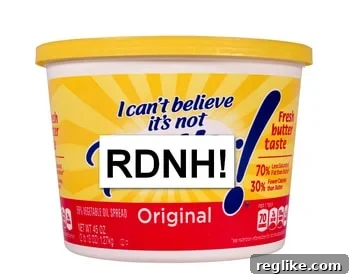
The outcome of this case serves as a prime illustration of Reverse Domain Name Hijacking (RDNH), a phenomenon where a trademark holder attempts to use the UDRP process unfairly to obtain a domain name from its rightful owner. RDNH occurs when a complainant knows or should have known that it cannot prove one of the three elements required under the UDRP: that the domain name is identical or confusingly similar to a trademark in which the complainant has rights; that the respondent has no rights or legitimate interests in respect of the domain name; and that the domain name has been registered and is being used in bad faith.
In the OSRAM v. OSAM.cloud case, the red flags for RDNH were numerous and stark. OSRAM, a sophisticated global corporation with ample legal resources, should have conducted thorough due diligence before filing this complaint. A basic investigation, precisely the kind performed by the panelist, would have immediately revealed OSAM.cloud as a legitimate, actively operating business with a relevant and transparent use for its chosen domain name. The specialized `.cloud` gTLD further emphasized the domain’s suitability for the respondent’s business and its inherent disassociation from OSRAM’s core lighting products, making any claim of confusion highly improbable.
OSRAM’s allegations of “bad faith intent” and lack of “bona fide use” were demonstrably false based on readily available public information. Their assertion that OSAM.cloud was trying to “attract potential buyers” by leveraging OSRAM’s fame for a completely different industry niche was speculative, lacked any factual basis, and bordered on the absurd. Such aggressive and unsubstantiated claims against a legitimate business, coupled with the clear absence of evidence for any of the UDRP requirements, strongly point towards an abusive filing. While the panelist, Scott Blackmer, stopped short of formally declaring RDNH in his decision, his detailed findings and explicit rejection of OSRAM’s inferences make a compelling argument for such a finding. His commendation for doing his “simple research” in light of no response was well-deserved, and indeed, a formal RDNH finding would have been a fitting conclusion to this case.
Protecting UDRP Integrity: The Role of Diligent Panelists
The UDRP system was established to combat abusive domain registrations, primarily cybersquatting, and to provide a streamlined, efficient mechanism for trademark holders to reclaim domains illicitly registered and used. It is not, however, intended as a tool for trademark holders to expand their portfolios by seizing legitimately registered domain names from businesses operating in good faith. Cases like OSRAM v. OSAM.cloud highlight the critical role of experienced and diligent panelists in upholding the integrity of the UDRP process.
Panelists must be willing to conduct their own research when a respondent remains silent, as demonstrated admirably by Scott Blackmer. This proactive stance ensures that default judgments are not rendered solely based on the complainant’s potentially misleading narrative. More importantly, panelists must be willing to issue RDNH findings where warranted. Declaring RDNH sends a strong and unambiguous message to potential complainants that the UDRP is not a low-cost alternative to litigation for speculative domain grabs or a means to improperly acquire domains that legitimately belong to others. It reinforces the principle that trademark rights, while undeniably important, do not automatically trump legitimate business interests, especially when there is no genuine confusion or intent to profit from another’s goodwill. The absence of an explicit RDNH finding in such a clear-cut case, while the panelist clearly understood the dynamics of the abusive filing, represents a missed opportunity to further strengthen the UDRP’s deterrent effect against baseless and abusive filings.
Conclusion: A Clear Victory for Legitimate Use
The OSRAM v. OSAM.cloud UDRP outcome is a significant victory for legitimate domain registrants and serves as a powerful cautionary tale for overly aggressive trademark enforcement strategies. It firmly reiterates that simply having a similar-looking domain name, even one letter off, is insufficient grounds for a UDRP transfer if the respondent can demonstrate a legitimate business purpose and no intent to trade on the complainant’s goodwill. The specific gTLD (.cloud) and the distinct nature of OSAM’s business further highlighted the lack of any real-world confusion.
The panelist’s diligent research in the absence of a respondent’s reply was exemplary and absolutely crucial in ensuring justice. This case underscores the vital distinction between genuine cybersquatting, which the UDRP is designed to combat, and a mere coincidence of names, especially when applied to businesses operating in entirely different sectors. For brand owners, the lesson is clear: thorough due diligence is paramount, and the UDRP should be invoked only when concrete, verifiable evidence of bad faith registration and use exists, not as a speculative tool to appropriate domain names from legitimate entities. For the broader internet community and domain registrants, it’s a reaffirmation that legitimate businesses can operate securely in the domain name space without constant fear of unwarranted trademark disputes, provided their use is genuine and not intended to deceive.