
The Unforeseen Spotlight: Michael Bloomberg’s .nyc Domains and the Power of Satire
The digital age has fundamentally reshaped how public figures and brands manage their online presence. In an era where a single tweet can spark a global conversation, controlling one’s narrative online has become paramount. This reality was humorously, yet pointedly, brought into focus by an incident involving former New York City Mayor Michael Bloomberg and his extensive collection of .nyc domain names, a story that first broke on Domain Name Wire.
Back in the early days of the .nyc top-level domain, a curious revelation emerged: Michael Bloomberg, a prominent figure in both business and politics, had registered an astounding 400 .nyc domain names. What made this defensive registration strategy particularly noteworthy wasn’t just the sheer volume, but the nature of the domain names themselves. They ranged from the subtly critical to the overtly comical, encompassing phrases like MichaelBloombergisaWeiner.nyc, MikeIsTooShort.nyc, and MikeBloombergisaDweeb.nyc. This preemptive move was clearly aimed at preventing potential detractors from seizing these URLs and using them to spread negative or satirical content.
The Genesis of a Viral Story: Defensive Domain Strategy in the Spotlight
The concept of defensive domain registration is a well-established practice in brand protection. Companies and public figures often register variations of their names, misspellings, and even potentially negative phrases to safeguard their online reputation. The logic is simple: by owning these domains, they can control the content associated with them, preventing malicious actors from establishing websites that could harm their image. However, Bloomberg’s approach, particularly with the .nyc domain, took this strategy to an unprecedented level, attracting widespread attention and sparking debate about the efficacy and optics of such a comprehensive defensive posture.
The .nyc top-level domain itself represents a unique digital identifier for businesses, organizations, and individuals connected to New York City. Launched with the promise of creating a distinct online identity for the city’s vibrant community, it offered a new frontier for digital branding. For a former mayor deeply intertwined with the city’s identity, securing a vast portfolio of these domains seemed a logical, albeit aggressive, step. The irony, however, was that by registering such overtly critical domains, Bloomberg inadvertently highlighted the very criticisms he sought to neutralize.
From Niche Revelation to Mainstream Discussion: Media Amplification
The initial story, shedding light on Bloomberg’s extensive .nyc domain portfolio, quickly transcended the specialized world of domain name news. Its inherent humor and the underlying implications for public relations and online reputation made it ripe for broader media consumption. Major outlets like the Wall Street Journal picked up the narrative, analyzing the strategy from a business and political perspective. CNBC’s Squawk Box, a prominent financial news program, also delved into the story, underscoring its relevance beyond just internet enthusiasts.
The journey from a specialized domain blog to national television highlighted the universal appeal of the story. It wasn’t just about domain names; it was about public image, political maneuvering, and the often-absurd lengths to which public figures go to manage their digital footprints. This widespread media attention set the stage for the story’s most impactful amplification, transforming it from a mere news item into a cultural talking point, largely thanks to the sharp wit of a renowned satirist.
John Oliver’s “Last Week Tonight”: Weaponizing Humor Through Domain Names
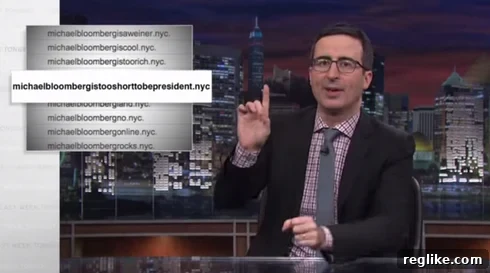
The story truly exploded into the public consciousness when it became a segment on HBO’s “Last Week Tonight with John Oliver.” Known for his incisive political commentary wrapped in brilliant humor, Oliver seized upon Bloomberg’s defensive domain registrations as a perfect illustration of the absurdities in modern public relations. His segment, which unfortunately did not credit Domain Name Wire as the original source, took the narrative to a new level of viral engagement.
Oliver’s approach was characteristic: he highlighted the most ludicrous examples of Bloomberg’s registrations, transforming them into comedic gold. But he didn’t stop there. With his signature blend of irony and activism, Oliver’s show also registered its own set of derogatory .nyc domain names aimed at Bloomberg. More significantly, he issued a direct call to action, encouraging his vast viewership to go forth and register even more satirical .nyc domains targeting the former mayor. This ingenious move turned a passive news story into an interactive, crowdsourced act of satire.
The Oliver Effect: A New Wave of Satirical Registrations
A review of the .nyc zone file subsequent to Oliver’s segment revealed the immediate impact of his call to action. Several new domains, registered by HBO or inspired by the show’s segment, surfaced, further cementing the story’s viral status. The domains Oliver mentioned on-air, which quickly became infamous, included:
- michaelbloombergisawiener.nyc
- tinytinymikebloomberg.nyc
- bloombergeatsbabycornasifitsrealcorn.nyc
These examples perfectly illustrate the power of specific, often bizarre, imagery in satire. The idea of Bloomberg eating baby corn “as if it’s real corn” conjures a vivid and humorous mental picture, far more memorable than a generic insult.
Even more intriguing were the domains unearthed through further investigation, registered to HBO but not explicitly highlighted in the on-air clip. These demonstrated an even deeper dive into the realm of specific, perhaps more pointed, critique:
- mikebloombergcallshispenisthemtrain.nyc
- bloombergoncepaidtwomiddleclassimmigrantstofighteachother.nyc
The latter, bloombergoncepaidtwomiddleclassimmigrantstofighteachother.nyc, stands out not just for its content, but for its remarkable length. At 57 characters (excluding the .nyc extension), it became the longest .nyc domain name registered at the time, narrowly surpassing another tongue-twister, cheating-spouse-private-investigator-forensics-crimelab.nyc. This record-breaking length added another layer of absurdity and memorability to the entire saga.
The Ripple Effect: Viewers Embrace the Call to Action
John Oliver’s segment was not merely an observational critique; it was a catalyst. His encouragement for viewers to participate actively in registering more satirical domains was widely embraced. This led to a decentralized, crowdsourced wave of new registrations, with the general public contributing to the satirical narrative. Domains like mikebloombergisaleprechaun.nyc began to appear, showcasing the creativity and collective engagement of Oliver’s audience.
This phenomenon underscored several critical points about the internet and public discourse. Firstly, it demonstrated the difficulty, if not impossibility, of completely controlling an online narrative, especially when faced with a mobilized, humorous opposition. Secondly, it highlighted the power of viral content and audience participation in shaping public perception. When satire becomes interactive, its impact multiplies, transforming passive consumption into active creation.
Lessons in Online Reputation Management and Satire
The entire episode serves as a fascinating case study in online reputation management, political satire, and the evolving landscape of domain names. For public figures and brands, Bloomberg’s situation offered a paradoxical lesson: while defensive registration is a valid strategy, its execution needs careful consideration. Registering every conceivable negative domain, especially highly specific and absurd ones, can backfire by drawing unwanted attention to those very criticisms.
The incident also showcased the enduring power of satire as a tool for social and political commentary. John Oliver’s ability to take a seemingly niche story about domain names and elevate it into a widely discussed cultural moment speaks volumes about the effectiveness of humor in critiquing power. By making the audience part of the joke, he transformed a passive media experience into an active, collaborative form of protest and commentary.
In conclusion, the saga of Michael Bloomberg’s .nyc domain names, from its initial revelation by Domain Name Wire to its explosive amplification by John Oliver, stands as a memorable chapter in the annals of online reputation. It reminds us that in the digital age, control over one’s online image is never absolute, and sometimes, the most elaborate attempts to manage it can inadvertently create the very viral moments they were designed to prevent.