
The Future of Domain Investing: Essential Uniregistry Features GoDaddy Must Preserve
The domain industry recently witnessed a monumental shift with GoDaddy’s acquisition of Uniregistry, its renowned marketplace, and Frank Schilling’s extensive domain name portfolio. This strategic move, announced previously, has generated considerable buzz and anticipation among domain investors and industry professionals alike. GoDaddy, a dominant force in the domain and web services sector, now faces the exciting challenge of integrating Uniregistry’s innovative platform into its existing infrastructure, particularly Afternic. While GoDaddy’s VP of Aftermarket, Paul Nicks, has indicated plans to retain much of Uniregistry’s established features, the specific implementations remain a keen point of interest for the community. This article delves into three critical features of the Uniregistry Marketplace that, for the benefit of domain investors and the health of the aftermarket, GoDaddy should not only retain but ideally integrate and enhance within its own ecosystem.
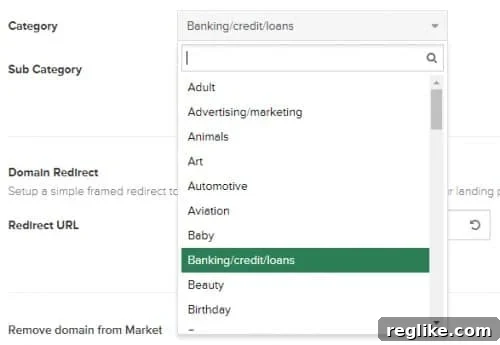
Revolutionizing Domain Parking with Keyword Category-Targeting
Domain parking, once a lucrative income stream for many domain investors, has evolved significantly over the years. While its direct revenue potential has diminished for a vast majority, its strategic importance remains, particularly as a tool for validating domain names and protecting investments. GoDaddy’s current domain parking platform is, by many accounts, rudimentary. In stark contrast, Uniregistry offered a sophisticated parking solution that many investors, including myself, found invaluable even when direct parking revenue wasn’t the primary goal.
The Strategic Advantage of Relevant Ads
Uniregistry’s standout feature in this regard was its ability to allow domain owners to precisely set a category for the advertisements displayed on their parked pages. This seemingly simple function carries profound implications. When ads displayed on a parked domain are directly relevant to the domain name’s dictionary meaning or its intended use, it helps to establish what is known as “legitimate interest” in a domain name. This concept is a cornerstone defense in UDRP (Uniform Domain-Name Dispute-Resolution Policy) cases, where trademark owners often challenge domain registrations. By showing relevant content, the domain owner demonstrates that their use of the domain is aligned with its generic meaning, rather than an attempt to capitalize on a trademark.
Avoiding Trademark Infringement and Algorithm Traps
Furthermore, this keyword category-targeting serves as a crucial safeguard against potential trademark infringement issues. Without proper categorization, automated advertising algorithms (like Google’s AdSense) might inadvertently display ads related to specific trademarks on a parked domain. This can expose the domain owner to accusations of bad faith registration or use. Uniregistry’s feature empowered owners to steer clear of this by explicitly guiding the ad display, ensuring that a domain like “apple.com” (if it were parked and generic) would show ads for fruit, not consumer electronics. This level of control is not just about maximizing click-through rates; it’s about mitigating legal risks and maintaining the integrity of domain ownership.
Enhancing User Experience and Value Proposition
Beyond legal considerations, relevant parking pages also enhance the user experience. Visitors landing on a parked page are more likely to engage with advertisements or content that aligns with their initial search or interest in the domain name. This professional presentation can also indirectly increase the perceived value of the domain name itself, suggesting a more thoughtfully managed and purposeful asset. GoDaddy has a tremendous opportunity to not only adopt this feature but perhaps even enhance it, offering domain investors a powerful tool that combines passive income potential (however small) with critical legal protection and improved user engagement. Integrating such a sophisticated parking system would elevate GoDaddy’s aftermarket offerings significantly, providing tangible value beyond just listing domains for sale.
Empowering Sellers with Comprehensive Buyer Information
One of the most significant differentiators between Uniregistry and GoDaddy’s Afternic platform lies in the transparency and detail provided to sellers regarding prospective buyers. In the high-stakes world of domain name sales, information is power. Uniregistry understood this implicitly, offering sellers a wealth of data that proved invaluable during negotiation processes. Currently, Afternic operates with a more opaque model, often shielding the buyer’s identity and basic information from the seller until much later in the negotiation, if at all.
Critical Data for Strategic Negotiation
Uniregistry’s marketplace made a point of disclosing crucial details about inquiries. This typically included the prospect’s IP address and geographical location, offering initial insights into their potential origin and intent. More importantly, it often provided the prospect’s contact information, such as an email address. This level of transparency allowed sellers to conduct their own due diligence, offering a significant advantage. Handy links to search Google for the prospect’s email or find their LinkedIn profile were also integrated, streamlining the process of researching a potential buyer’s background, professional affiliations, and estimated financial capacity. Understanding who you are negotiating with—be it an individual, a startup, or a large corporation—can dramatically influence your negotiation strategy, pricing expectations, and overall approach to the sale.
Building Trust and Mitigating Risk
Beyond negotiation tactics, access to buyer information also plays a vital role in fraud prevention and building trust. Knowing who is on the other side of the transaction helps sellers assess legitimacy and reduce risks associated with potentially fraudulent inquiries or time-wasters. It fosters a more direct and personal connection, which can be crucial in closing high-value domain deals. For professional domain investors managing extensive portfolios, this insight is not just a convenience; it’s a necessity for making informed business decisions and optimizing their sales pipeline.
Balancing Privacy and Transparency in the New Era
GoDaddy must find a way to integrate this level of transparency while adhering to modern data privacy regulations such as GDPR and CCPA. This might involve a multi-tiered approach: perhaps initial inquiries provide anonymized geographic data, with more specific contact information becoming available upon mutual interest or as the negotiation progresses. The core principle, however, should remain: empowering sellers with actionable intelligence. By providing more comprehensive buyer information, GoDaddy can significantly enhance the seller experience on Afternic, attracting more high-value listings and fostering a more dynamic and efficient marketplace for both buyers and sellers. This move would demonstrate a commitment to supporting the professional domain investor community, who often require more granular control and information to succeed.
The Power of Choice: Self-Service and Full Visibility Features
Perhaps the most fundamental difference in philosophy between Uniregistry’s marketplace and Afternic lies in the operational model for handling sales leads. Uniregistry excelled by offering unparalleled flexibility: sellers could choose to manage inquiries and negotiations themselves (self-service) or forward leads to Uniregistry’s brokers for assistance. In contrast, GoDaddy’s Afternic traditionally operates with a more hands-off approach for sellers, where GoDaddy’s team largely handles inquiries and negotiations on the seller’s behalf, often with limited visibility into the process for the domain owner.
Empowering the Savvy Domain Investor
The self-service option on Uniregistry was a game-changer for experienced domain investors who preferred direct control over their sales process. These investors often possess keen negotiation skills, deep market knowledge, and established relationships, preferring to handle direct communication with potential buyers. This model allowed for greater agility, personalized communication, and the ability to close deals on their terms. It acknowledged that domain investing is a sophisticated profession, and many sellers are fully capable—and prefer—to manage their own transactions. Removing this self-service capability would strip away a significant level of autonomy that many professional investors value deeply.
The Best of Both Worlds: Brokerage with Transparency
However, not all sellers have the time or expertise to manage every lead. This is where the “full visibility” aspect of Uniregistry truly shone. Even when sellers opted for broker assistance, Uniregistry often provided a degree of transparency into the ongoing communication and negotiation progress. Imagine having the expert Afternic team handling inquiries for you, but simultaneously being able to see the exchange of offers, counter-offers, and buyer communications. This hybrid model offers the convenience of professional brokerage without sacrificing the seller’s need for control and situational awareness. It builds trust and allows sellers to step in if necessary, ensuring their interests are always paramount.
The Risk of Alienating the Investor Community
Should GoDaddy choose to remove self-service capabilities entirely and maintain a opaque, broker-only model, it risks alienating a substantial segment of the professional domain investor community. These investors, who often manage large portfolios and rely on efficient, transparent processes, would likely seek alternative platforms. Competitors like DAN.com and Efty have successfully built their marketplaces around offering high levels of seller control, direct buyer communication options, and transparent sales pipelines. A lack of flexibility from GoDaddy could drive these valuable users to platforms that better cater to their operational preferences, ultimately fragmenting the aftermarket and diminishing GoDaddy’s competitive edge. Therefore, providing choice—either full self-service, full brokerage, or a transparent hybrid—is not just a feature; it’s a strategic imperative for GoDaddy to retain and grow its investor base.
Conclusion: Paving the Way for a Stronger GoDaddy Aftermarket
The acquisition of Uniregistry presents GoDaddy with a unique opportunity to significantly enhance its aftermarket offerings and solidify its position as the premier destination for domain investors. By thoughtfully integrating Uniregistry’s innovative features—specifically, its advanced keyword category-targeting for domain parking, comprehensive buyer information disclosure, and the flexible self-service/full-visibility sales model—GoDaddy can create an ecosystem that truly empowers sellers. These features are not merely superficial additions; they address core needs of the domain investing community, offering tools for legal protection, strategic negotiation, and operational control. Listening to the feedback of domain investors and committing to preserving the best of Uniregistry will be crucial for GoDaddy’s continued success and for fostering a more robust, transparent, and user-centric domain aftermarket for years to come.